

I've worked at photography shows. I've stood behind lighting setups, watched attendees cycle through shooting bays, and seen how models are treated over the course of a long day on their feet. The vast majority of people who step up to take a photograph are perfectly decent. Many are a bit nervous, maybe self-conscious about their ability, unsure of what to say. They take their shot and move on. And I get that. Not everyone is comfortable striking up a conversation with a stranger, especially one who's posing under studio lights in front of a crowd.
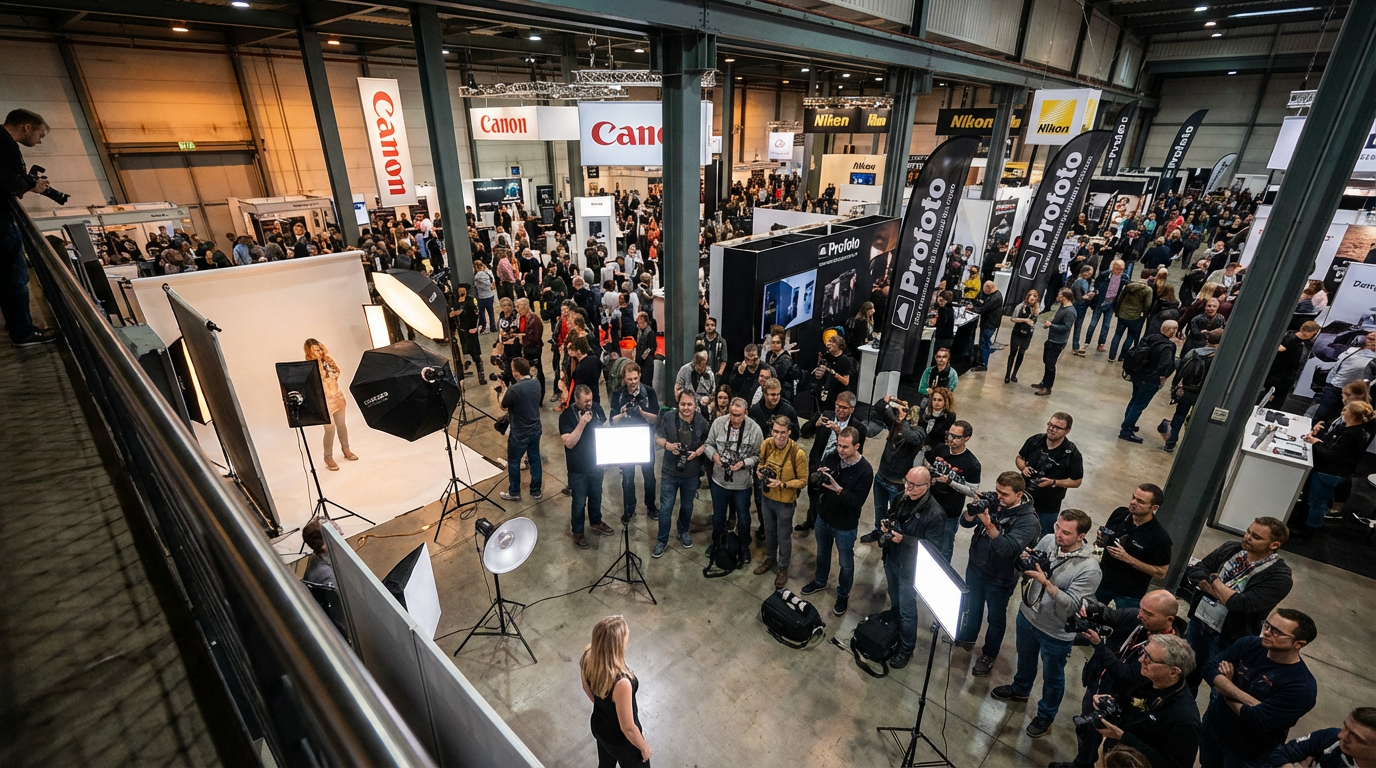
But here's the thing: even if you're feeling a bit awkward, even if you don't know what to say, just saying "thank you" would mean a lot. That model has been standing there for hours, holding poses, giving energy to every single person who steps up with a camera. A simple acknowledgement that they're a human being doing a job goes a long way.
What concerns me, though, is the other end of the spectrum. Because there are times when you watch certain people take a photograph, check the back of their screen, and walk away, and something about the whole thing just doesn't sit right. The way they framed the shot. The way they looked at the image. Their whole demeanour. You can't always put your finger on exactly what it is, but it gives you cause for concern. You find yourself wondering what the purpose of that shot actually was.
I've been thinking about this for a while now, and the more I look into it, the more I realise this isn't just a feeling. It's a well-documented problem across the photography industry, and models themselves have been talking about it for years.
What models have been saying
When you actually listen to what models say about working at photography shows and events, the picture is consistent and, frankly, uncomfortable to hear as a photographer.
At Photo Plus Expo in New York, a model was placed on a narrow traffic pylon on concrete for a dramatic skyline portrait. She was visibly frightened, reaching for a spotter's hand to keep her balance, yet photographers kept shooting. One attendee actually called out "Wait!" when the spotter stepped in to help her, prioritising a clean composition over a woman's physical safety. No one had brought mats, padding, or any safety equipment.
Chris Gampat, Editor in Chief of The Phoblographer, described watching models go for hours without a break, with photographers growing frustrated when they asked for water or a bathroom visit. He recounted swimsuits and summer fashion being shot outdoors in February, with the photographer complaining about shivers and goosebumps as though a woman in near-freezing temperatures should somehow override her own biology for the image. When lunch orders were taken on set, models were routinely passed over. As Gampat observed, when the model stepped onto the set she left her humanity at the edge of the seamless. She stopped being a person and became a prop.
That word, "prop," keeps coming up. And it's exactly the attitude I've seen glimpses of at shows. The model isn't a colleague or a collaborator. She's part of the furniture, there to be consumed.
Evelyn Devere, with thirteen years of modelling experience, described photographers making unnecessary comments about her body and their attraction to her, implying that photos would be used for personal gratification or shared among friends. She recounted a photographer who slowly adjusted her positioning so that areas she had explicitly chosen not to expose would be visible, reassuring her he couldn't see anything when she raised her discomfort.
Kat Yip, a UK-based model with eleven years' experience, described photographers bypassing her professional portfolio to request personal nude photos, and others who opened conversations by commenting on her body.
Amandy Rose Silva-Ranger, a promotional model speaking to VICE, described working a car show where attendees grabbed her as she walked past. She said she didn't feel like a model; she felt like a piece of meat on display. Nicole de Melo, another promotional model, said she had experienced sexual harassment many times and had left multiple companies because of it, adding that the boundaries between professional expectation and personal entitlement became blurred.
These aren't isolated stories. A survey by Zoner Studio found that over half of model respondents had negative photoshoot experiences, with the vast majority involving sexual harassment. 58% said they preferred working with female photographers, and many reported feeling uncomfortable or pressured when working with men. Data from the Model Alliance found that nearly 87% of models had been asked to pose nude without any prior agreement.
Reading all of this, I kept thinking back to those moments at shows. The ones where you watch someone take a photo, glance at the back of their camera with a look you can't quite place, and walk away without a word. Those moments that make you uneasy. The models' accounts suggest that unease is well founded.
The camera can make people forget themselves
There's something about holding a camera that can change the dynamic between two people. At its best, it creates a collaboration, a shared creative moment. But at a show, where there's no pre-shoot conversation, no agreed brief, no relationship at all between the photographer and the model, that dynamic can tip the wrong way very quickly.
I think some people genuinely forget, or perhaps never considered, that the person standing on that set is a professional doing a job. She's not there for them personally. She's giving the same energy, the same poses, the same patience to everyone who steps up. And she deserves to be treated with the same basic respect you'd give any other professional you encounter at a trade event.
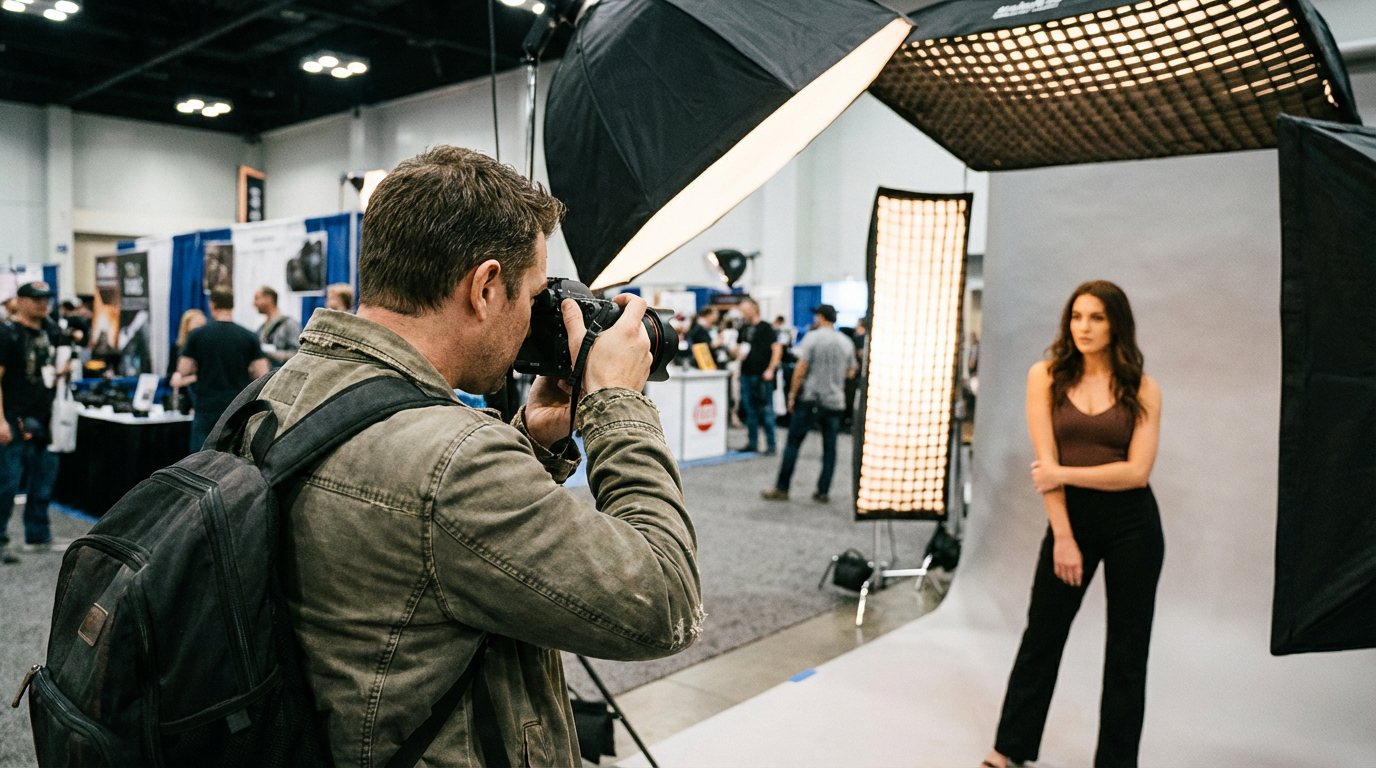
A female photographer writing for Photofocus catalogued the directions she had personally heard given to models at events and shoots: requests for "sexy looks," instructions to touch themselves, to spread their legs, to push their chests forward with their arms. She titled her piece simply: "I am over the creepy ones." And I think a lot of us in the industry share that sentiment but haven't been vocal enough about it.
The trade show format makes this worse. At CES, one reporter observed a model kept inside a physical pen for attendees to photograph, remaining silent for four straight days while even the most provocatively dressed promotional models at other booths were at least armed with product knowledge and a sales pitch. At Photokina 2016, female models were positioned as test subjects for camera equipment, dressed in ways that had nothing to do with the technology being demonstrated. The model becomes set dressing. Wallpaper with a pulse.
I understand that photography shows use models to demonstrate lighting and equipment in a practical, engaging way. That's legitimate. But the format creates a uniquely one-sided power dynamic. The model is static, available, performing. The photographer is transient, anonymous, accountable to no one. There's no conversation, no agreed brief, no relationship. And in that gap, some people's behaviour goes unchecked.
So where are the guidelines?
This is where it gets properly frustrating. When I started looking into whether any formal guidelines or codes of conduct exist around how photographers should interact with models at these events, I found almost nothing.
The one standout exception is Magnum Photos, which published a comprehensive Code of Conduct in January 2021 explicitly prohibiting all forms of discrimination and sexual harassment. It provides detailed examples of prohibited behaviour, including touching, unwanted advances, sexually oriented remarks, and comments about a person's sexuality, and applies across offices, events, workshops, and assignments. It includes a public complaints procedure with sanctions ranging from written reminders to permanent expulsion. Notably, a previous 2018 version had contained a confidentiality clause preventing its publication, which was removed in the 2021 revision. This is exactly the kind of thing we need more of. But Magnum stands almost entirely alone.
The major UK photography bodies, the Master Photographers Association, the Royal Photographic Society, the Society of Wedding and Portrait Photographers, the British Institute of Professional Photography, all have codes of conduct. But they're focused on business practices, client relations, and general professionalism. The RPS has a Nature Photographers' Code of Practice covering bird nesting sites and habitat disturbance, but nothing equivalent for the treatment of human subjects at events. The Professional Photographers of America asks members to maintain high levels of professionalism and integrity but offers no specifics around model interaction. None of these bodies have published event-specific guidelines addressing the concrete behaviours that models consistently report.
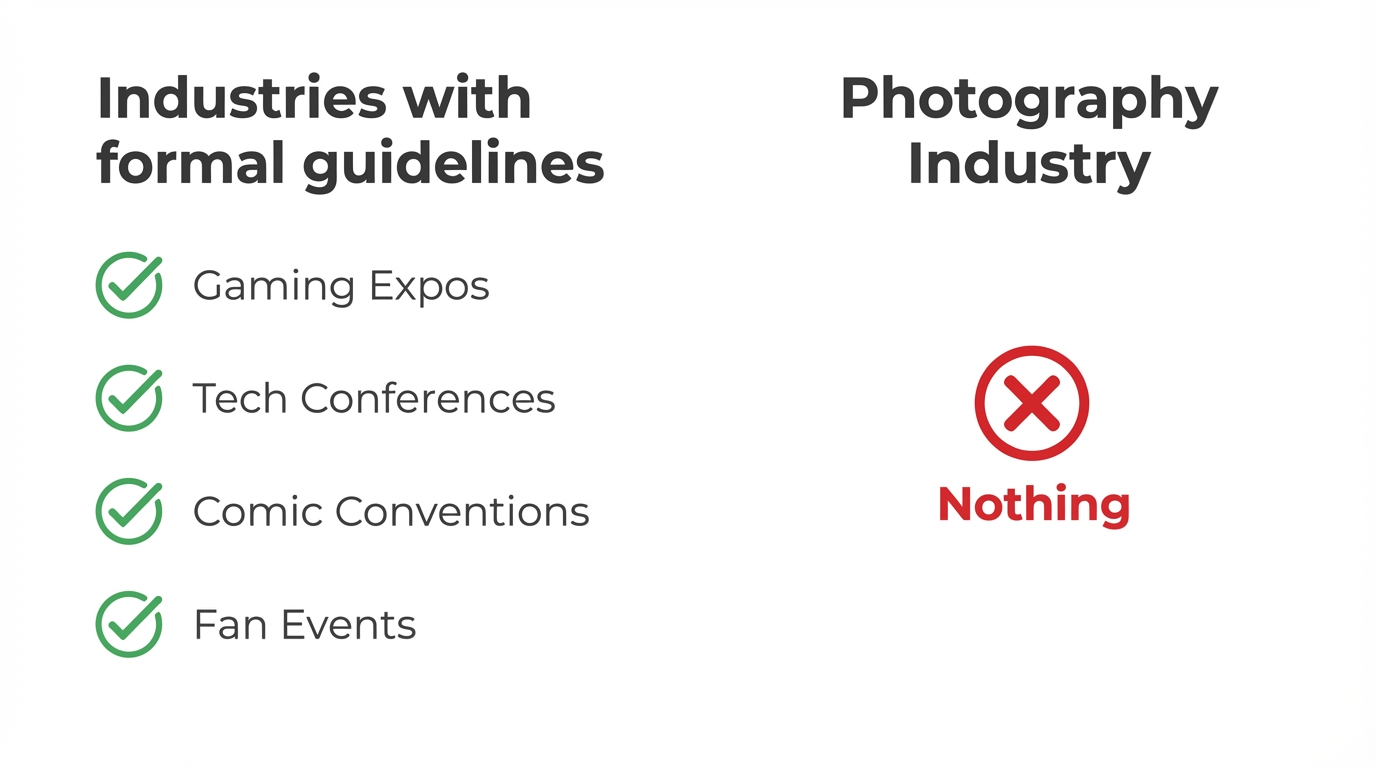
The photography shows themselves? Nothing I could find. No published attendee codes of conduct. No harassment policies. No briefings for people using interactive shooting bays. Nothing that says: "Here's how we expect you to behave when you step up to photograph a model."
Other industries figured this out years ago
What makes this even more frustrating is that other industries tackled the exact same problem a decade ago.
PAX, the gaming expo run by Penny Arcade, banned booth babes back in 2010, requiring that any promotional models be educated about the product and prohibiting overtly sexual or suggestive methods. Eurogamer Expo in the UK completely disallowed promotional models from 2012, with formal guidelines stating that the practice was unacceptable. RSA Conference banned revealing attire for booth staff in 2015, and CES updated its exhibitor guidelines after sustained public pressure. The "Cosplay Is Not Consent" movement drove widespread adoption of anti-harassment policies at fan conventions, with major Comic-Cons now defining harassment to include unwanted photography or recording.
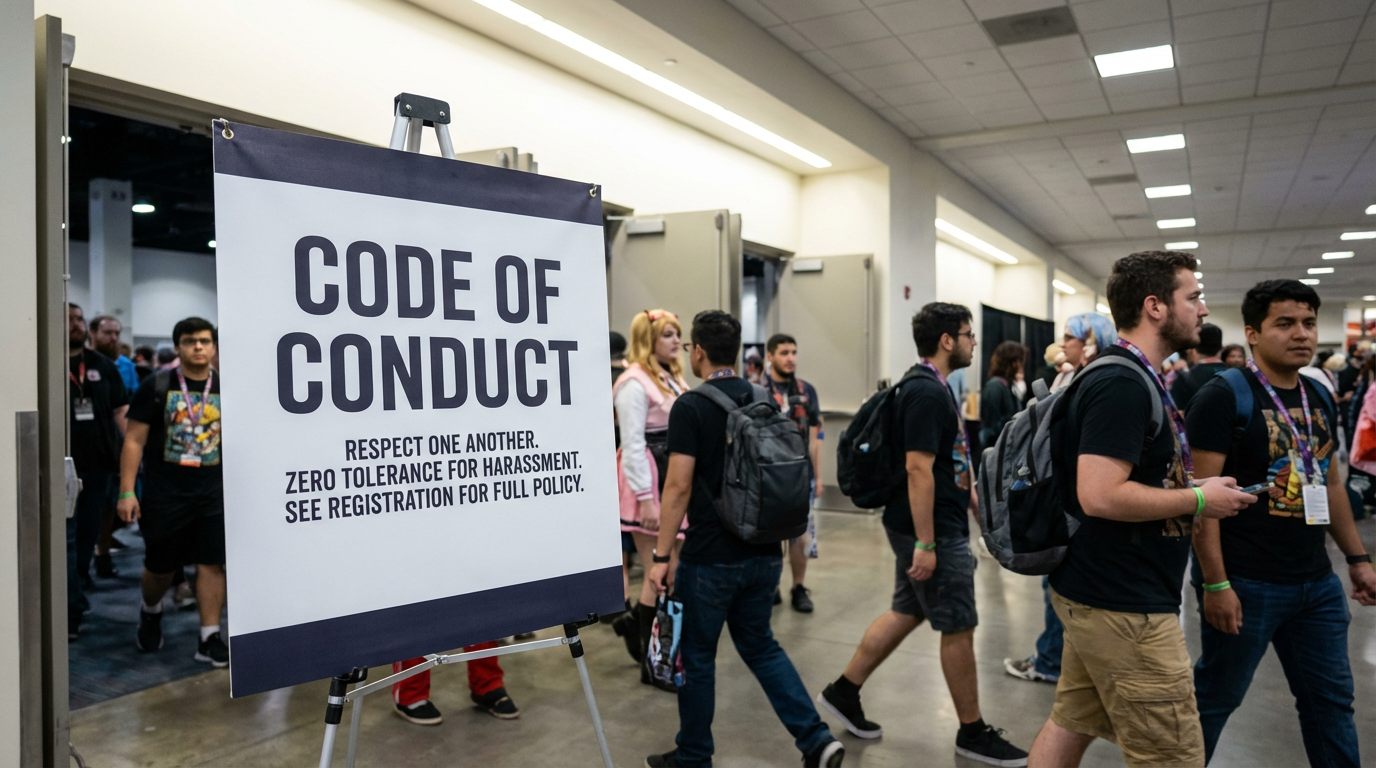
A freely available Conference Code of Conduct template, adopted by over a hundred organisations, specifically states that sponsors should not use sexualised images and that booth staff should not use sexualised clothing, uniforms, or costumes. The templates are there. The frameworks exist. The photography industry just hasn't adopted them.
And here's the irony that really gets me: photography is the one industry where the relationship between a camera and a human subject is the entire point. We should understand the ethics of looking at people through a lens better than anyone. Yet we're behind gaming conventions and tech expos when it comes to protecting the people in front of our cameras.
What I think needs to happen
I'm not writing this to shame anyone or to suggest that every photographer at a show is behaving badly. Most aren't. Most are there to learn, to practise, to enjoy the event. And I genuinely understand the self-consciousness that comes with stepping up to a shooting bay in front of other people. It can feel awkward. You might not know what to say. That's completely fine.
But at the very least, say thank you. Acknowledge the person who's been standing there all day giving you their time and energy. That small thing matters more than you might think.
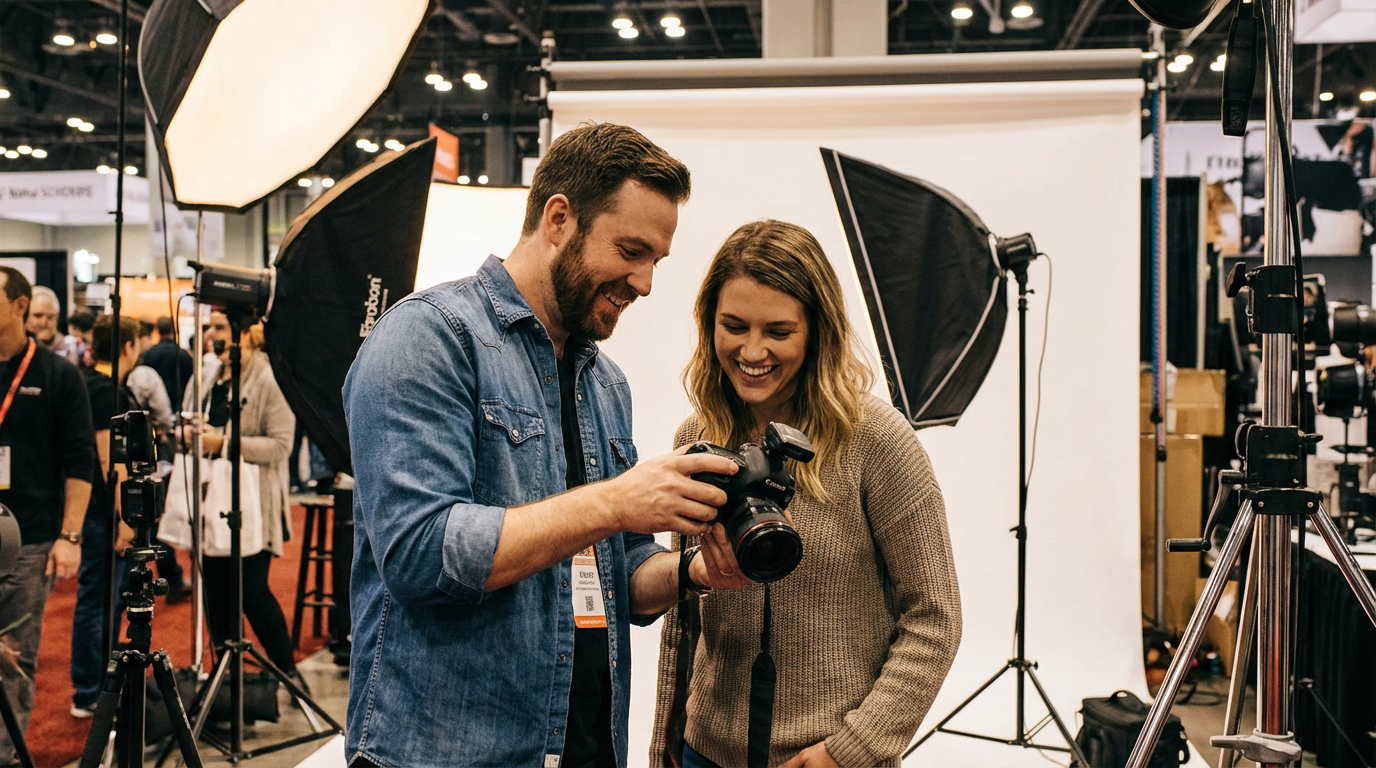
Beyond that, I think the industry needs to step up properly. Photography shows could adopt attendee codes of conduct tomorrow. The templates exist and they're freely available. UK professional bodies like the MPA, RPS, BIPP, and SWPP could develop specific guidelines for photographer-model interaction at events, going beyond generic professionalism language to address the concrete behaviours that models consistently report. Event organisers could provide briefings for people using interactive shooting bays, setting clear expectations around consent, communication, and basic respect. The Magnum Photos code demonstrates that detailed, enforceable standards are entirely achievable.
Models at photography shows are professionals. They deserve professional treatment. They deserve to be spoken to, not just photographed. They deserve to have their boundaries respected, their physical comfort considered, and their basic humanity acknowledged, and when something about a person's behaviour at a shooting bay gives you that uneasy feeling in the pit of your stomach, the kind where you watch them check the back of their screen and walk away and you think, "What was that actually about?", the industry needs structures in place that mean someone can act on that concern.