musings

The Rebellion Against Perfect Photos

I spent some time recently looking into what is actually happening with photography trends. I wanted to know if the use of mobiles phone for photography is as popuar, or if there is some kind of shift happening beneath the surface.

What emerges is pretty interesting. There is a clear movement building, especially among younger shooters and enthusiasts, that looks a little like a quiet rebellion against the smooth, hyper-processed default of modern tech.

The problem with perfection

We have reached a point where smartphone cameras are technically incredible. You take a photo with a recent iPhone or Google Pixel and the computational photography stack goes to work: it lifts the shadows, sharpens the details and nudges the colours into what the algorithm thinks "looks good".

The result is often a technically impressive image. But that is exactly where some people are starting to feel a disconnect. The photos can look a bit clinical or interchangeable, and because the software is doing so much of the heavy lifting, many images start to share the same ultra-clean, algorithmic look.

The "digicam" comeback

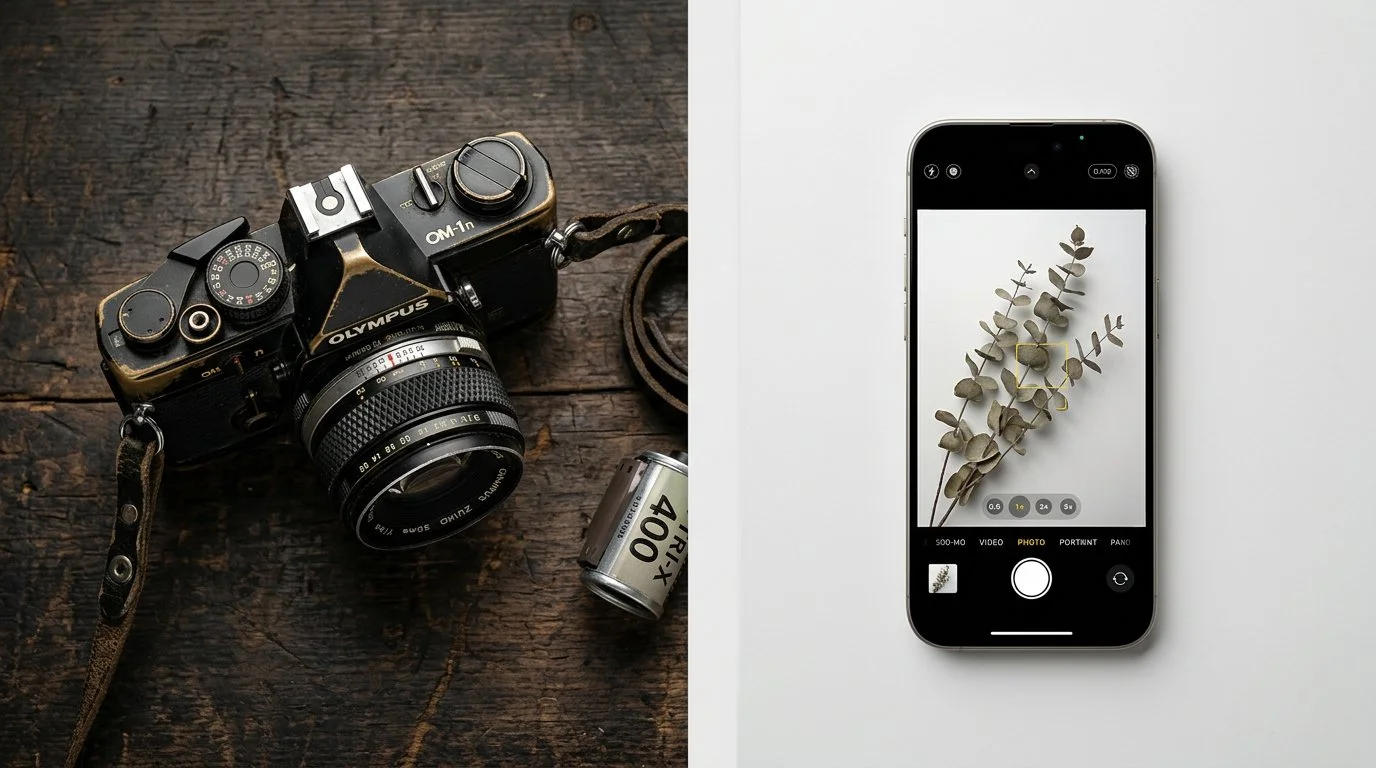
This is the part that feels like pure joy. In response to that polished phone aesthetic, there is a noticeable movement toward embracing "imperfection" again. Gen Z and millennials in particular are digging through drawers, charity shops and eBay listings for those compact digital cameras from the early 2000s: the old Canon IXUS and Sony Cyber-shot style point-and-shoots that many people stopped using years ago.

They want the grainy files, the harsh on-camera flash, the slightly off colours and limited dynamic range. What used to be dismissed as "low quality" from those early sensors now feels more authentic and nostalgic than the hyper-processed output of a flagship phone, especially when shared as "digicam" photo dumps on social platforms.

The need to disconnect

There is another layer to this as well, and it is not just about the look of the photos. It is about the device you are holding in your hand. Shooting with a phone means you are always one notification away from a distraction; you go to photograph a sunset and end up answering a work email or scrolling through Instagram.

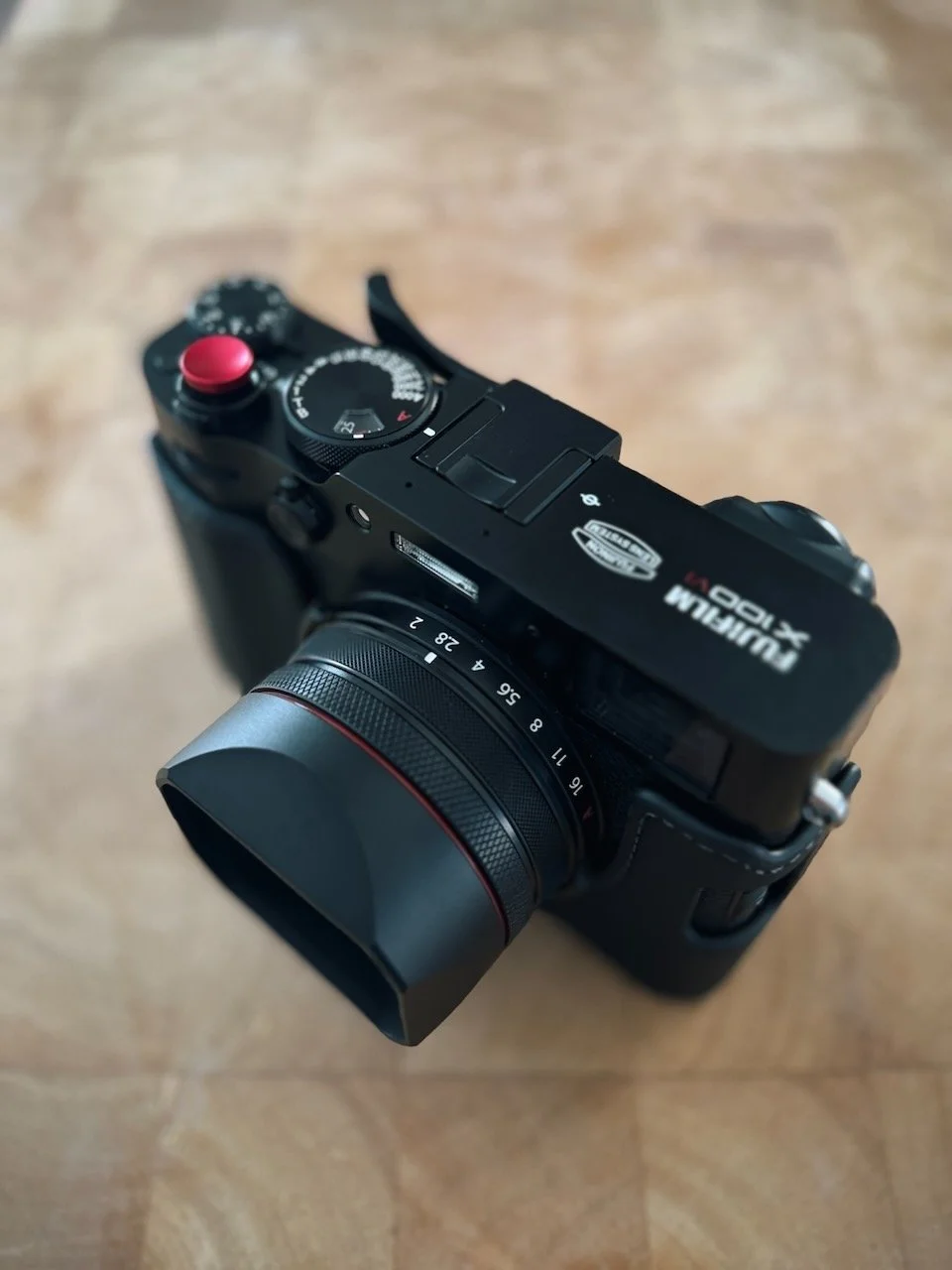
In contrast, a dedicated camera gives you a single, focused purpose. There has been a strong surge in interest for compact enthusiast cameras like the Fujifilm X100 series and the Ricoh GR line, with demand for models such as the X100VI and GR III at times outstripping supply and creating waitlists or periods of scarcity. People are actively seeking a device that just takes pictures, so they can stay in the moment without the constant digital noise of a smartphone.

So what does this mean?

Mobile photography is not going anywhere. Smartphones still dominate the sheer number of photos taken and remain unbeatable for convenience and quick video capture. But if you feel bored with your photography or find your images starting to look a bit sterile, you are very much in step with a wider mood.

The most interesting shift right now is not about the latest sensor spec or the smartest AI mode. It is about getting back to basics: choosing a camera that slows you down just enough to notice what you are doing, and being okay with a bit of friction and imperfection in the process. That might mean a premium compact, or it might simply mean rescuing an old digicam from the back of a junk drawer and giving it a second life.

Why I Love AI ... and Why I'm Still the Boss 😎

When I think back to the not-too-distant past, it's wild how much has changed. An editing task that used to take me thirty minutes (hair selections, cloning, backdrop cleanup) now takes about thirty seconds; and THIS is why I'm excited about what AI brings to the party.

AI: The Best Assistant I Never Had to Train

Look, nobody got into photography because they dreamed of removing sensor dust or spending three hours meticulously masking flyaway hairs. That stuff isn't the art. It's just the cleanup crew work that has to happen before we get to make our magic.

And honestly? AI is brilliant at that stuff.

Think of it this way: AI handles the grunt work so I can focus on the vision. It's like having an incredibly fast, never-complaining assistant who's amazing at the boring bits and then steps aside when the real creative decisions need to be made.

Oh and those decisions that need to be made? Those are still mine.

Where AI Stops and I Begin

There's a line, though, and it's one I think about a lot.

AI can smooth skin, relight faces, swap out skies. It can create a technically "perfect" image in seconds. But here's the thing: perfect isn't always interesting. Sometimes those ultra-polished images feel a bit ... lifeless. Like they're missing something human.

The magic happens in the choices we make. The colour grade that shifts the whole mood. The decision to keep a little texture in the skin because real people aren't porcelain. The way we balance light and shadow to tell the story we want to tell.

That's where our style lives. That's the part AI can't do because it doesn't have taste, intuition, or a point of view.

It's a tool. A really good tool. But we’re the one holding it.

Getting My Life Back

The biggest win isn't just sharper images or cleaner backgrounds. It's time.

AI is giving me hours back. Hours I used to spend in my office, squinting (I’ve now got new glasses) at a monitor, doing repetitive tasks that made me question my life choices.

Now I can use that time for the stuff that actually matters: shooting more personal projects, experimenting with new techniques, or better still, spending time with my wife and friends. Making memories instead of just editing them. Living the life that's supposed to inspire the work in the first place.

We shouldn't fear these tools. We should embrace them (smartly) so we can get back to doing what we love.

Where Do You Stand?

I'm curious how you're navigating this shift.

Are you using AI tools to speed up your workflow? Or are you still figuring out where the line is between "helpful assistant" and "too much automation"?

I'd love to hear how you're finding the balance in the comments below.

How AI is Saving 🛟 Photography by Killing it 💀

I've been scrolling through photo forums lately, and the panic is everywhere. Every day brings a new AI model that can generate hyper-realistic portraits, relight scenes after the fact, or conjure landscapes no human has ever visited.

Everyone's asking: "Is this the end of professional photography?"

After watching the industry closely and digesting the patterns, I've come to a conclusion that might surprise you.

We're not witnessing the death of photography. We're witnessing a correction, one that might actually save it.

The Middle Is Collapsing

For twenty years, the barrier to entry for "professional" photography has been dropping. Digital cameras made it easier to learn. The internet made it easier to find clients. A massive middle class of working photographers emerged: people shooting corporate headshots, basic product photos, standard real estate listings.

This is where AI hits hardest.

If a business needs "a diverse, happy team in a modern office" for their website, they don't need a photographer anymore. They can generate it in thirty seconds for pennies. If your primary value is owning a nice camera and delivering sharp, well-exposed images, the machines can do that faster and cheaper.

The "technician" photographer is becoming obsolete.

The New Professional: Selling Truth, Not Pixels

Here's what's interesting: the industry isn't just shrinking. The definition of "professional" is fundamentally changing.

In a world where perfect imagery is free and instant, we're shifting from an Image Economy to a Trust Economy.

The photographers who survive won't be paid for technical skill alone. They'll be paid for authenticity and accountability, for being present when it mattered.

Where does that happen?

Weddings and Events: A bride doesn't want an AI-generated image of her father crying. She wants her father crying at her wedding. The value isn't the lighting. It's the irreplaceable proof that the moment existed. AI can't witness anything.

Photojournalism: As deepfakes multiply, the value of a trusted human eye actually increases. News organizations need someone who can vouch for what really happened. The photographer becomes a verifier.

High-Stakes Commercial Work: Nike might use AI for backgrounds, but when they're sponsoring an athlete, they need a real photo of that person wearing that shoe. Legally. Ethically.

To stay professional, you can't just be a picture-taker anymore. You're either a creative director who uses AI to accelerate your vision, or you're a trusted witness in situations where truth matters.

The Vinyl Renaissance

So what about everyone else?

This is the liberating part … we get to do it because we love it.

Think about vinyl records. Digital streaming is more efficient, cheaper, and technically superior, yet vinyl sales are surging. Why? Because people love the ritual. The tangible object. The imperfections. The experience.

Photography is heading in the same direction.

Typing prompts into a computer is efficient, but it can never and will never replace the experience. Waking at 4 a.m. to hike a mountain (hoping the sunrise hits just right) is an adventure. Developing film in a darkroom is magic. Approaching a stranger for a portrait is human connection.

The future of photography, for most of us, won't be about hustling or undercutting competitors on price; it'll be about the joy of creation itself.

What's Left

The industry is shedding its commercial bloat. The middle ground is gone. What remains are two groups: highly specialised professionals chasing truth, and passionate hobbyists chasing light … and both living an experience.

Personally? I'm more than okay with that reality. What about you?

The Return of Intention: The Camera Comeback! 📷

It seems counterintuitive, perhaps even backwards. We walk around with incredibly powerful computers in our pockets, equipped with camera systems backed by billions of pounds of R&D and AI processing. These devices have democratised photography on an unprecedented scale. In recent 2025 data, smartphones capture around 92.5% of all pictures taken globally, leaving only 7.5% to conventional cameras (PhotoAid) (ElectroIQ). In the war for convenience, the smartphone has won decisively.

The Pivot

But if mobile photography is the undisputed champion of convenience and technical prowess, why are we seeing significant cracks in its dominance? Why, in an era of hyper-advanced phone sensors, are Gen Z buyers scouring eBay for 20-year-old, low-megapixel Canon PowerShots, and why are modern, retro-styled cameras like the Fujifilm X100VI so popular that waiting lists and intermittent shortages have persisted well into 2025 (Digital Camera World) (Yahoo)? Something fascinating is shifting in the photographic landscape: a cultural counter-movement away from frictionless, instant capture toward something slower, more deliberate, and more tangible.

Craving Friction in a Seamless World

This resurgence of traditional cameras - ranging from vintage "digicams" to high-end mirrorless systems - is not just a passing fad. It reflects a psychological response to increasingly automated, AI-mediated lives, where many people feel over-optimised and under-expressed (Passport Photo Online). Cultural reporting and social trends show younger users embracing tools that feel imperfect, limited, and more human in how they render the world.

1. The Revolt Against AI Perfection

Modern smartphone cameras rely heavily on computational photography and AI to render a "perfect" image instantly: enhanced skies, lifted shadows, and smoothed skin by default (Fortune Business Insights). For many - especially a generation raised entirely on screens - this perfection can feel sterile and inauthentic, feeding fatigue with the "over-processed" look.

This sentiment has helped fuel a revival of early-2000s point-and-shoot digital cameras, where users actively seek harsh flash, grainy low-light performance, and unpolished color as part of a more "real" aesthetic. In line with this shift, compact camera sales and shipments in Japan climbed again in 2024 after years of decline, marking the first clear rebound in that segment in roughly seven years (PetaPixel) (AI-AP).

2. The Tactile Rebellion

Humans are tactile creatures, and many are growing weary of tapping glass screens to perform every function in their lives. Cameras that emphasize physical controls - shutter speed dials, aperture rings, ISO knobs, and mechanical shutters - turn photography back into a physical craft rather than just another app interaction (FujiX Weekly). Recent financial and industry reports highlight strong demand for enthusiast-focused, retro-styled models like the Nikon Zf, which has contributed meaningfully to Nikon's imaging profits and unit growth in 2024-2025 (The New Camera).

3. The "Single-Purpose" Digital Detox

Perhaps the most profound insight is that the phone is simply too good at too many things. The moment you take a photo, you are milliseconds away from an email notification, a message, or the urge to edit and post instantly on social media, collapsing creation and distraction into the same gesture. A dedicated camera does essentially one thing, and picking it up creates a small "pocket of time" in which attention narrows to seeing and composing, separating the act of photographing from the noise and incentives of the broader internet (ElectroIQ).

The Takeaway

The shift back to traditional cameras is not primarily about technical image quality. In many measurable respects, the phone in your pocket may outperform the vintage digicam being bid up online, from dynamic range to autofocus intelligence. This movement is about mindfulness: embracing a bit of friction, accepting imperfections, and reclaiming the feeling that you - not an algorithm - made the photograph, signaling a genuine return of intention to photography.

References

  1. PhotoAid - Mobile Photography Statistics

  2. ElectroIQ - Mobile Photography Statistics

  3. Yahoo - Compact Cameras Firmly Back in Spotlight

  4. Digital Camera World - Compact Cameras Are Firmly Back

  5. Passport Photo Online - Mobile Photography Trends

  6. PetaPixel - Camera Sales Surged in Japan

  7. AI-AP - Sales of Compact Cameras in Japan

  8. Fortune Business Insights - Computational Photography Market

  9. FujiX Weekly - Why the Upcoming Nikon Zf Won't Be a Fujifilm Killer

  10. The New Camera - Nikon Imaging Business Booms

  11. ElectroIQ - Camera Statistics

🚀 AI: Creative Leap, NOT Deception

The headlines are full of outrage: AI is ruining photography, destroying trust, and spreading lies. The critics claim that generative tools are the death knell for visual truth, weaponizing deception on a scale we've never seen.

But let's pause. This argument is fundamentally flawed. It misdiagnoses the problem and unfairly demonizes the most powerful creative tool invented in a generation.

AI isn't the origin of the lie; it's the radical acceleration of the human desire to tell a more compelling story.

The Real History of "The Lie" in Photography

To claim that AI introduces deception to photography is to ignore the entire history of the medium. Visual manipulation has always been an inherent part of the creative process.

Consider the foundation of photojournalism: narrative construction.

The "Migrant Mother" (1936): Dorothea Lange's iconic image is hailed as a moment of truth, yet she meticulously constructed it. She cropped out the husband and teenage daughter to create a solitary, suffering figure. She physically directed the children to turn away. This wasn't a lie about poverty, but it was a masterful, intentional editing job designed to maximize emotional impact. It was truth made more powerful through manipulation.

"Valley of the Shadow of Death" (1855): During the Crimean War, Roger Fenton is believed to have literally moved cannonballs onto the road to make the scene look more dramatic and dangerous. The technology was primitive, but the intent to shape reality for a better picture was exactly the same as today's AI tools.

"The Falling Soldier" (1936): Robert Capa’s famous war photo is widely accepted as having been staged to capture an image of heroism and death that was too fleeting or dangerous to capture authentically.

These historical examples show that photographers have been physically arranging reality, staging scenes, and using darkroom techniques to tell the story they wanted to tell for over a century. The core issue has never been the camera or the software; it has always been the editorial judgment of the person behind it.

The Crop Tool Was Always More Dangerous Than AI

We also must remember the power of basic, low-tech deception. Long before generative fill, simple techniques were used to create outright political and social lies:

Intentional Cropping: The infamous photo of the toppling of the Saddam Hussein statue in 2003 was widely published using a tight crop to imply a massive, cheering crowd. The reality, revealed in a wide-angle shot, was an almost empty square. A simple crop created a massive global political narrative that contradicted the facts on the ground.

Perspective Tricks: The photo appearing to show Prince William making a rude gesture was simply a trick of perspective, hiding fingers to create a completely false narrative of aggression.

These are not complex manipulations. They are intentional deceptions using the most basic tools of photography: angle and crop. If simple tools can be used to propagate such significant lies, why is the focus solely on AI?

AI: The Ultimate Creative Democratizer

The fear surrounding AI is largely rooted in its speed, scale, and accessibility, not its capacity for invention.

AI is not primarily a tool of deception; it is a profound creative liberation.

  1. It Democratizes Vision: AI allows a person who cannot afford expensive equipment or complex training to visualize concepts instantly. It lowers the barrier to entry for creative expression to the point of a text prompt.

  2. It Expands Possibility: For professional photographers and artists, AI is not a replacement but an enhancer. It can instantly remove unwanted elements, seamlessly extend a scene, or realize complex conceptual ideas that would have previously taken days or weeks of painstaking work.

  3. It Forces Honesty: The very existence of perfect AI fakes means the public must now learn to treat all images, even traditional photos, with a new level of healthy skepticism. This shift forces better media literacy and demands higher ethical standards from those who publish images.

The problem is not the tool that can generate a manipulated image; the problem is the person who chooses to present that manipulated image as an unvarnished, factual truth. Blaming AI for deception is like blaming a pen for writing a lie. The pen is merely a tool.

Ultimately, AI is forcing us to acknowledge the truth about photography: it has always been an art of subjective framing, editing, and narrative construction. The ethical debate must move away from demonizing the technology and focus instead on demanding transparency and integrity from the people who use it.

Finally set up my Linktree Page 😃

So a couple of days ago I finally got round to setting up my Linktree Page, having decided to make the move from Biosite which I find limiting … and a little clunky.

Here’s my unique URL: linktr.ee/glyndewis

But … What is Linktree ?

In today’s digital world, managing multiple online profiles and content can be overwhelming. That’s where a Linktree comes in with a simple, effective way to organise and showcase all your important links in one place.

Linktree is a free (or premium) platform that allows you to create a personalised landing page with multiple clickable links.

Instead of sharing numerous URLs across different social media bios, email signatures, or websites, you can share just one Linktree URL, and when people click it, they’re directed to a page that displays all your relevant links prominently … all in one place.

Why Use a Linktree?

  • Centralised Access: Gather all your online content: social media profiles, blogs, shops, portfolios, videos etc in one easy-to-navigate page.

  • Save Space: Perfect for platforms with character limits, like Instagram bios.

  • Enhance Engagement: Direct followers precisely where you want them, be it your latest YouTube video, online store, or newsletter sign-up.

  • Professional Appearance: Make your online presence look organized and polished.

Who Can Benefit?

  • Creators and Influencers

  • Entrepreneurs and Small Business Owners

  • Artists and Musicians

  • Anyone with multiple online platforms looking for a convenient way to share their content.

Getting Started

Setting up your Linktree is straightforward: sign up, customize your profile, add your links, and share your unique Linktree URL. You can even customize the appearance to match your branding.

Final Thoughts

A Linktree simplifies the way you connect with your audience by providing a one-stop link that showcases everything you do. It’s a powerful tool to boost your online presence and make navigation easier for your followers.

Simples 😃

Delivering Iris Jefferies' Portrait from the 3945 Portraits Project

THIS is what it’s all about ❤️

Yesterday afternoon I drove to Bristol to deliver Iris Jefferies’ portrait and I couldn’t have wished for a better reaction …

So pleased too that Iris’ family got to see her portrait and Iris’ late husband David’s portrait as they appeared during the BBC’s VE80 Celebration Concert ( LINK )

2024 and the Magic of Friendship

This past year has been one for the books, and not necessarily in the way any of us saw coming. The unexpected happened, the dreaded, and where from that moment on everything seemed to hang in the balance, and you couldn’t help but wonder how things would ever feel okay again.

But somehow it has, and it is. The outcome is better than any of us dreamed because it hasn’t just met our hopes, its surpassed them and has made me realise that miracles really do happen, and no matter how dark things seem, you can’t stop believing.

I’m not avoiding saying exactly what this ‘thing’ was to be cryptic or aloof; it’s just private and it’s not for me to explain. That may or may not happen; it’s down to the person directly affected.

But if there’s one thing that carried us all through, it was keeping in regular contact (more than normal) and the time we spent together. This year has been a reminder of how important it is to surround yourself with people who lift you up in more ways than can be explained.

We’ve shared lots of creative times, where ideas have flowed as they always do when we’re together. Those moments were inspiring and energising, the kind of times that remind you why you love doing what you do.

But, what’s stood out even more has been the quality time we’ve spent together. The laughter, the conversations, the quiet moments of simply being there for one another—it’s those times that have truly made this year unforgettable.

Looking back, I’m struck by just how much our friendships mean. They’ve been the anchor through uncertainty, the light through dark times, and the spark that’s kept us moving forward.

This year has taught me that no matter what life throws at you, there’s strength in sticking together. There’s hope in believing things can get better, and that the outcome can not only be okay, but extraordinary.

So, to my friends: thank you for being my constant, my motivation, and my safe space.

To anyone else reading this, treasure the people in your life with whom you feel supported and inspired. Sometimes, simply being there for one another is the most important thing you can do.

I have a Print FOR SALE in a local Picture Framers 😃

Now THIS is a BIG DEAL for me because I’m primarily a Portrait Photographer and only started taking photographs of landscapes and seascapes during the Covid Pandemic … because I couldn’t take portraits.

So to now have a print FOR SALE in a local Picture Framers ( West Street Picture Framing in Axminster, Devon ) feels FANTASTIC 😃

This all came about just last week when I was with the owner of the Framers, Trevor Williams, as he very kindly gave up his own time to open on a day when ordinarily he’d be closed so that we could film him for my upcoming HOW TO PRINT course, showing how to put prints onto backing board for display and also how to put prints into a mount.

Now I’ve been very fortunate over the years to have had my images appear in magazines, books and on television but the thrill never decreases and seeing the framed print FOR SALE and on display in the shopfront window was such a good feeling.

I'd never considered selling prints because landscape and seascape is not something I’m known for because like I said I’m primarily a Portrait Photographer, so yeah it feels great that Trevor would suggest doing so; he also took care of everything with regards the printing and framing which unsurprisingly looks wonderful.

Of course the icing on the cake would be seeing it sell, so I’ll keep you posted 😉

*Check out my PORTFOLIO to see other examples of my Landcape / Seascape images

Times Square by Bert Monroy | I'll Treasure this FOREVER!

This I will treasure forever !

Loving having this VERY special print on the wall in my 'temporary' office ; "Times Square, New York" Drawn and Painted using Adobe Photoshop and Illustrator by my friend, the INCREDIBLE Bert Monroy …

It’s hard to put into words how much it means to have this ; an iconic piece of art created by Bert … someone I followed from Day 1 when first I started out using Photoshop. I’ve learned so much from him that I used back when I would do more compositing work but that are techniques I still turn to today when retouching my photography.

Having presented on the same stage as Bert and having travelled to present at different locations around the world with him, I am both honoured and blessed to call him a friend.

LIVE BROADCAST

To see a close up of “Times Square” have a watch of this recording of a LIVE Broadcast I hosted with Bert as my Guest where he zooms in and out showing all of the details and explains some of the techniques used to create the final piece …