

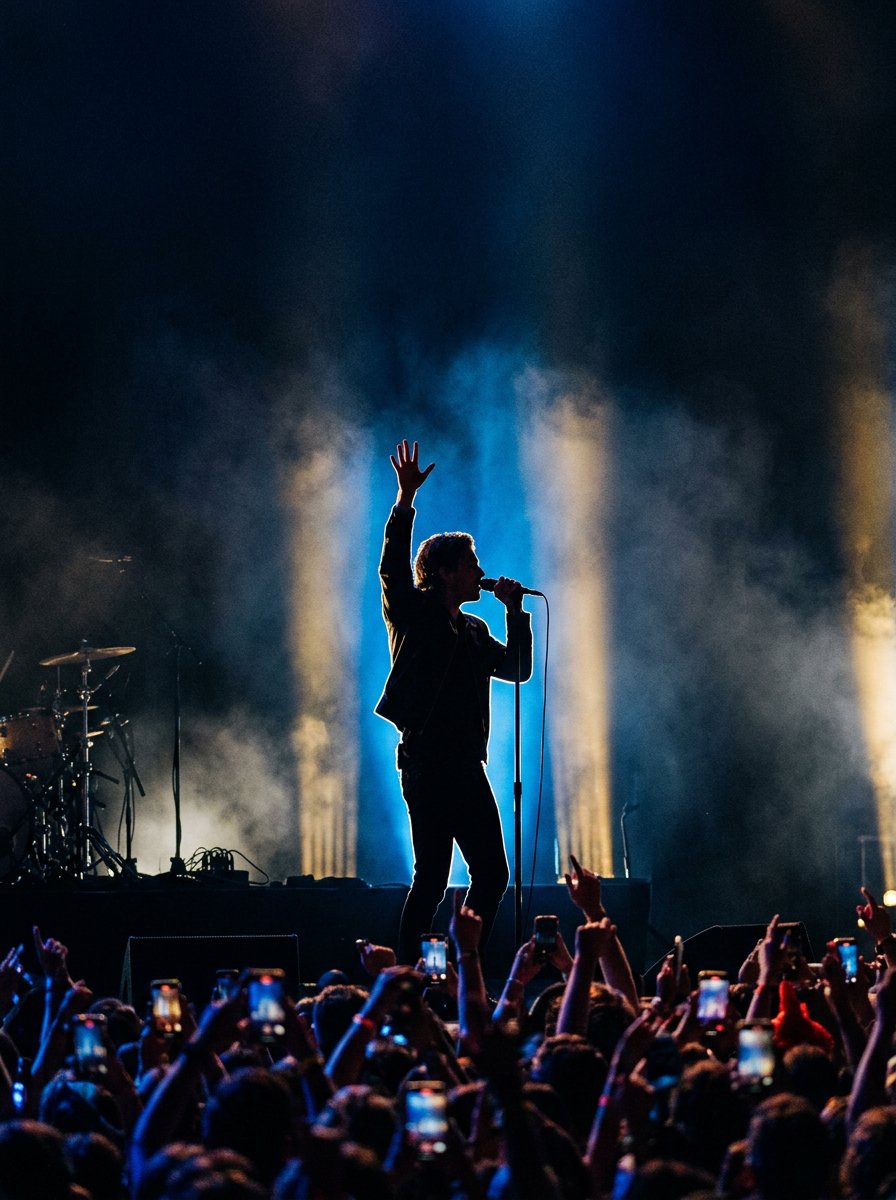
Concert photography is one of the most challenging and rewarding genres you can get into. Fast light, loud rooms, no second chances. But if you're willing to put in the work, it's also one of the most exciting. This guide, put together by community member Scott Diussa, covers the essentials to get you started.
Gear
You don't need a massive kit to begin. A DSLR or mirrorless body with a decent zoom will get you a long way. A 24-70mm or 24-105mm is your workhorse. Add a 70-200mm when you need reach (drummers, especially), and a wide option for tight spaces or dramatic environmental shots. In terms of aperture, f/2.8 or f/4 as a maximum gives you the best chance in low light, but don't let gear anxiety hold you back. Start with what you have.
Camera Settings
Stage lighting shifts constantly, and if you leave the camera in any kind of auto exposure mode it'll fight the light show rather than work with it. Manual mode is the way to go. Shoot RAW, always. The colour temperature at a gig is rarely flattering by default, and RAW gives you the latitude to fix it properly in post.
A solid starting point: 1/500s shutter speed, widest aperture available, and push the ISO until the exposure looks right. Don't underexpose to keep ISO low. Lifting shadows in Lightroom also lifts noise, and it's far messier than noise from a correctly exposed high-ISO file.
Getting Access
The most common question people ask is how to get into shows with a camera. The answer is straightforward: start small. Local venues, local bands. In most cases you don't need formal permission to photograph a smaller act, and small venues are actually harder to shoot than big ones. Bad light, cramped spaces, limited movement. Master those conditions and the bigger shows feel straightforward by comparison.
For larger shows you'll need a media pass, which means having a publication or media outlet to shoot for. That's a longer game, built on portfolio and relationships. Get the shots right at the small shows first and those conversations open up naturally.
Shooting Each Instrument
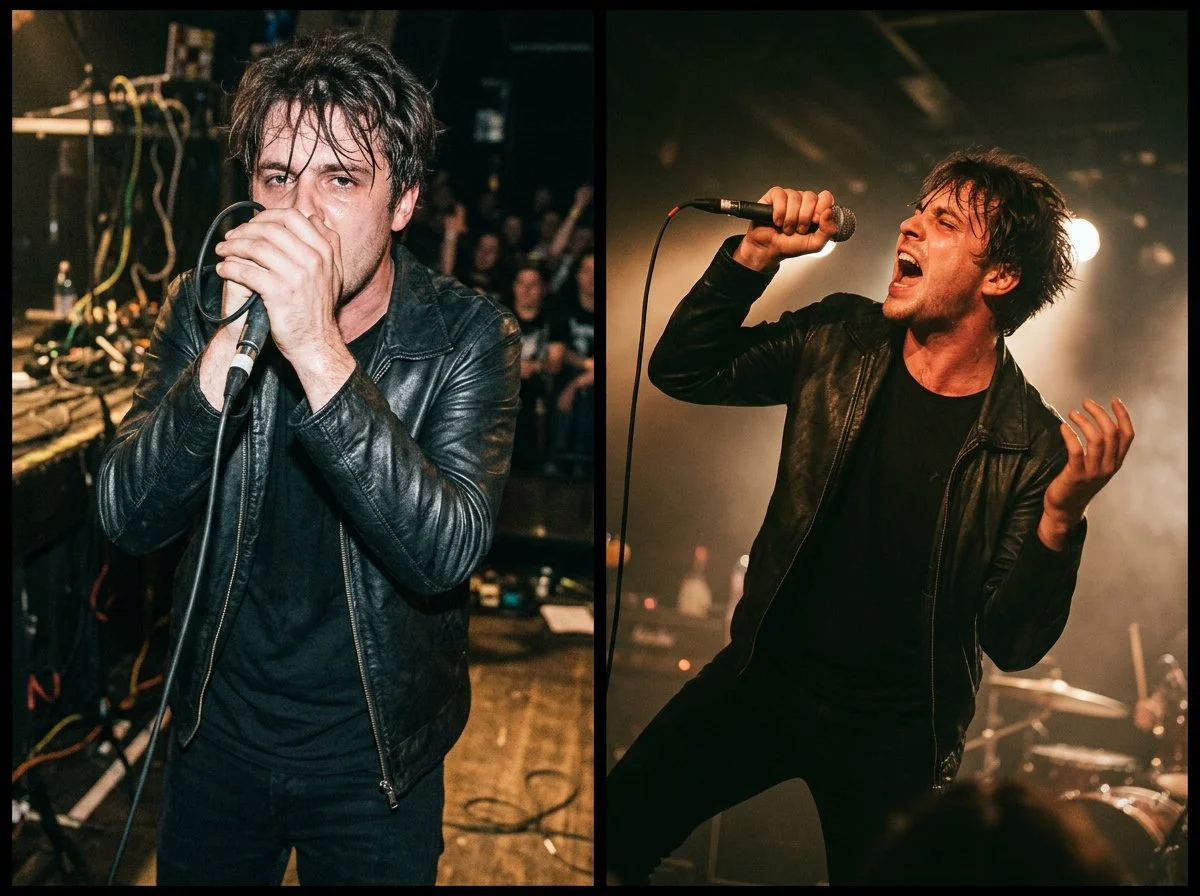
Every member of the band presents a different challenge. With singers, timing is everything. The best moments tend to come when they step back slightly from the microphone on a held note, which also naturally avoids the microphone shadow falling across their face. If you can learn the setlist beforehand, do it.
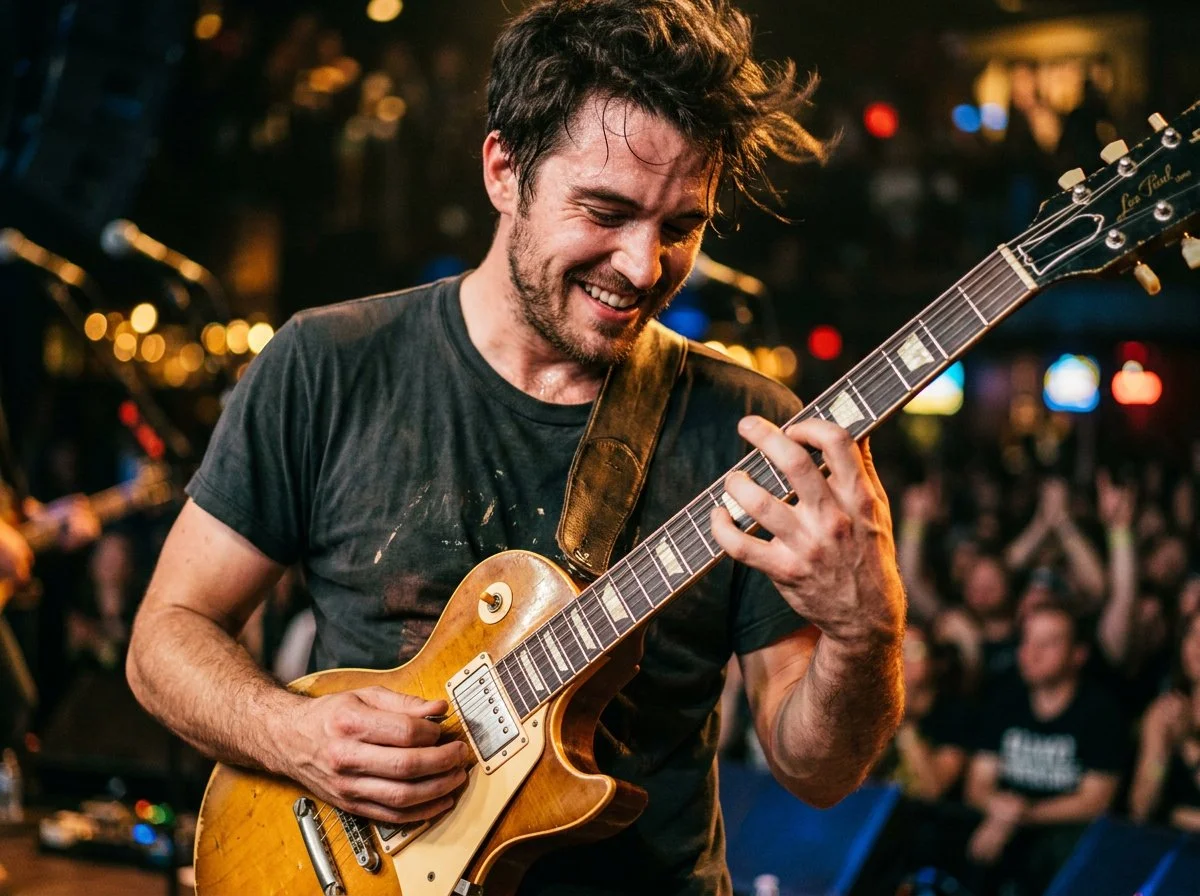
For guitar and bass, try not to cut off the headstock of the instrument. Think of it like cropping a wrist out of a portrait. Angles help a lot here. A lower shooting position or a slight tilt adds energy to what would otherwise be a flat frame.
Drummers are the hardest subject in the genre, full stop. You're usually shooting through cymbals, hardware, and kit stands. A 70-200mm helps you reach through the gaps. Use Eye Detection AF if your camera has it, shoot continuously, and keep that 1/500s shutter speed to freeze stick movement.
Editing and Sharing
You'll come back from a gig with a lot of files. Cull before you edit; go through everything and mark your picks before you touch a single slider. Be ruthless. The instinct is always to keep too many.
In post, focus on two things: face colour and exposure balance. Export full-resolution files for your archive, and 2000px watermarked versions for social.
When you share with the band or a PR contact, send your best 20 images. Not everything you shot. Twenty strong images that make the band look great. Tag the artist when you share on social media too; it builds the relationship and extends the reach of your work at the same time.
Enjoyed this? The full version of Scott's concert photography guide is available inside The Photography Creative Circle on Skool, where community members share knowledge, tips, and guides like this one across every area of photography. It's free to join.