

I've been scrolling through photo forums lately, and the panic is everywhere. Every day brings a new AI model that can generate hyper-realistic portraits, relight scenes after the fact, or conjure landscapes no human has ever visited.
Everyone's asking: "Is this the end of professional photography?"
After watching the industry closely and digesting the patterns, I've come to a conclusion that might surprise you.
We're not witnessing the death of photography. We're witnessing a correction, one that might actually save it.
The Middle Is Collapsing
For twenty years, the barrier to entry for "professional" photography has been dropping. Digital cameras made it easier to learn. The internet made it easier to find clients. A massive middle class of working photographers emerged: people shooting corporate headshots, basic product photos, standard real estate listings.
This is where AI hits hardest.
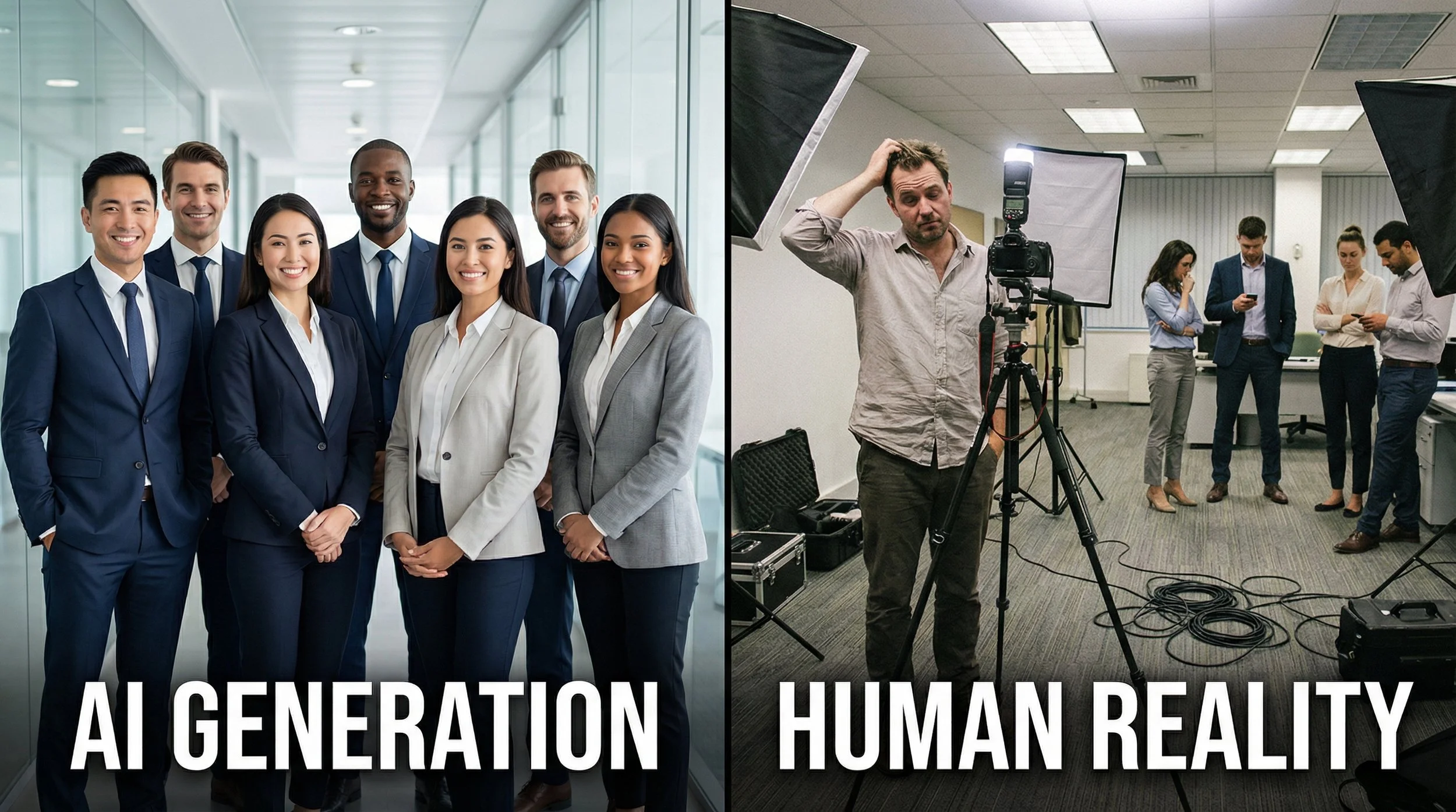
If a business needs "a diverse, happy team in a modern office" for their website, they don't need a photographer anymore. They can generate it in thirty seconds for pennies. If your primary value is owning a nice camera and delivering sharp, well-exposed images, the machines can do that faster and cheaper.
The "technician" photographer is becoming obsolete.
The New Professional: Selling Truth, Not Pixels
Here's what's interesting: the industry isn't just shrinking. The definition of "professional" is fundamentally changing.
In a world where perfect imagery is free and instant, we're shifting from an Image Economy to a Trust Economy.
The photographers who survive won't be paid for technical skill alone. They'll be paid for authenticity and accountability, for being present when it mattered.
Where does that happen?
Weddings and Events: A bride doesn't want an AI-generated image of her father crying. She wants her father crying at her wedding. The value isn't the lighting. It's the irreplaceable proof that the moment existed. AI can't witness anything.
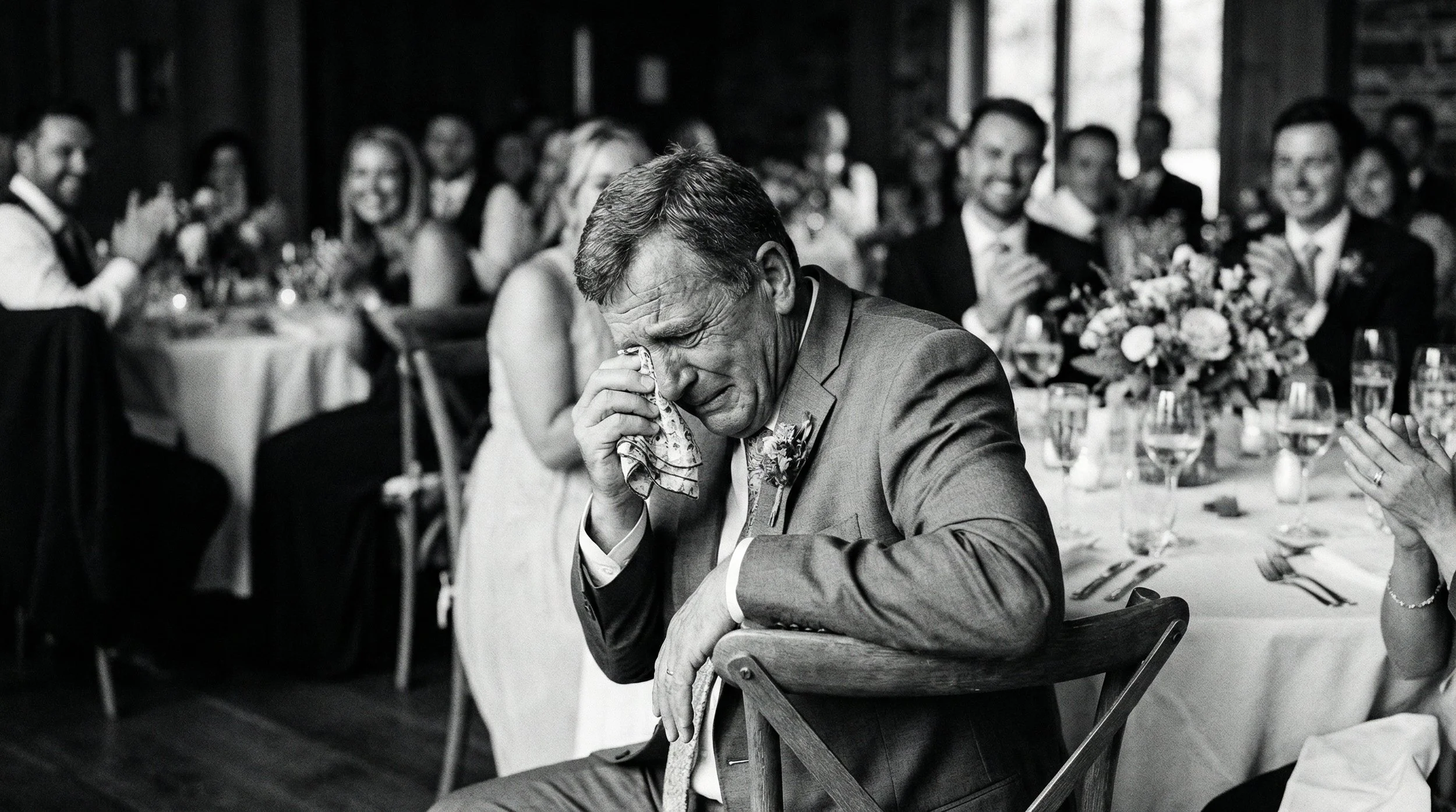
Photojournalism: As deepfakes multiply, the value of a trusted human eye actually increases. News organizations need someone who can vouch for what really happened. The photographer becomes a verifier.
High-Stakes Commercial Work: Nike might use AI for backgrounds, but when they're sponsoring an athlete, they need a real photo of that person wearing that shoe. Legally. Ethically.
To stay professional, you can't just be a picture-taker anymore. You're either a creative director who uses AI to accelerate your vision, or you're a trusted witness in situations where truth matters.
The Vinyl Renaissance
So what about everyone else?
This is the liberating part … we get to do it because we love it.
Think about vinyl records. Digital streaming is more efficient, cheaper, and technically superior, yet vinyl sales are surging. Why? Because people love the ritual. The tangible object. The imperfections. The experience.
Photography is heading in the same direction.
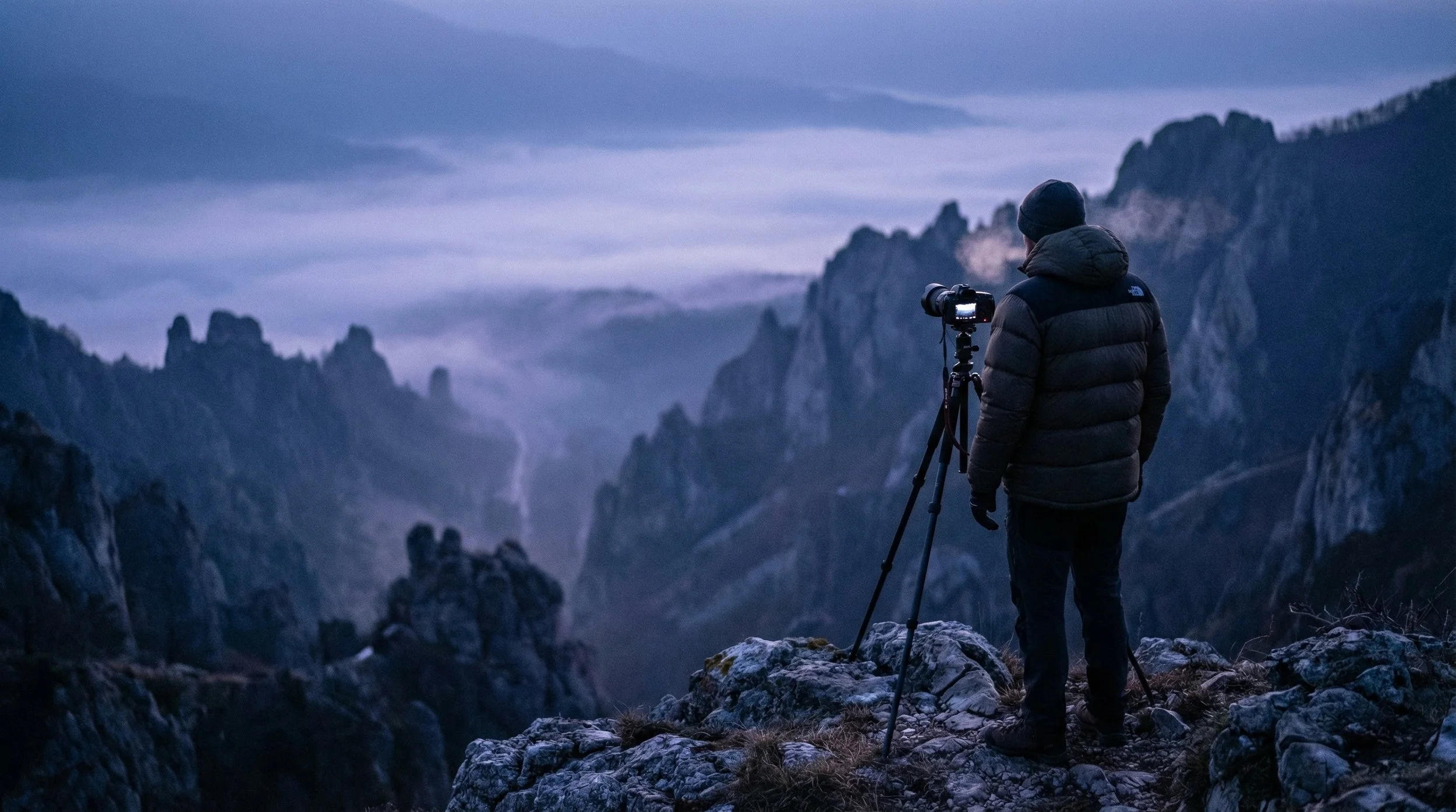
Typing prompts into a computer is efficient, but it can never and will never replace the experience. Waking at 4 a.m. to hike a mountain (hoping the sunrise hits just right) is an adventure. Developing film in a darkroom is magic. Approaching a stranger for a portrait is human connection.
The future of photography, for most of us, won't be about hustling or undercutting competitors on price; it'll be about the joy of creation itself.
What's Left
The industry is shedding its commercial bloat. The middle ground is gone. What remains are two groups: highly specialised professionals chasing truth, and passionate hobbyists chasing light … and both living an experience.
Personally? I'm more than okay with that reality. What about you?