Book Review

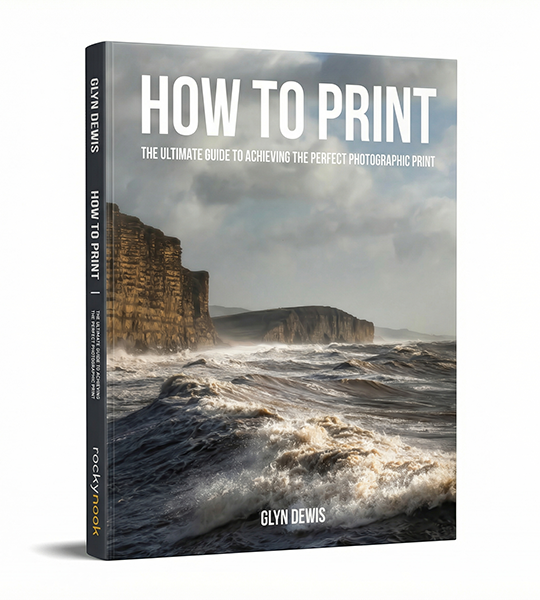
My How to Print - 17 Five-Star ⭐ Reviews on Amazon

Writing a book takes a lot of work. The planning, the preparation, the writing itself, working through all the proofs, making sure everything is right. Once you've submitted it, there's a waiting game while it comes together, and then when you finally see how it looks and you're happy with it, the next question is always the same: how is it going to be received?

So when I checked the Amazon pages for How to Print recently and saw that every single review on both Amazon.co.uk and Amazon.com was five stars, the feeling was one of pure relief and excitement. People had not only bought the book but had taken the time to sit down and write about their experience with it. As an author, you really couldn't wish for a better response than that.

As of October 2026, the book has 17 global ratings on Amazon, every single one of them five stars. That means a lot.

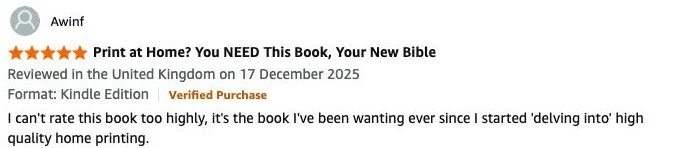
What's really moved me about the reviews is that they reflect exactly the problem I set out to solve. Awinf described the experience of trying to figure out home printing as "entering a dark maze," where you spend time, paper, ink and money chasing a solution only to end up with inconsistent or just plain poor results. Reading that, I thought: yes, that's it. That's precisely why I wrote the book. It was great to see that Awinf even posted a photo of their finished framed prints on the wall alongside the review, which is exactly the kind of thing that makes it all worthwhile.
Dave Handy put it simply: "Covers all that I needed to know. Expensive, but really good and well worth it." I appreciate that honesty! Photography books are an investment, and knowing people feel it's worth it genuinely means a lot.

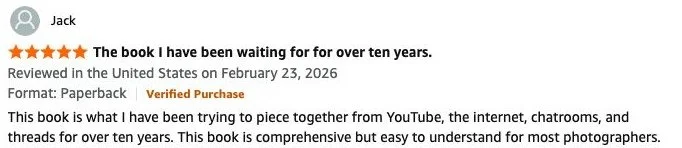
Jack in the United States called it "the book I have been waiting for for over ten years," saying it was everything he'd been trying to piece together from YouTube, forums and chatrooms for a decade. He mentioned that by page 12 he'd already learned something practical about connecting his monitor properly to improve colour accuracy. Knowing someone picked up something genuinely useful that quickly is a brilliant feeling.
Brian Nguyen said the book was very useful and that he really enjoyed and appreciated the expertise that went into it. Jean V, reviewing from Belgium, praised the explanations particularly around BenQ screens but noted they work just as well for other brands too, which is a lovely thing to read.

Joseph Taggart titled his review "Excellent resource for inkjet printing!! Glyn is the master!!!" which made me smile. C. D. Potter noted that the book works brilliantly alongside the video course as a way to follow up and reinforce what you've learned, and that's exactly how I designed the two to work together.
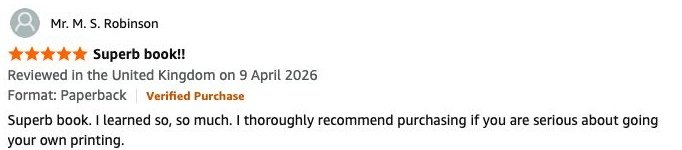
From Canada, John W. Copland said that anything I put together is a huge asset when tackling a subject with as many complexities as printing. From the UK, Mr M. S. Robinson said he learned "so, so much" and thoroughly recommends it to anyone serious about their own printing. A. Webb described it as everything you need to know about the complete process, explained in great detail. An anonymous Amazon Customer simply called it "yet another outstanding book by Glyn Dewis," which, honestly, I'll take.

Printing is something I'm deeply passionate about. There's nothing quite like holding a finished print in your hands, something that represents the full journey from pressing the shutter to a physical image on paper. Seeing readers say they're now getting the results they always wanted from their printing is the best outcome I could have hoped for.

That's EXACTLY why I wrote it.

👉🏻 You can find How to Print on Amazon here: ( LINK )
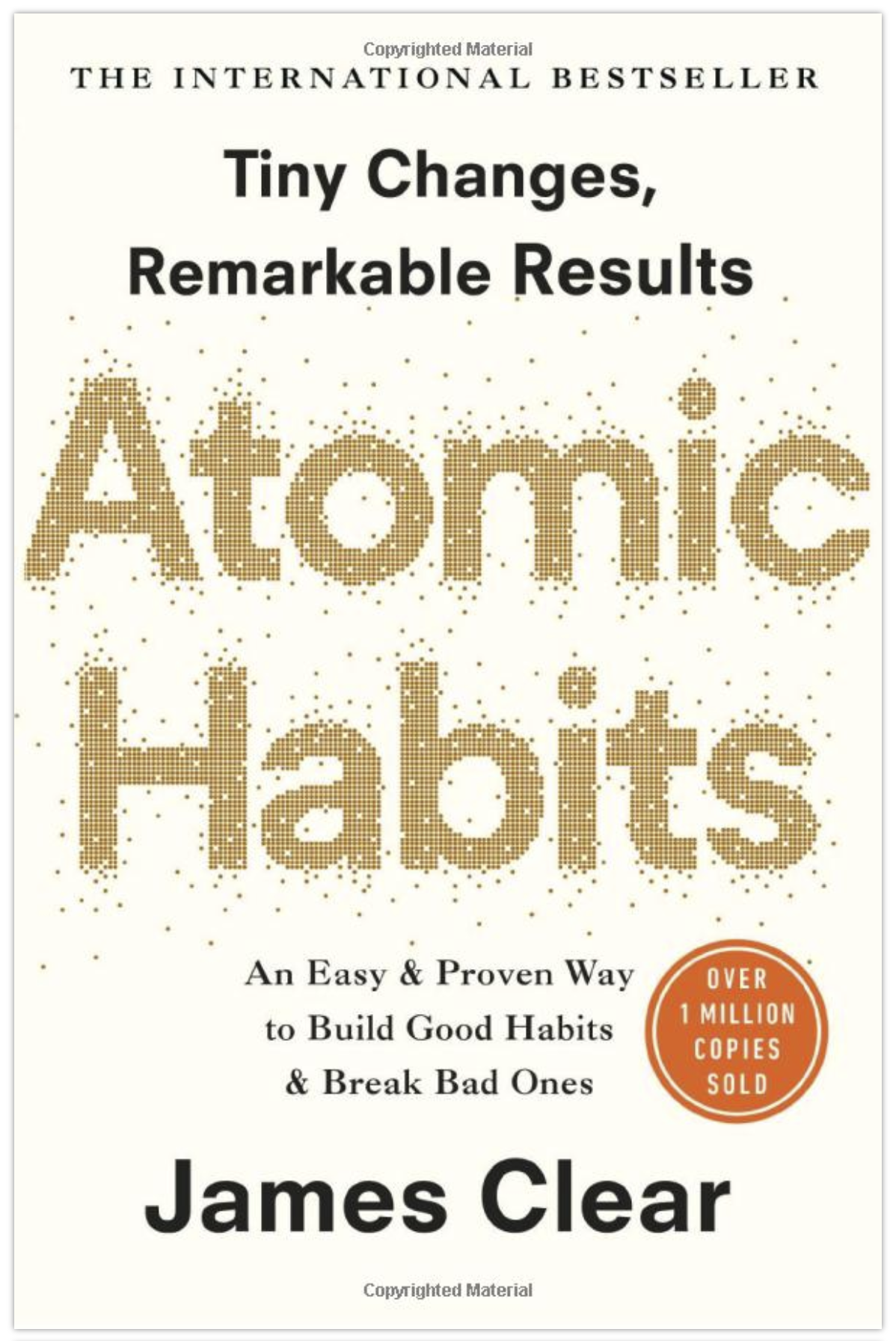
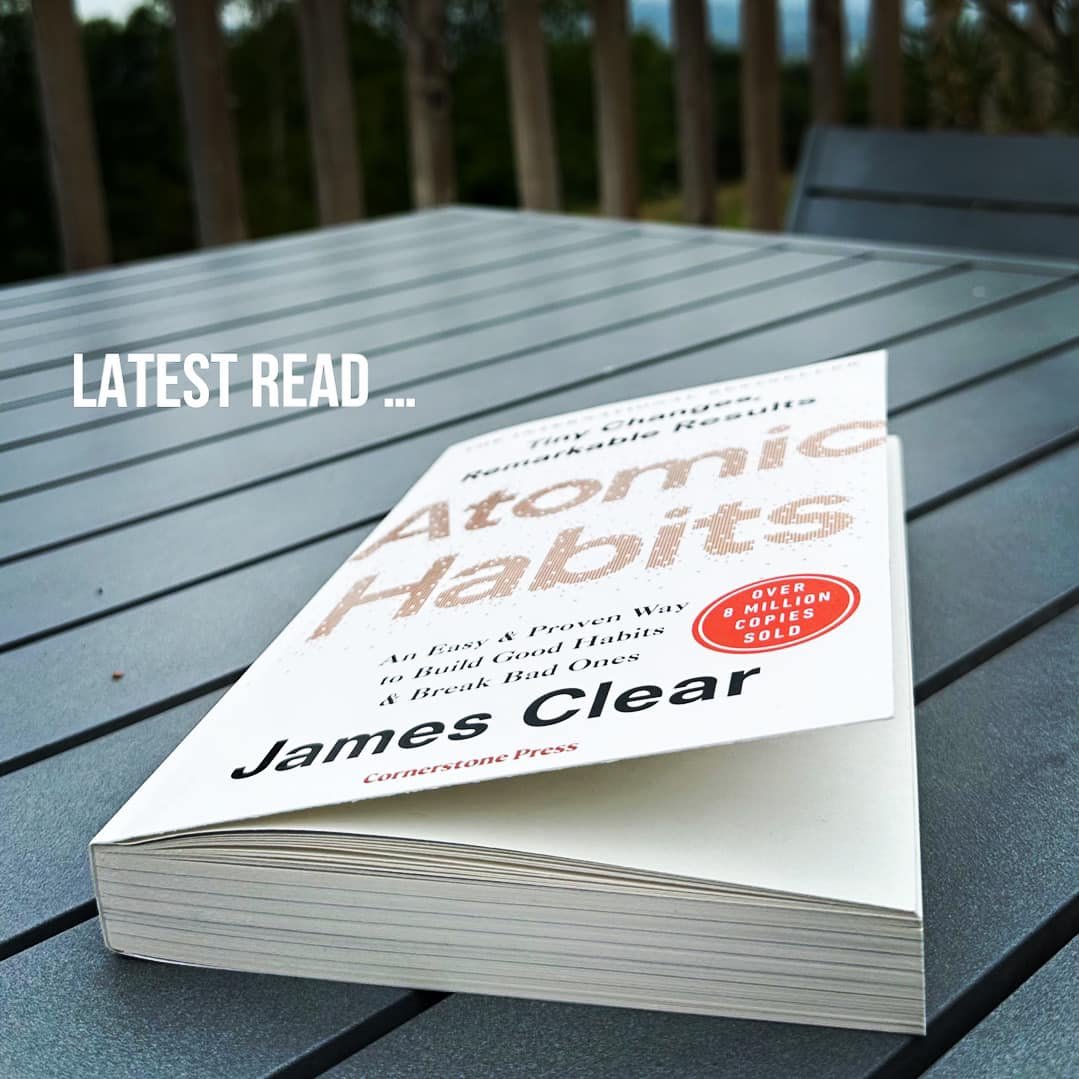
Book Review: "Atomic Habits" by James Clear

"Atomic Habits" by James Clear is definitely now one of my favourite books!

Atomic Habits is a powerful and insightful book that provides practical strategies for creating positive habits and breaking destructive ones. With a clear and engaging writing style, James demystifies the process of habit formation and guides readers on a transformative journey toward personal growth and productivity.

It seemed that on each and every page I found myself nodding in agreemnt or outwardly saying “Now that makes sense” or “I never thought of that”

So breaking the contents down, here’s some of the main key concepts and takeaways …

1. The Power of Tiny Habits:

James Clear emphasises the significance of small, incremental changes—what he calls "atomic habits." James encourages readers to focus on making small, manageable adjustments in their daily routines, as these compound over time to create significant and lasting results. In his own words, “By breaking down big goals into smaller, actionable steps, readers can develop a sense of momentum and build successful habits that endure.”

2. The Four Laws of Behavior Change:

James introduces the framework of the Four Laws of Behavior Change, which are cue, craving, response, and reward. By understanding how these laws interact, readers can design and shape their habits effectively. He guides readers to identify the cues that trigger their habits, the cravings that drive them, the responses they take, and the rewards they receive. This framework empowers individuals to modify their behavior and create positive habits while eliminating negative ones.

3. The Importance of Habit Stacking:

Habit stacking is a technique that involves attaching a new habit to an existing one. Clear explains that by linking a desired habit to an established routine, individuals can leverage the power of consistency and make habit formation more seamless. This approach eliminates decision-making and makes it easier to adopt new habits without relying solely on willpower.

4. The Role of Environment:

James highlights the influence of environment in shaping our habits. He suggests that individuals can optimise their environment to make desired behaviors more attractive and easily accessible. By making small adjustments, such as organising workspaces, removing distractions, or surrounding yourself with like-minded individuals, readers can create an environment that supports their desired habits and increases their chances of success.

5. Continuous Improvement and Identity:

Clear encourages readers to focus on the process of continuous improvement rather than solely fixating on the outcome. By embodying the identity of the person they want to become, readers can align their habits with their self-perception. Through consistent action and mindset shifts, individuals can reinforce their new identity and sustain positive habits for the long term.

Conclusion:

"Atomic Habits" by James Clear is an invaluable resource for anyone seeking to understand the science behind habit formation and leverage it for personal growth. Clear's practical strategies and actionable advice empower readers to make small, incremental changes that lead to profound transformations. By adopting the principles outlined in the book, individuals can break free from destructive patterns, cultivate positive habits, and ultimately achieve their goals.

"Atomic Habits" is a must-read for those looking to build a solid foundation for lasting change and maximise their potential for success. At no point did I find myself thinking this was all just clever wording and regurgitating what some many other books in the P.M.A. genre seem to do; quite the oppisite in fact … the contents, the principles, the suggestions are well explained, make total sense and effective.

Highly recommended.