
Sean Tucker was my guest on Sunday Night Live this week, and it’s one of those conversations I’ve not stopped thinking about since. We were both on the Wex Photo Video roadshow over the summer but never got the chance to sit down and talk properly while we were there, so this was the chance, and I’m really glad we took it, because it went somewhere very different to my usual interviews; hardly anything about settings or kit, and nearly all of it about why we take pictures in the first place.
A winding route in
Sean’s route into photography is about as unconventional as they come. In his twenties he was working for the church in South Africa, and because, in his words, the church doesn’t pay brilliantly, he started making little promotional videos for businesses on the side, so it was actually video before it was photography. He left the church around 2009 at thirty years old, with ten years sunk into one career and everything to start again.
A good friend told him that if he had to start from scratch, he might as well start with something he loved. What followed was at least three years of waiting tables while picking up bits of photo and video work, then a job as in-house product photographer for Yuppiechef, a kitchenware company in South Africa. After moving back to the UK in 2012 it was more product work, furniture this time, for around four years, then head of photography and video across Europe, the Middle East and Africa for the consultancy Oliver Wyman, which he was quick to point out mostly meant office headshots and talking-head interviews. His last full-time job was in 2018.
He’s self-taught as well, all of it from YouTube and blogs. He’d already done a psychology degree and four years of theology at seminary and couldn’t face going back to studying, which is a big part of why he started his own channel; it was a way of giving something back to the people coming up behind him. Being self-taught myself, that one struck a chord.
The why rather than the how
Everyone I spoke to while I was researching Sean said the same thing, that it’s his outlook people love. He’s happy to teach technique and give you the numbers if you want them, but he felt there was already plenty of that online and a real gap for people talking about why you’d pick up a camera at all.
He’s met so many photographers who’ve finally bought the camera and lens they wanted for years, watched a thousand tip videos on how to use it, and still have no idea what to point it at. That’s the bit he’s interested in. What have you got to say that only you can say, and why would you choose this subject over that one?
His own why is really specific. Having had partners and family members with severe anxiety, he wants whatever he makes, whether it’s a portrait, a film or something he’s written, to turn the volume down slightly on people’s anxieties about where they fit in the world. In his book The Meaning in the Making he uses a line from the pastor Frederick Buechner [CHECK: spelling], the gist of which is that you belong where your deep joy and the world’s deep hunger meet. Find the thing you love doing, then point it at something in the world that’s a bit broken.
Tea first, then the camera
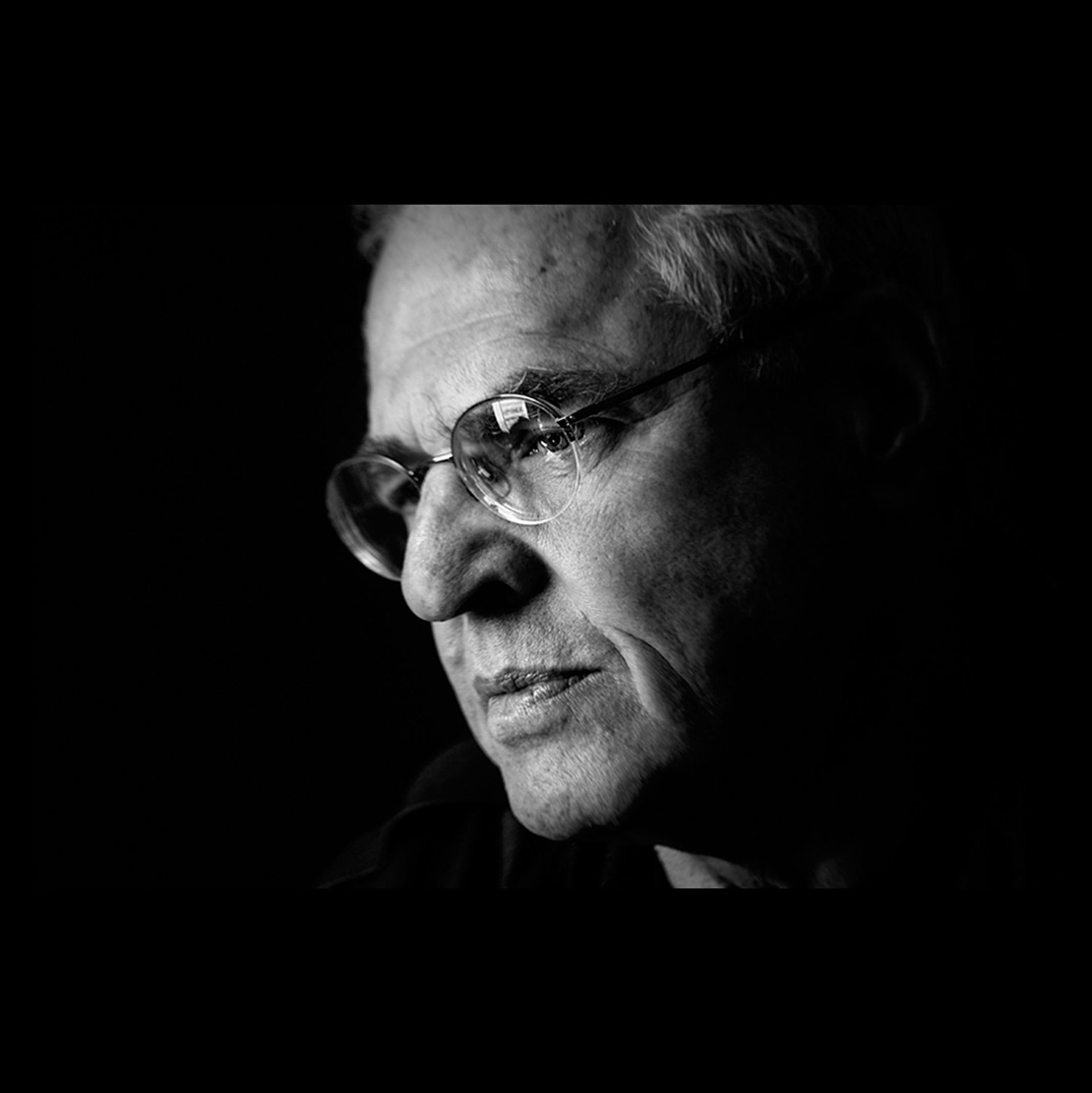
This is where I found myself nodding along, because his approach to portraits is so close to mine. It starts with a cup of tea or coffee in his little garage studio, chatting until that’s run its course, so that by the time the camera comes out you at least know who he is. He shows people the pictures as he goes and keeps it collaborative, but he’s upfront by email beforehand that his lighting is moodier and shadowier, it’s not everyone’s favourite, and if it’s not for you he’ll happily point you to someone else.
The bit I loved was a trick he stumbled on while shooting headshots for drama students in his flat in London [CHECK: which drama school; the transcript says “Ryder’s”]. One of them told him about an exercise where every student was given an animal to embody on stage, with no talking allowed, and they’d had to be a flamingo. From then on, whenever a session with someone from that class started to flag, he’d ask what their animal was, and suddenly they’d be laughing about having to be an elephant and the life came straight back behind the eyes. Find the thing someone loves and get them talking about it.
I was taught something very similar years ago, to imagine everyone you meet has four letters written on their forehead, MMFI, make me feel important. Get people talking about themselves and the things they care about, and they relax.
One light and the old painters
I asked where his look comes from, because like mine you won’t find anything happy clappy in his work, and he knew straight away; it’s the old painters. When he lived in London he’d sit in Room 22 at the National Gallery with the Rembrandts. What gets him about Rembrandt is that he didn’t flatter anyone. Other painters of the time would happily knock fifteen years off you, but Rembrandt leaned into age and character and the texture of skin, and Sean thinks that makes a portrait you look at for longer. He was honest that it’s a brave thing to want as a sitter, and that having been self-conscious about his own skin when he was younger, he understands why people are wary of it.
The other thing Rembrandt taught him was that there’s one light, a single bank of window light with shutters opened and closed. Sean had been through all the usual stages, starting with two speedlights at equal power either side of the face, which filled every shadow and left everything flat, then on to five, six and seven lights with gels, before the penny dropped that it’s about taking things away. These days it’s one strong light, and if there’s a second, it’s a rim light at very low power, because for him shadow is shape. Shooting street in harder light bled back into his portraits too, so his modifiers have got smaller over the years; soft light is forgiving, and the better he got at using light, the more he leaned into the harder stuff.
I told him it felt like he’d been stalking me, which it genuinely did.
Photographing himself
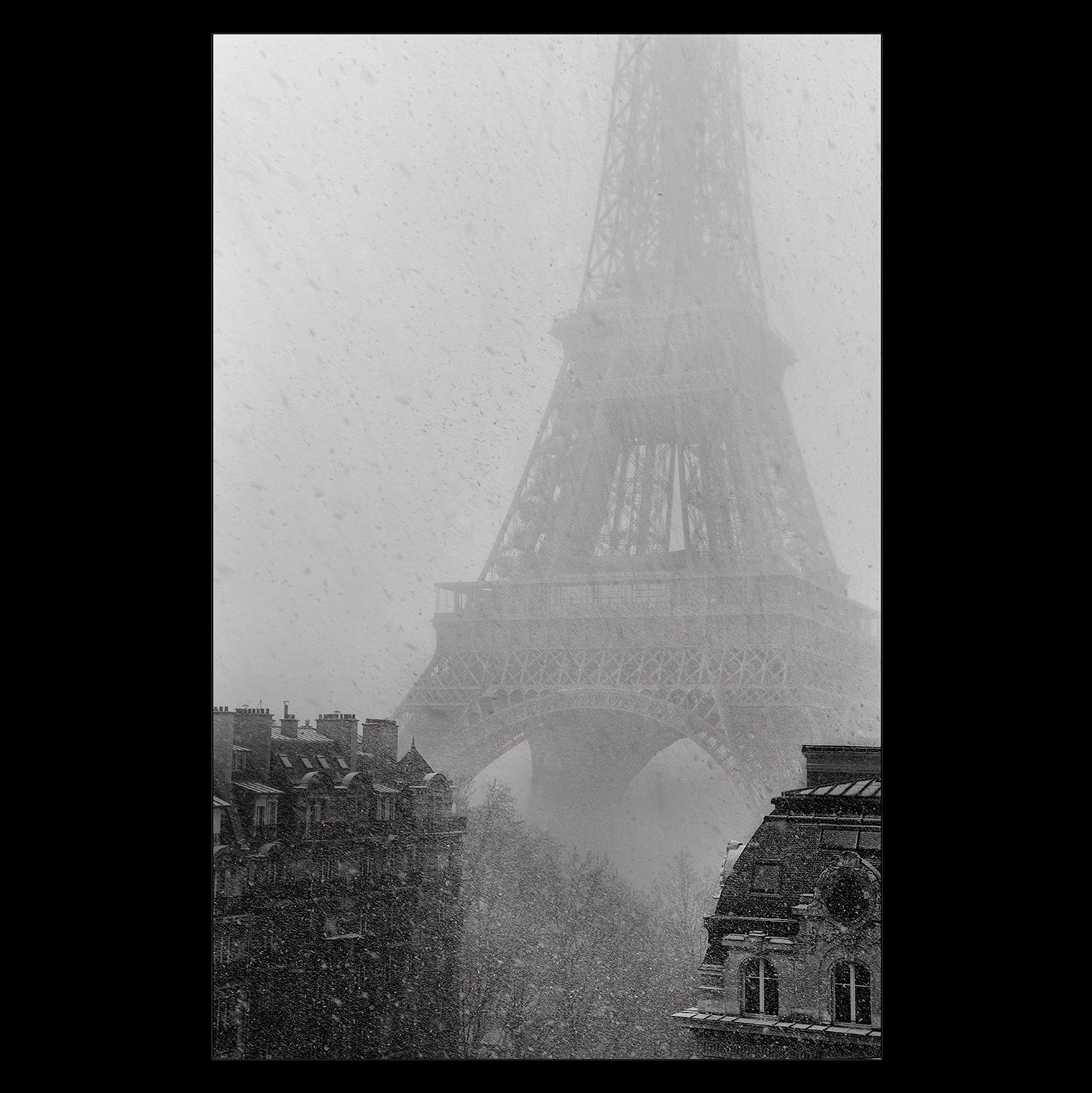
The idea I’ve thought about most since is that his work comes directly out of who he is. When he started on the street it was with his phone, getting off the Tube a stop early and walking home, photographing anything he found interesting. After a while themes started to show up; single figures on their own in urban spaces, in interesting light and shadow. He’d have told you he just liked the look of it, until people on Instagram kept saying it reminded them of Edward Hopper, who he’d never heard of.
Hopper painted isolated figures in New York at a time when the city was booming, which is a choice, so perhaps he was painting how cities feel rather than how they look. Sean’s an INFJ on the Myers-Briggs, the person reading a book in a quiet café rather than shouting at the football in a loud pub, and the one walking down the quiet street one over from the busy one. Looking at his pictures again, he realised he might be photographing his own experience of cities, and in a sense photographing himself. Once he knew that, he could make the work on purpose.
He compared it with his friend Andre [CHECK: surname spelling; the transcript reads “Vachek”], a Czech conflict photographer. The two of them walked into Trafalgar Square one day to find chaos after a football match, with flares going off, and while Sean went and got a doughnut and stood at the side, Andre dived straight into the crowd and took a football to the face. Both of them made the pictures that suit how they’re wired.
His advice for anyone who doesn’t know what to photograph yet is to photograph everything for a month or two, then step back and see what themes are coming through, because there’s something in that.
Fishers and hunters
I put it to him that an introvert doing portraits and street photography seemed a bit odd; surely he’d be off somewhere quiet doing wildlife. His answer was that people confuse introvert with shy, when it’s really about how you recharge. After a bad day an extrovert goes out with friends to blow off steam, while an introvert goes home, makes a cup of tea and gets on the sofa. He’s a fairly confident introvert who isn’t interested in small talk, he wants to go deep one on one, which is exactly what a portrait session is.
On the street he’s a fisher rather than a hunter. A hunter chases down characters, which is how you end up in confrontations. A fisher finds the space first, where the light and shadow are doing something, sets up the composition and waits to see who walks into it. Because he was there first, nobody shouts at him; the most he gets is someone apologising for walking into his shot, and he can joke that he’s been waiting half an hour for them. It made me think of Jay Maisel, who always said much the same about New York.
The number isn’t a talent score
We got onto envy too. Sean’s view is that the minute you start caring about what you do and get a bit of a handle on it, you start looking round at the people who have what you don’t, the following or the success, and that comparison kills the joy. He used the line usually credited to Theodore Roosevelt, that comparison is the thief of joy.
His marathon analogy is one I’ll be borrowing. You plan your race around your body, your running style and the course, maybe easing off early because of a weak ankle and leaving something in the tank for the last couple of miles. Then on the start line there’s a bloke in a red t-shirt who annoys you for some reason, so you throw the plan out and sprint after him, and your race is shot. He might not even know you exist, but you’ll end up trying to second-guess the algorithm or copy what someone else does, and you won’t make the work only you can make.
He was brilliantly blunt about likes and follower counts. He’s got a bigger following than some Magnum photographers, which he called stupid, because he’s “not a shadow of the photographer they are”, and there are cats on Instagram with bigger followings than him. If it’s numbers you’re after, get naked or get a puppy, but don’t kid yourself your photography got any better.
Who to listen to
Criticism comes down to two things for him; the person has to know what they’re talking about, and they have to care about him getting better. Meet both and they can be as harsh as they like. The part that stuck with me is that it works both ways, so if he’s going to tune out the person telling him he shouldn’t be a photographer, he has to tune out the people gushing that it’s the best picture they’ve ever seen as well, unless they pass the same two tests.
It reminded me of my bodybuilding days and a friend who coached me telling me that a true friend won’t let you get on stage. Everyone in the gym tells you that you look amazing; a true friend tells you your calves are lagging and you’re not ready yet.
From the chat
Norman asked whether his background in philosophy and theology shapes his photography, and Sean said it does, though not in a preachy way. He puts out two Parable magazines a year, each with thirty to forty images and around 5,000 words, and one of them, Going Rural, is about moving from London to the North York Moors, how his photography had to change and how the move brought him more peace but also some loneliness. For him it’s all one thing really; photography, film and writing are all just communication.
He’d also just got back from Morocco, where he took twelve photographers through Chefchaouen, Fez and Marrakesh over nine days. Each of them had to present a set of images at the end that hung together as a set, not just their favourites from the trip, and those go into a magazine alongside everyone’s writing as a keepsake. The trips have been selling out within 24 hours of going live.
One light, one lens
I did sneak in one technical question. He used to be an 85mm portrait shooter but felt too far away from the person, so he moved to a 50mm to be physically closer for the conversation, and lately he’s been playing with something nearer 40mm. If he could only have one prime it would be the 50, because it does street and portraits with no compromise. With one light it means being very precise, because the smallest move changes everything; very unforgiving, but very rewarding when you nail it.
On the street it’s mostly a little Ricoh GR IIIx, a 40mm equivalent that’s so nondescript nobody notices it, or on flatter days a Sony A7C with the Zeiss 55mm f/1.8, so he can separate people from the background with focus when the light won’t do it for him.
Why it landed with me
Ten years ago a conversation like this would probably have had me thinking get over yourself. I’d come from the gyms and door work, and I really struggled with the idea of calling myself an artist. That’s changed over time, particularly with the 39-45 Portraits Project, where the photography and editing I love met my fascination with Second World War history, and it felt like what I was meant to be doing. Hearing someone else who’s self-taught, and who’s found his way by trial and error, arrive at the same conclusions was a real bit of reassurance, and judging by the comments I wasn’t the only one who felt that.
The advice that’s stuck
I always finish by asking about the best advice a guest has been given, and Sean’s wasn’t about photography at all. It came from a mentor in South Africa who saw an angry, angsty twenty-something wanting meaningful things to happen quickly, and taught him patience. Things take longer than we think they should, and that’s normal; it doesn’t mean you’ve messed up. Just take the next step, then the next one, and don’t worry about the final form, because it’ll probably look different by the time you get there anyway.