musings

Is It Time to Retire the name "Camera Club" ?

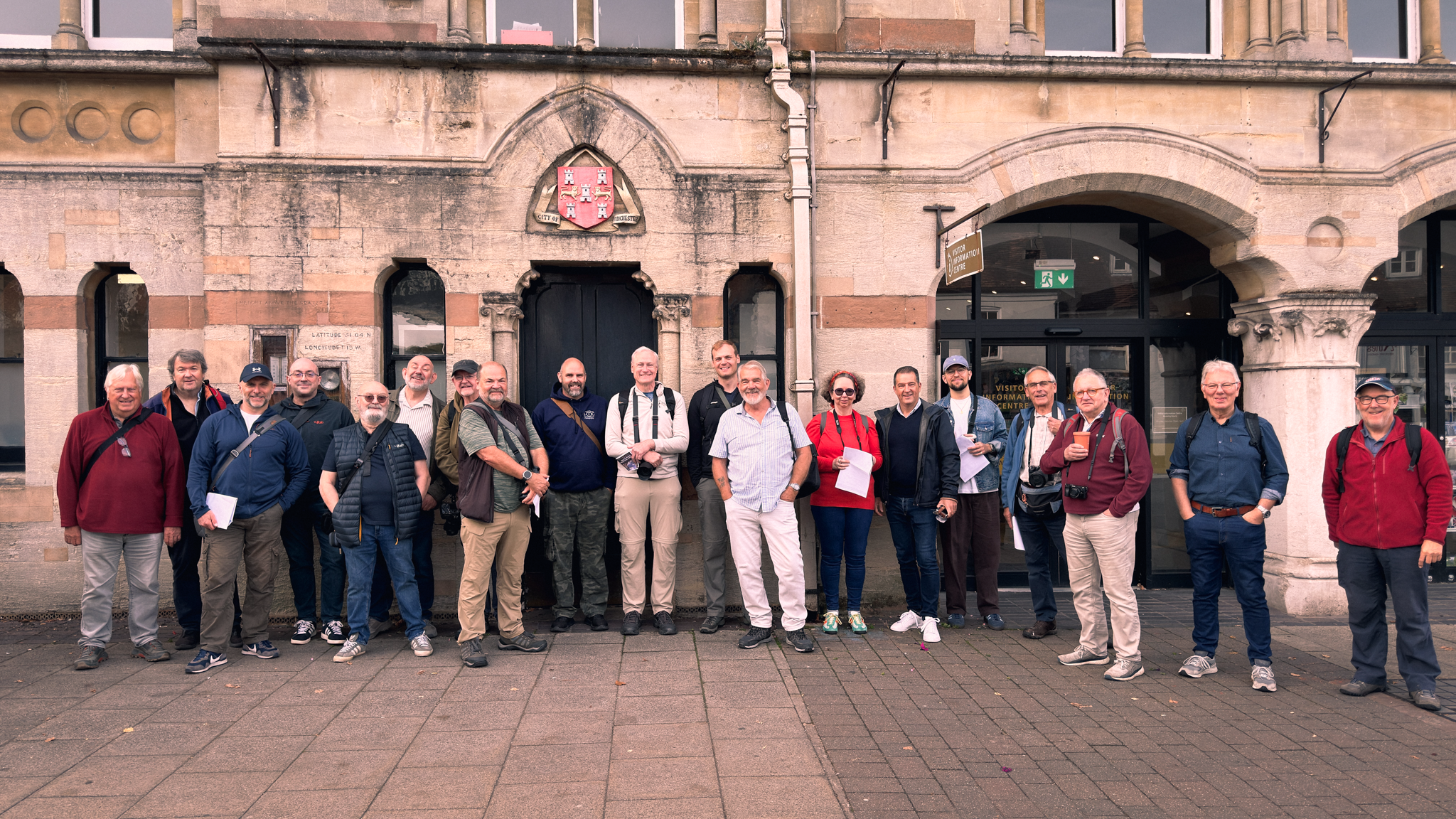
There's been a cracking conversation happening inside my Photography Community on SKOOL ( LINK ) recently, and honestly I think it's one of the most important conversations the photography world could be having right now.

The topic?

Camera clubs.

Specifically, why they're struggling to attract younger members, and whether something as simple as what we call them might be part of the problem.

I've never joined a camera club

I've never belonged to a camera club, and I say that not to be dismissive of them, because I know plenty of people who've had brilliant experiences and genuinely improved their photography through being part of one.

But, it never felt like it was for me.

I couldn't quite put my finger on why for a long time. But sitting with this discussion in my community, I think that maybe it starts with the name.

The Elephant in the Room

The demographic at most camera clubs sits firmly at 55 and above, and the majority of clubs have shrunk since Covid, with several folding altogether, which is incredibly sad to see.

Walk into a typical meeting and you'll find familiar faces, familiar subjects, and familiar debates about judging criteria. There's nothing wrong with any of that in itself, but the pattern is consistent enough to ask some hard questions.

The conversation in the Photography Community mentions not only the struggle to attract younger members but also speaks of other clubs announcing declining memberships.

That's not a blip.

That's a warning sign.

So what's driving this?

Competition-heavy formats? a lack of openness to newer genres and technology perhaps? I actually think one thing is being underestimated, and it's the very first impression these clubs make before anyone even walks through the door.

The name.

What I've Noticed Every Single Time I've Visited

Before I get into the name thing properly, I want to share something from personal experience.

As I’ve mentioned, I've never been a camera club member, but I have visited quite a few over the years as a speaker and presenter, and one thing I notice (except for the few) is that every visit has included a mention of the next competition, the upcoming judging session, or where the club currently sits in some regional standings.

Now, I get it. Competitions give members something to work towards. They create structure, they generate engagement. But when it's woven into almost every conversation, almost every meeting, it starts to define what the club is about, and if what the club is about, is winning, or being judged, that's a very specific kind of person you're going to attract, and a very specific kind of person you're going to put off.

Think about it from the outside. You love photography. You take pictures because it makes you happy, because you see the world differently through a lens, because it's your creative outlet. You're looking for other people who feel the same way. You walk into a camera club and within ten minutes you're hearing about judging criteria and competition deadlines. Is that going to make you feel like you've found your people, or is it going to feel like you've accidentally wandered into something that takes itself a bit more seriously than you're ready for?

With dwindling memberships very apparent over the last five to ten years, several clubs have folded entirely, and the more established ones are attracting very low numbers of new, younger members to replace more senior ones as time goes by.

Words Shape Perception

So back to the name, because I think it matters more than people realise.

Naming psychology tells us that a name without an emotional connection is virtually useless, and a name with a negatively charged association can actively work against you. That's not fluffy marketing theory. That's just how human beings process information.

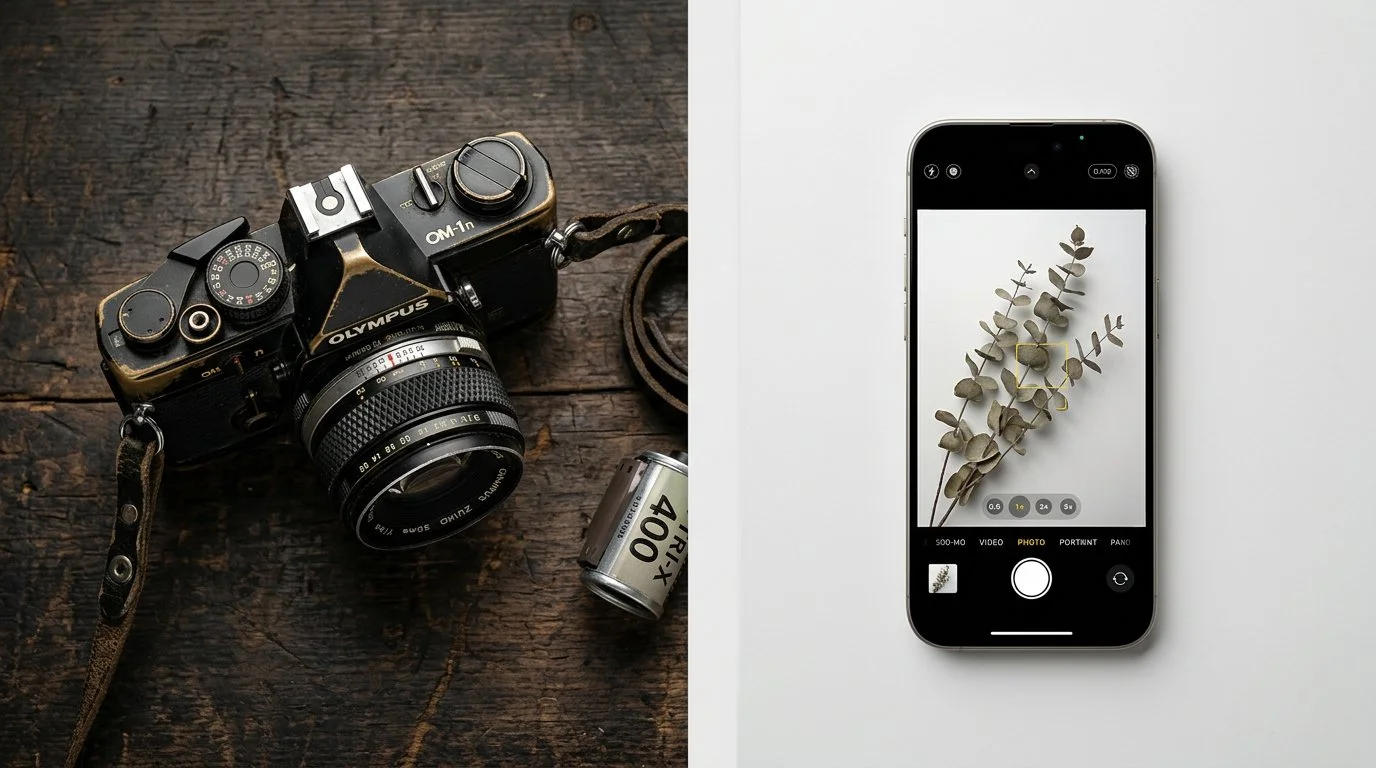
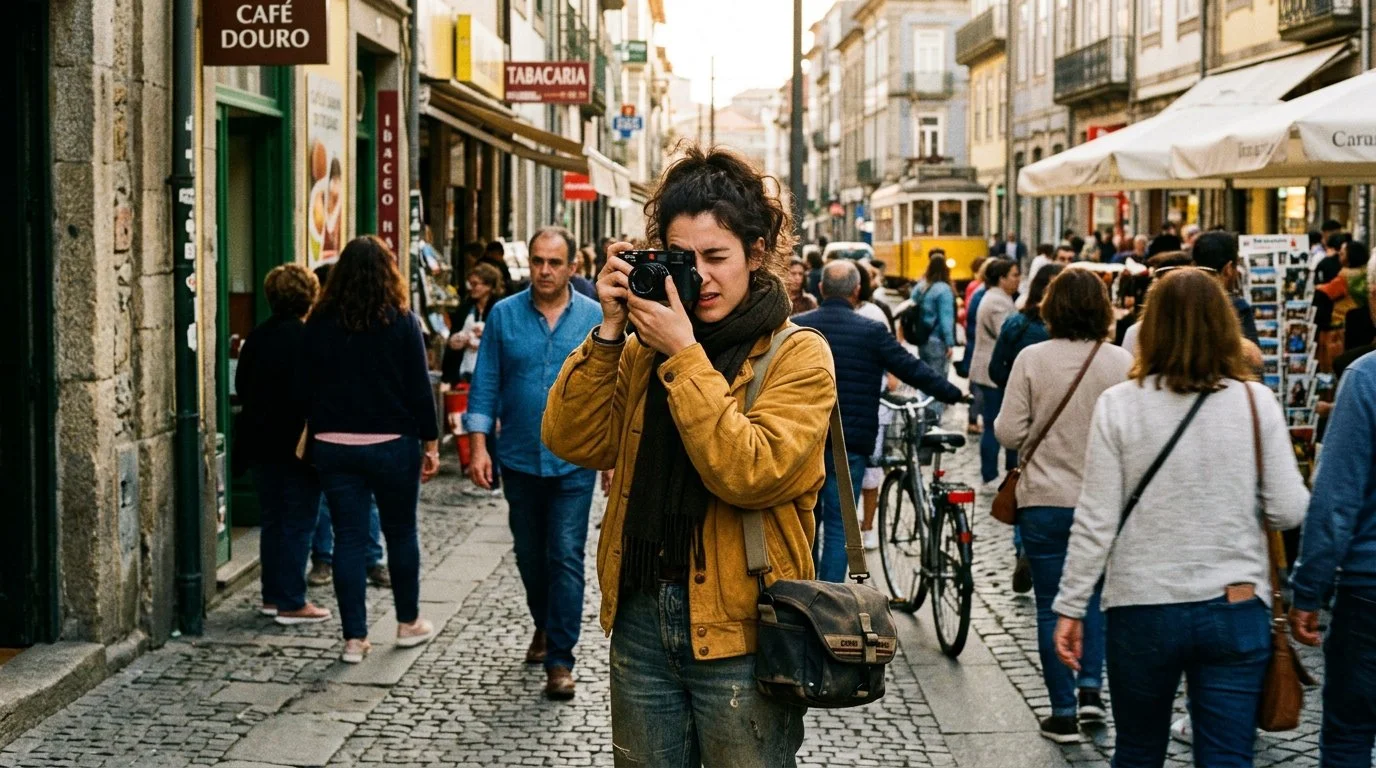
So what does "Camera Club" say to a 25-year-old who shoots on their iPhone, edits in Lightroom Mobile, and shares their work on Instagram? It says hardware. It says equipment. It says a room full of people debating sensor sizes and lens brands. It says: “Probably not for me.”

"Camera" as a word carries baggage. It implies a physical device, and a fairly specific one at that. In a world where the best-selling camera on the planet is a smartphone, leading with the word camera as your entire identity is, at best limiting, and at worst, actively putting off a huge potential audience before they've even given you a chance.

"Photography" though? That's about the image. The art. The craft. The story you're trying to tell. It doesn't care what you shot it on.

"Society" and "Association"is no different

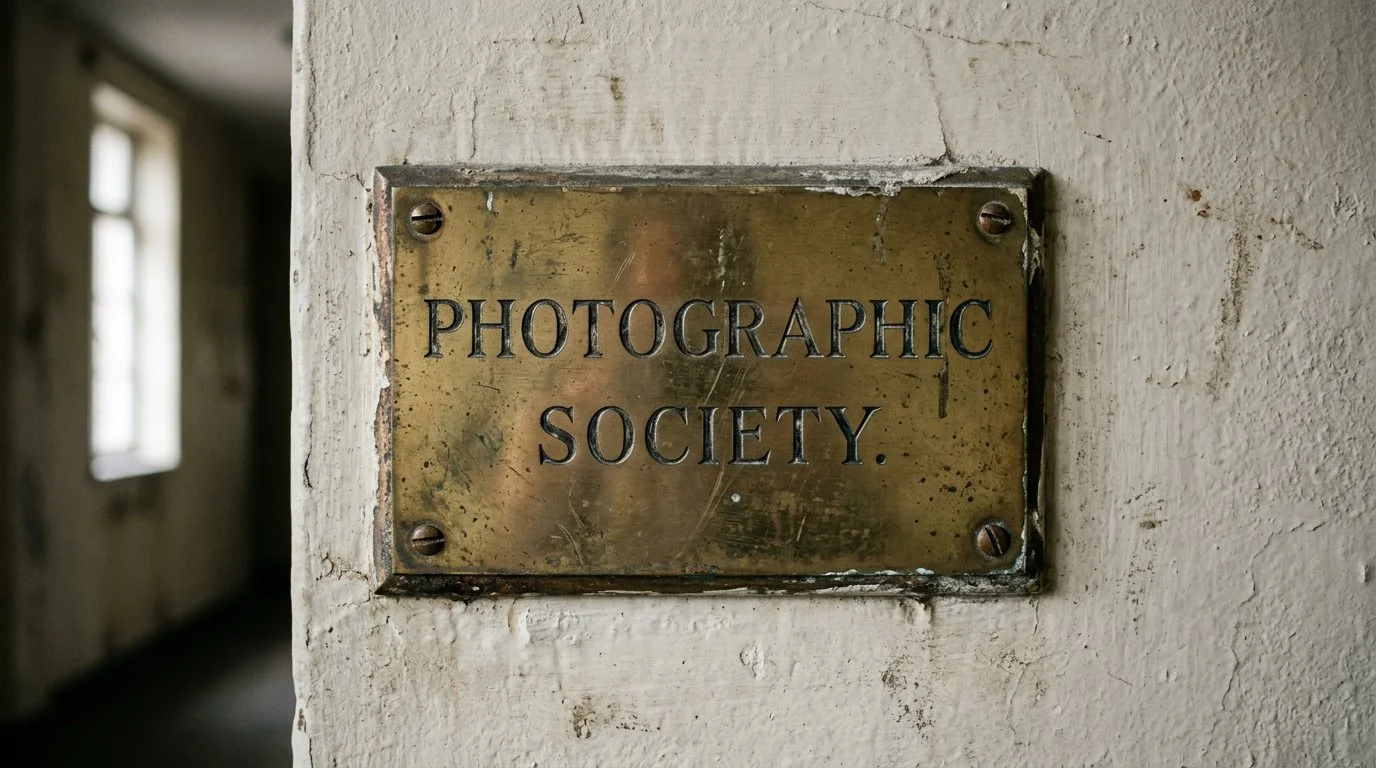
Here's the thing, it's not just "Camera Club" that has a problem. Some clubs have tried to modernise by rebranding as a Photographic Society or a Photography Association, and while I understand the thinking, I'd argue those names bring their own baggage.

"Society" sounds formal. It sounds like membership cards, committee meetings, and a waiting list. It sounds like somewhere you need to be invited into rather than somewhere you wander into because you love taking photos. It has a certain stiffness to it that, however unintentional, can feel exclusive rather than welcoming.

"Association" is even worse. It sounds corporate. It sounds like a trade body or a professional organisation, somewhere you join because you have to, not because you want to. It creates distance before you've even said hello.

The word "Club" though? I actually think that's fine.

A club sounds like somewhere people gather because they love something. It sounds informal, accessible, and human.

Keep the club.

Ditch the camera.

The Psychological Shift

When you call something a Photography Club, you shift the identity of the group from being defined by a tool to being defined by a pursuit. That's a genuinely meaningful distinction. It's the difference between a Running Shoe Club and a Running Club. One is about the kit. The other is about what you do.

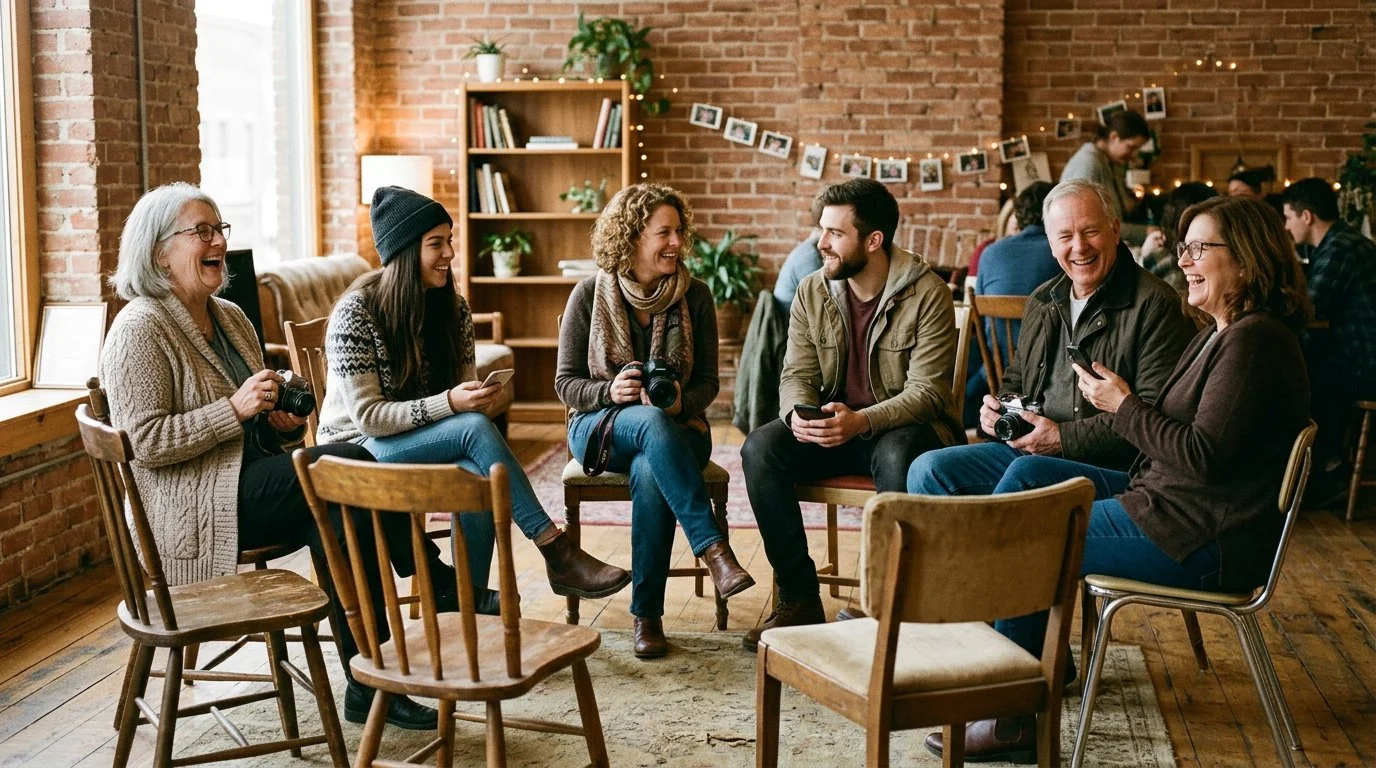
A Photography Club says: come along if you love photography. Bring your mirrorless, your DSLR, your phone, your film camera. Bring your creativity. Bring your eye. The name sets an expectation, and if clubs back it up with programming that's genuinely inclusive of all types of image-making, including mobile photography, documentary, portraiture, street, and landscape, the name becomes a promise they can actually keep.

And maybe, just maybe, if the name shifts the identity, the culture starts to shift with it. Fewer evenings built around who's entering what competition, more evenings built around sharing work, exploring ideas, learning from each other.

It's Not Just Semantics Though

Of course a name change alone won't save a struggling club. If the judging is still archaic, if the welcome isn't genuine, if competitions still dominate every conversation the moment you walk in the door, you can call it whatever you like and younger members still won't stay.

In an Amateur Photographer reader poll of nearly 900 people, almost a fifth said they didn't belong to a camera club because they considered it an old-fashioned concept. That's a perception problem, and perception starts with the name, but it doesn't end there. The culture inside has to match the promise the name makes on the outside.

But here's what I keep coming back to; a name change can be a catalyst. It forces a conversation. It makes a club publicly commit to something bigger than it was before. It's a visible signal to the outside world that things are different now, and for someone scrolling past a community listing on their phone, that signal might just be the thing that makes them stop and read on.

My Take

I've never been a camera club member, and honestly, if I'd ever stumbled across a local Photography Club that genuinely welcomed all types of photography, all types of photographers, and all types of cameras, including the one in my pocket, with evenings built around creativity rather than competition, I might well have felt very differently.

That's the gap we're talking about. It's not enormous, but it might be the difference between a club that survives the next decade and one that quietly fades away.

The clubs that will be thriving in ten years' time won't necessarily be the ones with the longest history or the most impressive trophy cabinets. They'll be the ones that made a newcomer feel like the name above the door was written for them too.

Photography Club.

Two words.

BIG difference.

It’s got to be worth a try, right?!?

BenQ Creative Pro PD2770U: The Display I've Been Waiting For 😍

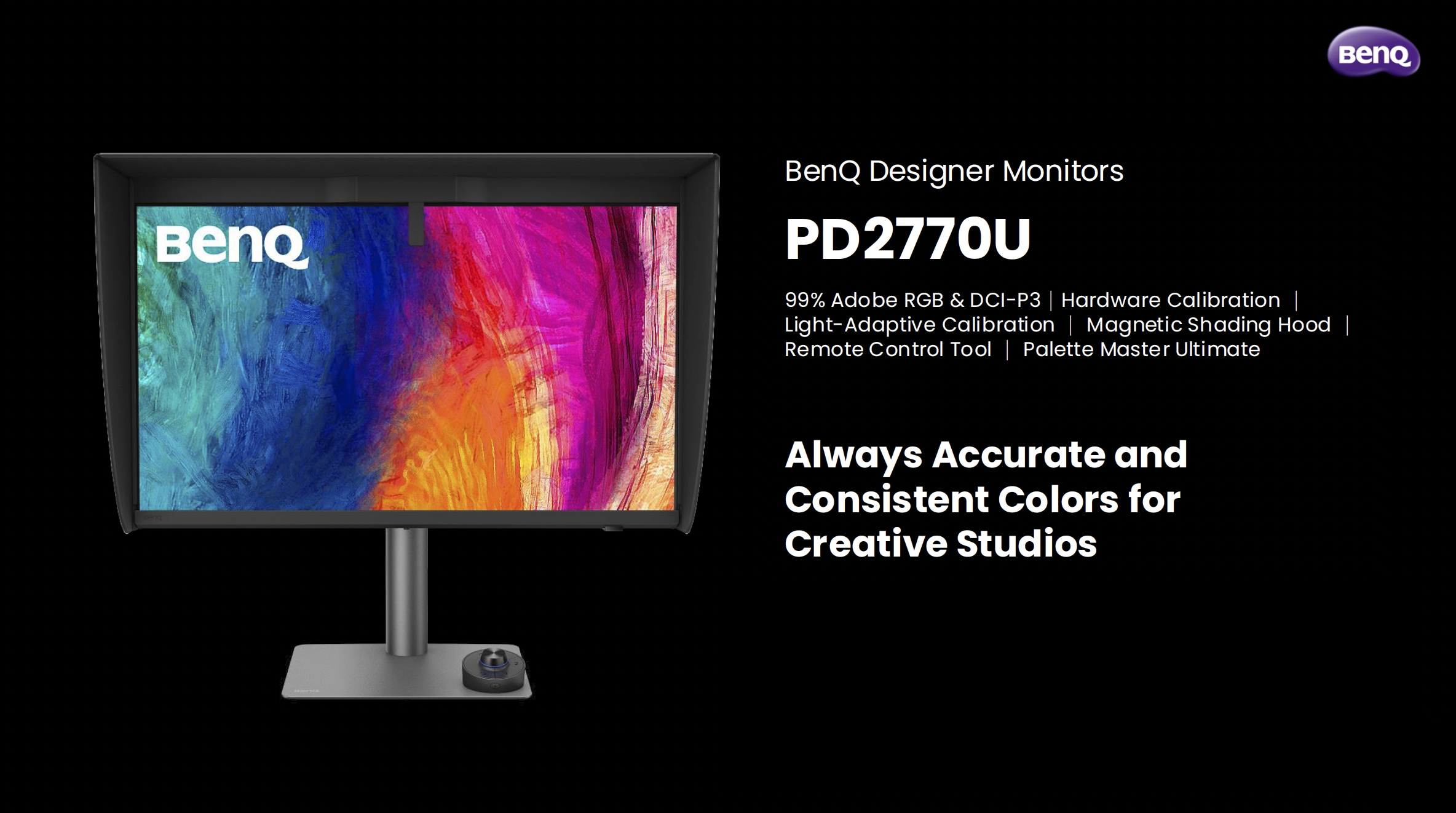
There are products that come along and tick boxes, and then there are products that come along and actually solve a problem you've been living with for years. The BenQ Creative Pro PD2770U falls firmly into the second category for me.

Let me explain why …

A Built-In Calibrator. Finally.

If you've followed my work for any length of time, you'll know I've been a BenQ display user for a long time. I've recommended their monitors, used them in my own setup, and talked about them on the channel more times than I can count, but there has always been one thing missing … a built-in hardware calibrator.

Every time a new BenQ display launched, that was the thing I found myself quietly hoping for, and every time, it wasn't there. Until now.

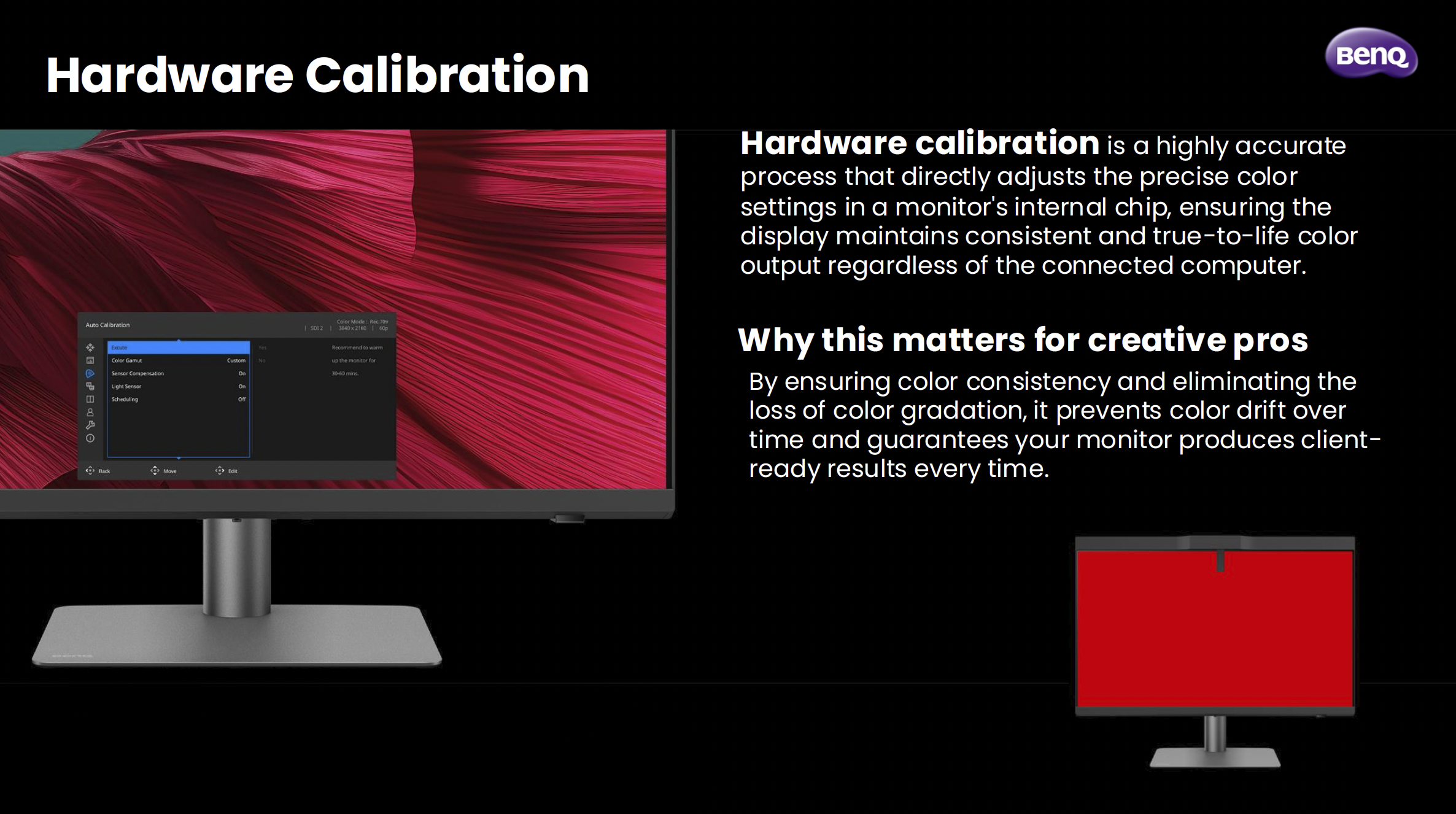
The PD2770U is the first BenQ PD Creative Pro display to feature hardware calibration with a built-in calibrator, and honestly, that alone was enough to get my attention. Hardware calibration is a different beast to software calibration. Rather than adjusting things at the GPU level, it works directly inside the monitor's chip. The result is more accurate, more consistent, and doesn't eat into your bit depth the way software calibration can. For anyone doing colour-critical work, that distinction genuinely matters.

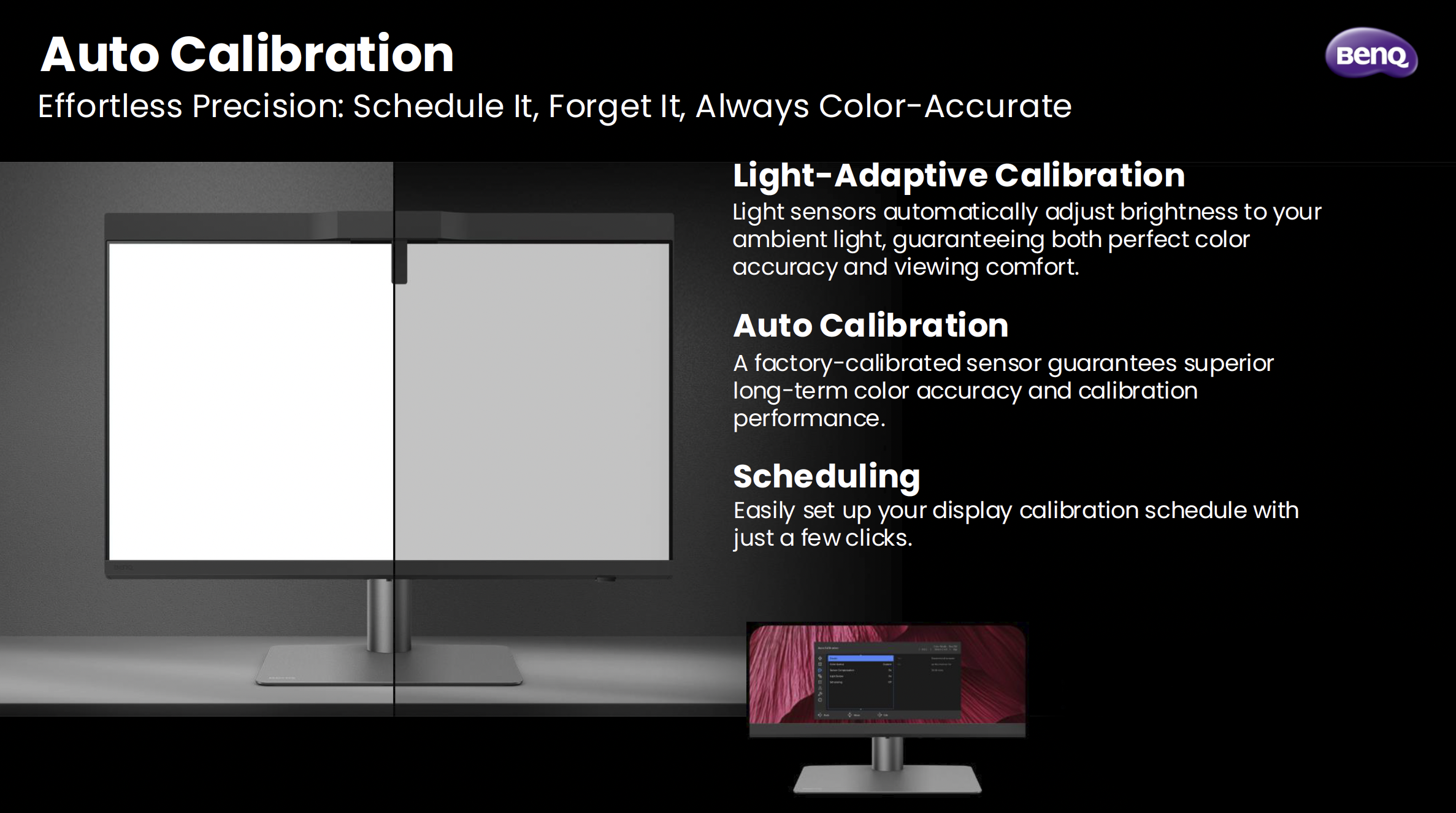
What makes it even smarter is something BenQ calls Light-Adaptive Calibration. The display has a light sensor that reads your ambient environment and adjusts the monitor's brightness to match before the calibration runs. It sounds like a small detail, but it's actually solving a real problem. How many times have you calibrated a display only to find the brightness felt off the moment you sat back down to work? That's exactly what this is designed to prevent.

Also, you can schedule it. Set it, walk away, come back to a calibrated display. No puck, no laptop, no cables. Just done.

Why I've Made This My Main Display

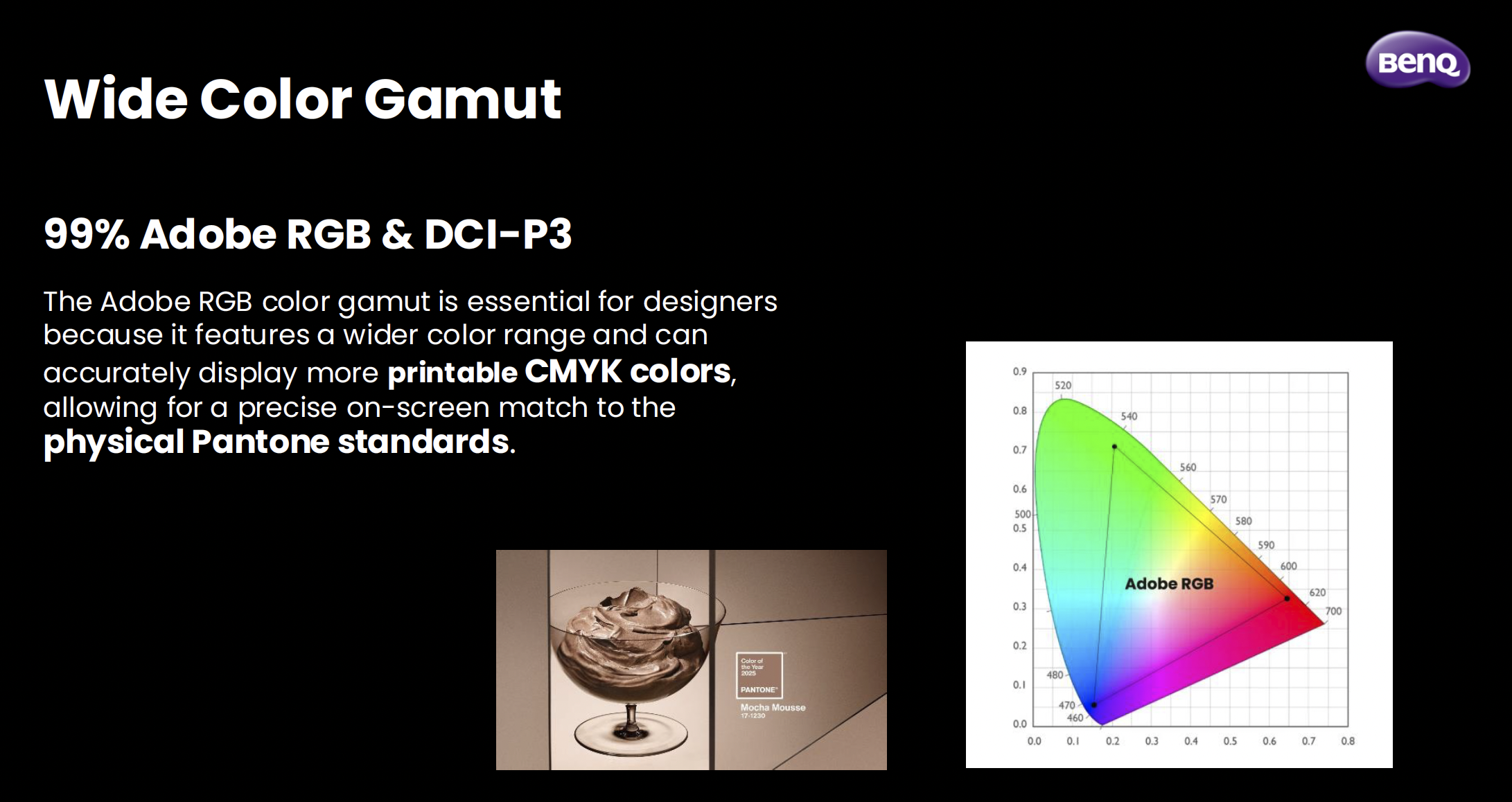
I've switched the PD2770U to my main display, and the reason comes down to one thing: Adobe RGB.

I do a lot of work that ends up in print, and Adobe RGB covers a much wider range of printable colours than standard sRGB. When you're working in a narrower colour space and then sending files to print, you're essentially working blind. What you see on screen isn't what comes back from the lab. The PD2770U covers 99% of Adobe RGB, which means what I'm seeing when I'm editing is as close as it gets to what's actually going to be printed.

Pair that with a Delta E of ≤1.5 out of the box, triple certification (Calman Verified, Pantone Validated, and SkinTone Validated), and the fact that the panel goes through BenQ's AQCOLOR uniformity calibration where every section of the panel, right out to the edges, is individually tuned, and you've got a display that I genuinely trust. That trust is hard to put a price on when you're making colour decisions for print.

The Bits That Make Day-to-Day Life Easier

Beyond the calibration story, there are a few things about this display that have genuinely improved how I work day to day.

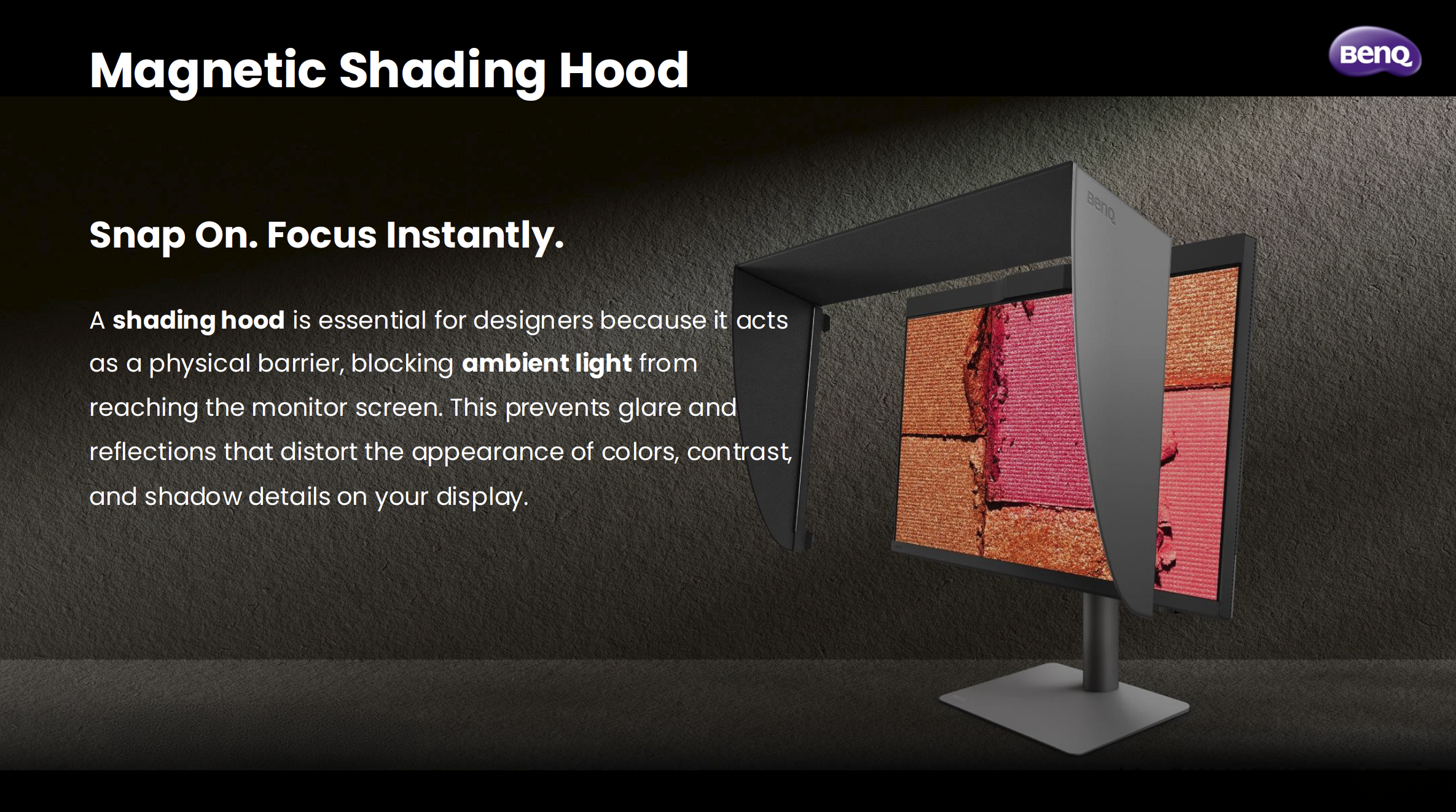
The magnetic shading hood is one of them. It snaps on cleanly, blocks ambient light from messing with how you perceive colour on screen, and is built from noticeably sturdier material than what I've seen on other hoods. It's one of those things where you don't realise how much ambient light was affecting your judgement until you block it out.

The Wireless Hotkey Puck G3 is another. It's a small dial that sits on your desk and lets you switch colour modes, inputs, and now with the G3, launch applications directly. I use it to jump between Adobe RGB mode and sRGB mode when I need to check how something's going to look on a standard screen. It sounds like a minor convenience, but when you're doing it multiple times a day, having it on a dial rather than digging through a monitor menu makes a real difference.

On the connectivity side, the PD2770U has two USB-C ports (both at 96W charging), two HDMI 2.1 ports, a DisplayPort, and a wired ethernet port via RJ45. My desk runs a single USB-C cable from the laptop to the monitor, and everything else flows through the display. Clean, simple, exactly how it should be.

The Panel Itself

27 inches, 4K UHD, IPS. The panel uses BenQ's Nano Matte technology, which brings the reflection rate down to under 3%. That's noticeably lower than a standard matte panel sitting at 3.5%, and miles away from a glass panel at over 4%. In a real working environment with lights and windows, that matters more than it sounds on paper.

It's a 60Hz panel, which for creative work is absolutely fine. This isn't a gaming monitor. It's built for people who need to trust what they're looking at.

Is It Worth It?

If you shoot for print, work in Adobe RGB, or just want the confidence of knowing your display is consistently accurate without faffing about with external calibrators and third-party software, yes, I think it is. The built-in calibrator alone changes the equation for the PD range. The fact that it comes with everything else the PD2770U offers makes it, for me, the most complete BenQ display I've used.

I've wanted a display like this from BenQ for a long time, and this has definitely worth the wait.

Why Photography in 2026 Feels Less Perfect and More Human

Something really encouraging is happening in photography right now, and if you have been feeling quietly frustrated with the pressure to make everything look flawless, I think you are going to love it.

Industry reports from Aftershoot, Stills, and other creative sources are all pointing in the same direction: audiences are turning away from over-polished, over-processed imagery and responding much more warmly to photographs that feel honest, immediate, and genuinely human. After years of chasing technical perfection, it seems the tide is finally turning, and I find that genuinely exciting.

Why the shift is happening now

It makes a lot of sense when you think about it. We are living in a visual landscape absolutely saturated with AI-generated content, heavily filtered social media imagery, and endlessly refined visuals.

In that context, a photograph that carries real emotion, a little texture, or a fleeting spontaneous moment stands out precisely because it feels true. Audiences can sense the difference, even if they cannot always articulate it.

What "more human" actually looks like

What the trend reports describe as "more human" photography comes down to a handful of connected ideas: natural expressions rather than rigid poses, visible texture rather than smoothed-out skin, and editing choices that preserve the character of the original moment rather than ironing everything into a generic finish.

In practice that might mean embracing grain, direct flash, looser framing, or a more documentary approach to light and movement. None of that requires you to abandon your craft; it just asks you to use it in service of feeling rather than control.

Your personality is the point

The most encouraging thing I take from all of this is that technical quality still matters, it just is not the whole story anymore. The photographers who are really connecting with people right now are the ones combining solid skills with a genuine point of view and a willingness to let a little life into the frame.

That is something worth celebrating, because it means your personality and your way of seeing the world are actually an asset, not something to sand away in post.

The bigger picture

There is also a broader context worth keeping in mind. Adobe's recent updates to Photoshop and Express are a good reminder that automated, AI-assisted production is only going to become more common across the creative industry. That is not something to fear; it is actually an opportunity. The more synthetic visual content floods our screens, the more a real photograph, one made with intention and feeling, can cut through simply by being authentic.

The question worth asking yourself

So the question worth sitting with as you work in 2026 is not whether your images are perfect. It is whether they are meaningful. Can the photograph still do its job if it keeps a bit of roughness, a bit of risk, or a bit of life? According to everything being written about where the industry is heading, that roughness might be exactly what makes it memorable.

That feels like a genuinely good moment for photography, and for the people who make it.

AI and Photography: It's Not the End of the World

There is a conversation happening in photography right now, and chances are you’ve heard it. Whether it is in comment sections, Facebook groups, or at events, the same question keeps coming up: is AI going to kill photography?

I get it. When generative AI started producing photorealistic images from a text prompt, the alarm bells rang, and not entirely without reason. If a computer can conjure a dramatic seascape or a perfectly lit portrait from a few typed words, where does that leave those of us who actually pick up a camera?

So here’s what I believe: I don’t think it’s the threat people fear it is. Of course for some areas of Professional / Paid Photography but certainly not for enthusiasts; not for anyone who shoots because they genuinely love it.

We’ve Been Here Before

Photography has always had to adapt. Digital replaced film, and people said it would ruin photography. Smartphones put a camera in everyone's pocket, and people said that would ruin it too. It didn’t. If anything, more people are shooting now than ever before. Accoridng to CIPA shipment data with 2025 market reports, the hobbyist camera market made up well over two thirds of all digital camera sales, and the number of photography workshops and online courses has grown by more than 30 percent in recent years. People are not falling out of love with photography. They are falling deeper into it.

AI is the latest chapter in that same story. It’s a new tool arriving in an industry that has always evolved alongside new tools.

What AI Actually Is, and Is Not

Here’s the thing that often gets lost in the noise. AI, in the context of most photographers' day-to-day lives, is not generating fake images to replace yours; it’s quietly working inside the software you are already using.

Take Lightroom and Photoshop. Both are packed with AI-powered features now. Masking that would have taken me the best part of an hour a few years ago takes seconds. Removing a distracting element from the background of a portrait, reducing noise in a high ISO shot, selecting a subject with precision. These are the kinds of tasks that used to eat into your editing time without giving anything creative back. They were just tedious.

That is where I have found AI genuinely useful. Not as something that replaces my decisions, but as something that handles the mechanical stuff so I can focus on what I actually enjoy, developing the image, getting the look I had in my head when I pressed the shutter, making it feel the way I want it to feel. The creative part is still mine. AI just means I am not spending forty minutes (and more) doing fiddly selections to get there.

Yes, There Will Be Casualties

It would be dishonest to say AI has no impact on photography as a profession, because it does. Certain areas are already feeling it. Product photography is one. Generic stock imagery is another, and headshot photography is shifting too, with a growing number of AI applications now capable of producing professional-looking results at a fraction of the cost of hiring a photographer.

Will some people choose those options? Of course. But then, every industry has customers who will always gravitate towards the cheapest available option. Photography is not immune to that, and it never has been. There have always been clients who want results without paying for expertise. AI simply gives that segment of the market a new way to do what they were always going to do.

The clients worth having though, tend to think differently. They understand the difference between a generated image and a photograph made by someone who knows what they are doing. They value the professionalism, the experience of working with a skilled photographer, and ultimately an image that could not have come from a prompt box. That market is not shrinking. If anything, as AI imagery becomes more widespread, it is becoming more discerning.

The Authenticity Factor

There is something interesting happening on the other side of the AI conversation. As AI-generated imagery has flooded the internet, audiences have started to crave the opposite. The photography trends emerging in 2026 are centred around authenticity, real moments, real imperfections, real emotion. The slightly overcooked, hyperpolished aesthetic is losing its appeal. People want to see images that feel genuinely human.

That is actually great news for photographers, because the one thing AI cannot do, no matter how sophisticated it becomes, is be there. It cannot stand on a cold beach at six in the morning, read the light, time the wave, feel the composition before it happens. It cannot build a relationship with a portrait subject and find the moment where they forget the camera is there. It can produce images that look impressive on a screen, but impressive and meaningful are not the same thing.

Photography Is Not Just About the End Product

This is the point that gets missed entirely in the AI debate. When people talk about whether AI can replace photography, they tend to focus on the output. Can it produce a decent image? In some cases, yes. But photography has never really been just about the image at the end of it.

It is about being out in the world with a camera. It is the discipline of learning your craft, understanding light, making decisions in the moment. It is the feeling of nailing a shot you had been visualising for weeks. It is the connection you build with a subject during a portrait session. It is standing somewhere beautiful and choosing how to see it.

No AI can replicate that experience. And for the vast majority of photographers, enthusiast or professional, that experience is the whole point.

So Where Does That Leave You?

If you shoot because you enjoy it, AI changes very little about that. It might make some parts of the process quicker and easier, and used well, that is no bad thing. But it is not going to make the experience of making a photograph redundant.

Yes, the industry will keep changing. Some corners of it will shrink. But photography itself, the act of it, the craft of it, the joy of it, is not going anywhere. Do not be scared of AI; just don’t hand it the wheel either.

Photography is not dying. If anything, the conversation AI has started might just remind people why real photographs matter.

Images from the UK Photography Show

Last week, I was working at the UK Photography Show with Adobe, hosting their Capture, Edit, Print area of the Adobe stand.

This area was kitted out with lighting from Westcott (thank you) and also featured my vintage gray background.

David

The lighting being used was the L120-Bs, fitted with Rapid Box Switch softboxes, so folks attending the show could take pictures of our fantastic models, Kristina, David, Grace, and Beth, (great fun and great to work with) using either their cameras or their mobile phones, with no need to worry about triggers. This worked extremely well.

Kristina - Captured using my iPhone 17 Pro Max

We also had some great photography students from Birmingham University, who were kitted out with Lightroom mobile on iPads. They could edit images taken by attendees and print them out there on the spot, thanks to Canon for lending printers and also Hahnemühle for providing paper. This definitely went down well with attendees.

David - Captured with my iPhone 17 Pro Max

It was great working with Adobe and great to catch up with friends who also work at Adobe that I've known for many years, but not seen in person for way too long.

Here's a few more samples of some of the pictures that I managed to take while setting up the stand ready for attendees, or maybe grabbing the odd one in between shots during the day ; I’ve more to edit so will share them in another post …

David

Kristina

Models at Photography Shows - They're NOT Props!

I've worked at photography shows. I've stood behind lighting setups, watched attendees cycle through shooting bays, and seen how models are treated over the course of a long day on their feet. The vast majority of people who step up to take a photograph are perfectly decent. Many are a bit nervous, maybe self-conscious about their ability, unsure of what to say. They take their shot and move on. And I get that. Not everyone is comfortable striking up a conversation with a stranger, especially one who's posing under studio lights in front of a crowd.

But here's the thing: even if you're feeling a bit awkward, even if you don't know what to say, just saying "thank you" would mean a lot. That model has been standing there for hours, holding poses, giving energy to every single person who steps up with a camera. A simple acknowledgement that they're a human being doing a job goes a long way.

What concerns me, though, is the other end of the spectrum. Because there are times when you watch certain people take a photograph, check the back of their screen, and walk away, and something about the whole thing just doesn't sit right. The way they framed the shot. The way they looked at the image. Their whole demeanour. You can't always put your finger on exactly what it is, but it gives you cause for concern. You find yourself wondering what the purpose of that shot actually was.

I've been thinking about this for a while now, and the more I look into it, the more I realise this isn't just a feeling. It's a well-documented problem across the photography industry, and models themselves have been talking about it for years.

What models have been saying

When you actually listen to what models say about working at photography shows and events, the picture is consistent and, frankly, uncomfortable to hear as a photographer.

At Photo Plus Expo in New York, a model was placed on a narrow traffic pylon on concrete for a dramatic skyline portrait. She was visibly frightened, reaching for a spotter's hand to keep her balance, yet photographers kept shooting. One attendee actually called out "Wait!" when the spotter stepped in to help her, prioritising a clean composition over a woman's physical safety. No one had brought mats, padding, or any safety equipment.

Chris Gampat, Editor in Chief of The Phoblographer, described watching models go for hours without a break, with photographers growing frustrated when they asked for water or a bathroom visit. He recounted swimsuits and summer fashion being shot outdoors in February, with the photographer complaining about shivers and goosebumps as though a woman in near-freezing temperatures should somehow override her own biology for the image. When lunch orders were taken on set, models were routinely passed over. As Gampat observed, when the model stepped onto the set she left her humanity at the edge of the seamless. She stopped being a person and became a prop.

That word, "prop," keeps coming up. And it's exactly the attitude I've seen glimpses of at shows. The model isn't a colleague or a collaborator. She's part of the furniture, there to be consumed.

Evelyn Devere, with thirteen years of modelling experience, described photographers making unnecessary comments about her body and their attraction to her, implying that photos would be used for personal gratification or shared among friends. She recounted a photographer who slowly adjusted her positioning so that areas she had explicitly chosen not to expose would be visible, reassuring her he couldn't see anything when she raised her discomfort.

Kat Yip, a UK-based model with eleven years' experience, described photographers bypassing her professional portfolio to request personal nude photos, and others who opened conversations by commenting on her body.

Amandy Rose Silva-Ranger, a promotional model speaking to VICE, described working a car show where attendees grabbed her as she walked past. She said she didn't feel like a model; she felt like a piece of meat on display. Nicole de Melo, another promotional model, said she had experienced sexual harassment many times and had left multiple companies because of it, adding that the boundaries between professional expectation and personal entitlement became blurred.

These aren't isolated stories. A survey by Zoner Studio found that over half of model respondents had negative photoshoot experiences, with the vast majority involving sexual harassment. 58% said they preferred working with female photographers, and many reported feeling uncomfortable or pressured when working with men. Data from the Model Alliance found that nearly 87% of models had been asked to pose nude without any prior agreement.

Reading all of this, I kept thinking back to those moments at shows. The ones where you watch someone take a photo, glance at the back of their camera with a look you can't quite place, and walk away without a word. Those moments that make you uneasy. The models' accounts suggest that unease is well founded.

The camera can make people forget themselves

There's something about holding a camera that can change the dynamic between two people. At its best, it creates a collaboration, a shared creative moment. But at a show, where there's no pre-shoot conversation, no agreed brief, no relationship at all between the photographer and the model, that dynamic can tip the wrong way very quickly.

I think some people genuinely forget, or perhaps never considered, that the person standing on that set is a professional doing a job. She's not there for them personally. She's giving the same energy, the same poses, the same patience to everyone who steps up. And she deserves to be treated with the same basic respect you'd give any other professional you encounter at a trade event.

A female photographer writing for Photofocus catalogued the directions she had personally heard given to models at events and shoots: requests for "sexy looks," instructions to touch themselves, to spread their legs, to push their chests forward with their arms. She titled her piece simply: "I am over the creepy ones." And I think a lot of us in the industry share that sentiment but haven't been vocal enough about it.

The trade show format makes this worse. At CES, one reporter observed a model kept inside a physical pen for attendees to photograph, remaining silent for four straight days while even the most provocatively dressed promotional models at other booths were at least armed with product knowledge and a sales pitch. At Photokina 2016, female models were positioned as test subjects for camera equipment, dressed in ways that had nothing to do with the technology being demonstrated. The model becomes set dressing. Wallpaper with a pulse.

I understand that photography shows use models to demonstrate lighting and equipment in a practical, engaging way. That's legitimate. But the format creates a uniquely one-sided power dynamic. The model is static, available, performing. The photographer is transient, anonymous, accountable to no one. There's no conversation, no agreed brief, no relationship. And in that gap, some people's behaviour goes unchecked.

So where are the guidelines?

This is where it gets properly frustrating. When I started looking into whether any formal guidelines or codes of conduct exist around how photographers should interact with models at these events, I found almost nothing.

The one standout exception is Magnum Photos, which published a comprehensive Code of Conduct in January 2021 explicitly prohibiting all forms of discrimination and sexual harassment. It provides detailed examples of prohibited behaviour, including touching, unwanted advances, sexually oriented remarks, and comments about a person's sexuality, and applies across offices, events, workshops, and assignments. It includes a public complaints procedure with sanctions ranging from written reminders to permanent expulsion. Notably, a previous 2018 version had contained a confidentiality clause preventing its publication, which was removed in the 2021 revision. This is exactly the kind of thing we need more of. But Magnum stands almost entirely alone.

The major UK photography bodies, the Master Photographers Association, the Royal Photographic Society, the Society of Wedding and Portrait Photographers, the British Institute of Professional Photography, all have codes of conduct. But they're focused on business practices, client relations, and general professionalism. The RPS has a Nature Photographers' Code of Practice covering bird nesting sites and habitat disturbance, but nothing equivalent for the treatment of human subjects at events. The Professional Photographers of America asks members to maintain high levels of professionalism and integrity but offers no specifics around model interaction. None of these bodies have published event-specific guidelines addressing the concrete behaviours that models consistently report.

The photography shows themselves? Nothing I could find. No published attendee codes of conduct. No harassment policies. No briefings for people using interactive shooting bays. Nothing that says: "Here's how we expect you to behave when you step up to photograph a model."

Other industries figured this out years ago

What makes this even more frustrating is that other industries tackled the exact same problem a decade ago.

PAX, the gaming expo run by Penny Arcade, banned booth babes back in 2010, requiring that any promotional models be educated about the product and prohibiting overtly sexual or suggestive methods. Eurogamer Expo in the UK completely disallowed promotional models from 2012, with formal guidelines stating that the practice was unacceptable. RSA Conference banned revealing attire for booth staff in 2015, and CES updated its exhibitor guidelines after sustained public pressure. The "Cosplay Is Not Consent" movement drove widespread adoption of anti-harassment policies at fan conventions, with major Comic-Cons now defining harassment to include unwanted photography or recording.

A freely available Conference Code of Conduct template, adopted by over a hundred organisations, specifically states that sponsors should not use sexualised images and that booth staff should not use sexualised clothing, uniforms, or costumes. The templates are there. The frameworks exist. The photography industry just hasn't adopted them.

And here's the irony that really gets me: photography is the one industry where the relationship between a camera and a human subject is the entire point. We should understand the ethics of looking at people through a lens better than anyone. Yet we're behind gaming conventions and tech expos when it comes to protecting the people in front of our cameras.

What I think needs to happen

I'm not writing this to shame anyone or to suggest that every photographer at a show is behaving badly. Most aren't. Most are there to learn, to practise, to enjoy the event. And I genuinely understand the self-consciousness that comes with stepping up to a shooting bay in front of other people. It can feel awkward. You might not know what to say. That's completely fine.

But at the very least, say thank you. Acknowledge the person who's been standing there all day giving you their time and energy. That small thing matters more than you might think.

Beyond that, I think the industry needs to step up properly. Photography shows could adopt attendee codes of conduct tomorrow. The templates exist and they're freely available. UK professional bodies like the MPA, RPS, BIPP, and SWPP could develop specific guidelines for photographer-model interaction at events, going beyond generic professionalism language to address the concrete behaviours that models consistently report. Event organisers could provide briefings for people using interactive shooting bays, setting clear expectations around consent, communication, and basic respect. The Magnum Photos code demonstrates that detailed, enforceable standards are entirely achievable.

Models at photography shows are professionals. They deserve professional treatment. They deserve to be spoken to, not just photographed. They deserve to have their boundaries respected, their physical comfort considered, and their basic humanity acknowledged, and when something about a person's behaviour at a shooting bay gives you that uneasy feeling in the pit of your stomach, the kind where you watch them check the back of their screen and walk away and you think, "What was that actually about?", the industry needs structures in place that mean someone can act on that concern.

My iPhone Made Me a Better Mirrorless Photographer

It sounds like an unlikely claim; smartphone making you better with a professional camera system, but for me, it is exactly what happened, and the journey that brought me there started in the strangest of circumstances: a global pandemic, an empty coastline, and a camera bag I eventually stopped reaching for.

When Lockdown Pushed Me Towards the Coast

Portrait photography is what I do, it’s the heart of my work, but in the early days of the COVID pandemic, with people unable to gather, I needed an outlet. I needed to get out and stay creative. Fortunately, the nature of my work meant I had the permission to do so, even when so many others could not.

So I turned to landscapes, and more specifically, seascapes. I headed to the coast with my Sony A7R IV, invested in filters and all manner of specialist kit, and prepared to throw myself into a new discipline. What I found instead though, was that I had thrown myself into a wall.

The Problem with Too Much Kit

The gear was overwhelming. I was new to landscape photography, new to reading the light in that environment, and new to the entire creative process involved.

Instead of being absorbed by the scene in front of me, I was absorbed by the technical decisions.

Which filter? What exposure? How do I handle this brightness range?

The equipment that was supposed to help me create better images was, in practice, creating a barrier between me and actually photographing the scene.

Out of frustration more than strategy, I started leaving the heavy camera bag in the car when I first arrived at a location. I would take my iPhone and simply walk, scout, and look for compositions before going back to collect the proper gear.

But, what was meant to be a workaround, turned into a revelation.

When the iPhone Stopped Being a Scouting Tool

The images I was capturing purely for composition reference were genuinely looking good; not just useful as guides, but good in their own right.

That realisation shifted everything. Suddenly, the iPhone was not just a note-taking device; it had become a creative challenge: could I get a shot with my mirrorless that was meaningfully better than what I had already captured on my phone?

That question drove me forward, and over the years that followed, I found myself thoroughly absorbed in seascape photography, increasingly using the iPhone as my primary tool at the coast. My portrait work never wavered, that always remained with my mirrorless system, but for the seascapes, the iPhone became its own discipline.

Reexpose and the Long Exposure Workflow

A big part of what made this work was discovering the Reexpose app. Long exposure photography, the kind that smooths water into silk and turns crashing waves into mist, had always required filters, tripods, and careful technical management with my mirrorless. With Reexpose on the iPhone, I could achieve genuinely compelling long exposures without any of that overhead.

This is the nature of computational photography. The iPhone handles so much of what would otherwise require deliberate technical decisions, and for a long time, I thought that was the whole story. Remove the friction, get the shot, enjoy the process.

But what I came to understand was that the phone was doing something far more valuable than saving me time.

What the iPhone Was Actually Teaching Me

Without the weight of technical decisions pulling at my attention, I began to truly absorb my surroundings. The sights, the smells, the sounds, the feeling of being somewhere specific at a specific moment. I was learning to read light not as a technical problem to solve but as something to feel and respond to. I was developing an instinct for composition that no amount of deliberate study had given me.

The iPhone removed the friction that had always sat between me and pure creative engagement, and in doing so, it allowed me to build a visual language and a sensitivity to light that I was then able to bring back to my mirrorless work.

The technical side of things, the things I had found so overwhelming at the start, began to feel natural; not because I had studied harder, but because I had spent years simply being present with the subject, free from distraction. The craft followed the instinct, rather than fighting against it.

The Lesson for Any Photographer

Don’t get me wrong here … I’m not suggesting everyone should put down their camera and reach for their phone. What I am suggesting however, is that whatever removes the barrier between you and creative immersion is worth taking seriously, regardless of how unconventional it looks.

For me, it happened to be seascapes with an iPhone during a pandemic. For you, it might be something else entirely. But the principle holds. When you can stop thinking about the tool and start thinking about the image, something shifts, and that shift stays with you, long after you pick the bigger camera back up.

The iPhone did not replace my mirrorless photography, it made it better, and I suspect it will keep doing so for a long time yet.

Cornwall Photography Road Trip - February 2026

It's hard to believe that it's already a week since I was down in Cornwall, on a seascape photography road trip with friends Anthony Crothers, Andy Hughes and Mark Stapleton.

On the Friday 27th of February, Andy and Anthony made their way to my house for around about 11 a.m.

Once we’d packed the car and had a bit of a chat, it was around about midday when we headed off to Porthleven on the South Coast of Cornwall; a little over two hours away.

Quick coffee stop at Starbucks just outside of Honiton on the A30.

Arriving at Porthleven, all three of us were beaming from ear to ear as we opened the car doors and could see and hear the waves crashing in the harbour. This was going to be a great weekend for sure.

Just arrived at Porthleven

We grabbed lunch at the Harbour Inn (very nice place), and a short while later, we were joined by Mike, who was with us for the evening and the Saturday.

Kind of expected on the Friday, the weather turned and the rain started to come down, so we then headed over to the hotel in Penzance and checked in and freshened up.

Later in the evening, we headed out to a great place called the Old Life Boat House in Penzance and grabbed dinner. Definitely somewhere I'd recommend, great food and really welcoming, friendly staff.

Grabbing Dinner at The Old Lifeboat House, Penzance

The following morning, we left the hotel around about 6:00 AM and headed off to Godrevy, with fingers firmly crossed that the plans were going to slot into place with a great sunrise expected.

Arriving in the car park and opening the doors, we knew we were in for a good day. We could just about make out some great clouds, and you could hear the Atlantic roaring as it crashed into the coastline.

We then grabbed kit and made our way into position 😃

I couldn't resist getting down to the sea level

Godrevy Lighthouse

Fuji X-T5 and Fuji 10-24mm f/4 @ 10mm

f/11 , ISO 125 , 0.4sec

NiSi JetMag Pro 3 Stop ND Filter

The conditions were incredible.

The outgoing tide was still creating dramatic waves as it crashed against the rocks, and the clouds were being lit with a beautiful warm pink and golden light from the rising sun.

We couldn't have asked for a better morning of photography.

All of us were very happy indeed 😃

We eventually made our way off for a coffee and to grab some breakfast.

Then it was off back to Porthleven to have a good look around and do a recce for where we'd be taking photographs later in the day for sunset and the incoming tide.

As the day went on, we could kind of tell that conditions weren't going to be as dramatic as the day before, but no problem, we had a great afternoon anyway.

You could easily spend an entire day from dawn to dusk photographing around Porthleven; even if the conditions of the sea aren't dramatic enough for you, there’s still plenty to photograph, and, as everywhere we went, everyone was so incredibly friendly and welcoming.

I got chatting to this gentleman, and it turns out years ago he used to teach photography as a form of therapy to heroin addicts.

Eventually, we made our way over to Marazion to check out St. Michael's Mount and to see if there was any decent light and conditions and the chance of taking photographs, or to see if it would be a good location to go to on the Sunday morning.

Unfortunately, as is the way, the weather conditions changed, and although dry cloud cover came in, completely hiding the setting sun, so not to be deterred, we made plans to return the following morning for sunrise.

Mike was only with us the whole day on Saturday, so had to make his way home in the evening. So, after a great dinner at a wonderful little bistro that we found in Penzance, Mike said his goodbyes.

The following morning, there did appear to be more cloud than was expected, but the three of us, Andy, Anthony and myself, thought it would be crazy not to take the 8-minute drive back down to Marazion and just see if we could get some shots of St Michael's Mount.

So glad we did 😍

St Michael’s Mount

Fuji X-T5 and Fuji 10-24mm f/4 @ 12mm

f/11 , ISO 250 , 10 sec

NiSi JetMag Pro 3 Stop + 6 Stop ND Filters

Whilst Anthony was taking his photographs, he got chatting to a woman, Ilona, walking her dog Winston, and ended up taking a portrait of them both for her.

I grabbed the photograph below of Winston, with my iPhone using the Leica Lux app.

We all commented over the weekend how everyone we met and chatted to was so friendly. Proof again of that was that Ilona captured this photograph of the three of us walking back along the causeway, and sent it to Anthony on Whatsapp …

So, a fantastic weekend of photography in great locations with great people, but as is always the way, things that you look forward to always seem to end too quickly.

But no fear … we’re already looking at planning the next trip and getting the dates in the diary.

Content Credentials: The Future of Proving Your Photos Are Real ✅

In a world where AI can generate a photorealistic image in seconds, how do you prove that your photograph is actually real? That it was captured by a real camera, in a real place, by a real photographer?

That is exactly the problem Content Credentials are designed to solve, and in 2026 this technology is finally moving from niche experiment to something every working photographer needs to understand.

What Are Content Credentials?

Think of Content Credentials as a kind of nutrition label for your photographs. Just as a food label tells you what is inside the packet, Content Credentials can tell viewers key facts about an image: who created it, which camera or software was used, what kind of edits were made, and, crucially, whether AI tools were involved at any stage.

Under the hood, Content Credentials are powered by an open technical standard called C2PA, which stands for Coalition for Content Provenance and Authenticity. C2PA is a cross-industry specification backed by companies and organisations including Adobe, Microsoft, Google, Sony, Nikon, Canon, Leica, Fujifilm, the BBC, the Associated Press and many others.

The key point is that Content Credentials do not judge whether a photo is "good" or "bad". They provide a tamper-evident record of provenance, meaning a factual history of where an image came from and how it was made, so that editors, clients and audiences can make their own decisions about whether to trust what they are seeing.

How Do Content Credentials Actually Work?

At a technical level, C2PA uses cryptographic hashes and digital signatures, the same kind of technology that protects online banking, to bind provenance information to media files. In practice, the chain looks like this:

  1. Capture. On supported cameras, a C2PA manifest is signed at the moment of capture, recording the device identity and, where enabled, when and where the image was created.

  2. Edit. When the photo is opened in C2PA-enabled software such as Photoshop or Lightroom, the software can log key edits, including the use of generative AI tools, into an updated manifest.

  3. Export and publish. On export, the photographer chooses what information to include. The Content Credentials can be embedded in the file itself, published to a cloud service, or both.

  4. Verify. Anyone can later inspect the credentials using tools such as the Content Authenticity Initiative's Inspect site at contentcredentials.org/verify, browser extensions, or compatible apps and services.

If someone tampers with the pixels or tries to alter the signed provenance after the fact, the cryptographic checks break. The result is that the credentials are tamper-evident: you cannot quietly change the file or its signed history without that being detectable.

Which Cameras Support Content Credentials in 2026?

Camera support has accelerated over the last two years. A useful snapshot comes from the community-maintained c2pa.camera site, which tracks devices that can sign images using the C2PA standard.

As of early 2026, supported cameras include:

One particularly important entry is the Google Pixel 10. Thanks to its Tensor G5 and Titan M2 security chips and built-in C2PA support in the Google Camera app, it is currently the least expensive way to capture C2PA-signed images. That matters because not every working photographer or journalist will be carrying a flagship mirrorless body at the moment something newsworthy happens.

On the mirrorless side, Fujifilm has committed to rolling Content Authenticity support out across its X and GFX cameras, starting with models like the X-T50 and GFX100S II, with further firmware support planned but not yet fully detailed.

Content Credentials in Lightroom and Photoshop

The good news is you do not need a C2PA-enabled camera to start using Content Credentials. Adobe has built support directly into Lightroom Classic, Lightroom Desktop and Photoshop, using C2PA under the hood.

Lightroom Classic

In Lightroom Classic, Content Credentials are applied at export time.

Open the Export dialogue and scroll to the Content Credentials section, then enable Apply Content Credentials. You will need to choose how the credentials are stored: you can publish to Content Credentials Cloud, attach them to files by embedding them in the JPEG, or do both at once, which is the recommended option for most photographers. You can also decide what information to include, such as your name from your Adobe account, any connected social accounts, and a log of the editing steps recorded by Lightroom.

A few practical limitations are worth knowing about in 2026. Lightroom Classic only applies Content Credentials on JPEG export, not on TIFF, PSD or RAW files. An active internet connection is also required for the feature to work, even if you are simply attaching credentials to files rather than publishing to the cloud.

Lightroom Classic

Content Credentials are set in the Preferences and Export section …

Photoshop

Photoshop takes a slightly different approach because it can record provenance while you edit. Go to Settings or Preferences, then History and Content Credentials, and enable Content Credentials for saved documents. For each document you can turn credentials on or off individually, so not every file has to be recorded. When you export, Photoshop can embed a detailed edit history into the Content Credentials, including the use of Generative Fill, Generative Expand and other AI-powered tools.

The system records a summarised, provenance-oriented history rather than every brush stroke, but enough to show that AI tools were used and how the file evolved over time.

Keeping the Chain Intact Between Lightroom and Photoshop

If your workflow moves between Lightroom Classic and Photoshop, it is worth thinking about the provenance chain. A robust approach is to export from Lightroom with Content Credentials turned on, then open that exported file in Photoshop with Content Credentials enabled for the document. Export again from Photoshop with Content Credentials, and if you want the final file back in your Lightroom catalogue, import the Photoshop export so that Lightroom sees the credentialled version.

Is it perfectly seamless? Not yet. But this approach ensures that each major step in your workflow adds to the same signed chain instead of breaking it.

Why Content Credentials Matter in 2026

Several developments make Content Credentials especially relevant right now.

Photo Mechanic and Press Workflows

In February 2026, Camera Bits confirmed that Photo Mechanic is gaining support for the C2PA standard. For decades, Photo Mechanic has been the first stop in press photographers' workflows, used for ingest, culling and metadata. Camera Bits' goal is to preserve C2PA signatures from C2PA-enabled cameras all the way through to publication, so editors can trust that a signed image really traces back to a specific moment and camera.

Camera Bits has been clear that this feature is still in active development with no public release timeline yet, but for photojournalism this is a significant shift.

Competitions and Clubs

The Canadian Association of Photographic Art has adopted a Content Credential model for its competitions to address AI-generated imagery. Their current stance, through at least 2027, is that the model is optional and educational rather than mandatory, but potential winning entries already undergo verification that includes Content Credentials analysis, AI detection and forensic checks. Images that fail those verification steps can be disqualified, which is a strong signal of where competition rules are heading.

Platforms and the Broader Ecosystem

On the platform side, there has been real movement. LinkedIn now displays a CR icon for images carrying Content Credentials, which users can click to see the provenance summary. Google has brought C2PA-based Trusted Images to Android and Pixel, using Content Credentials and SynthID to distinguish originals and AI-generated content. Cloudflare Images and other services now preserve Content Credentials through transformations, so the provenance remains intact when images are resized or optimised for delivery.

The Content Authenticity Initiative itself has grown into a global community of more than 6,000 members by the end of 2025, spanning media, tech, education and government. This is no longer a small experiment.

The Honest Challenges (As of 2026)

That said, Content Credentials are not magic, and the current limitations are worth being transparent about.

Social Platforms Still Strip Metadata

Many social platforms still strip embedded metadata from uploads, which removes embedded C2PA manifests along with traditional EXIF and IPTC data. Tests have shown that platforms like Facebook remove Content Credentials on upload, which is one reason Adobe allows you to publish credentials to a cloud service as well, so you can still verify an image via the cloud record even if the embedded data is lost.

The Chicken-and-Egg Problem

Camera makers want platforms and tools to support provenance before they invest heavily. Platforms want a critical mass of signed content. Newsrooms want both to be stable before they change their workflows. PetaPixel's coverage of the Digimarc C2PA Chrome extension in 2025 summed up the situation bluntly: at that point, basically no photos published online were carrying C2PA metadata. That is slowly improving in 2026, but it remains an adoption loop rather than a solved problem.

The Perception Problem

At CES 2026, several analyses highlighted that many visitors misunderstood the Content Credentials icon, assuming it marked AI-generated content rather than authentic content with a provenance record. Without better public education, there is a real risk that authenticity labels are misread as AI labels, which is the exact opposite of the intended outcome.

Inconsistent Implementations

Some early implementations have also bent the semantics in unhelpful ways. Critics have pointed out that certain smartphone workflows only add C2PA manifests to images that have been processed with AI features, not to ordinary captures. That reverses the intent entirely: the real images are the ones that most need a verifiable credential.

Privacy and Identity

Finally, there is the privacy angle. C2PA and Adobe both make identity assertions optional and opt-in, so you choose whether to embed your name, social accounts or edit history. That flexibility is valuable, but it also means you should think carefully about what you are comfortable attaching to every exported file. For some photographers, including personal account details on every share will feel like a useful feature; for others, it may feel like over-exposure.

Should You Start Using Content Credentials?

For most photographers who share work online, the pragmatic answer in 2026 is yes, it is worth turning on now, even with the current rough edges.

There is no extra cost, as Content Credentials in Lightroom and Photoshop are included in your existing Adobe subscription and do not consume generative credits. They are non-destructive, meaning enabling them does not alter your image content or require a different editing approach. It simply adds metadata, and optionally a cloud record, at export.

Starting now also means you build good habits early. As more contests, clients and platforms start expecting provenance, having a back catalogue of signed images will be an advantage rather than something you are scrambling to retrofit. Organisations like the Canadian Association of Photographic Art explicitly highlight that embedded creator information and timestamps help strengthen copyright and attribution claims as part of a wider evidence chain. And the export settings give you control over privacy, so you can choose to share just a minimal provenance chain or a more detailed record including identity and edit history.

For photojournalists and press photographers, this is already moving from a nice-to-have to something expected. For commercial and fine-art photographers, it is a professional differentiator that signals authenticity and transparency at a time when clients are increasingly wary of AI fakery.

How to Check if an Image Has Content Credentials

If you want to verify an image, whether your own or someone else's, there are several options available. You can upload a file at contentcredentials.org/verify to see its provenance, including capture and edit history where available.

Adobe and its partners also provide browser extensions that detect and surface Content Credentials as you browse the web. On LinkedIn, look for the CR icon on images; clicking it shows the stored provenance for that image. Nikon users, editors and agencies can use the Nikon Authenticity Service to validate C2PA-signed images from supported cameras. And Leica's FOTOS app can read and display authenticity information for images from the M11-P, SL3-S and related cameras.

Where This Is Heading

The direction of travel is clear. The C2PA Conformance Programme and the CAI's growing membership are pushing the ecosystem towards more consistent implementations across cameras, software and platforms. Open-source tooling is making it easier for smaller developers to add support. And regulatory and industry pressure around AI transparency, especially in news and political advertising, is giving content authenticity a real tailwind.

As Camera Bits put it when discussing Photo Mechanic's planned support, the goal is not to replace trust in photographers, but to provide an additional layer of confidence in an environment where synthetic media is increasingly common.

For working photographers, the message in 2026 is straightforward. The tools are here, they are free to switch on, and they are only going to become more important. Enabling Content Credentials today is one of the simplest practical steps you can take to protect your work and to prove that it is genuinely yours.

🪦 Is Adobe Killing Lightroom with Topaz?

A few days ago I posted a video about the latest Lightroom update, version 9.2, and one of the big headlines was the new generative upscale feature powered by Topaz Gigapixel. A lot of people were excited about it, and honestly, so was I at first. But now that the dust has settled, I've had a chance to really sit with it, and I'll be straight with you: something feels off.

I've been going through your comments and doing a lot of thinking, and there are a few things here that I just can't get past.

Are We Really Going Backwards on Non-Destructive Editing?

The non-destructive workflow is one of the things that makes Lightroom so brilliant. We've reached a point where we can do masking, lighting adjustments, special effects, all without ever leaving the app or touching the original file. It's genuinely impressive how far it's come.

But this Topaz integration throws a spanner in the works. It basically puts a full stop on your edit and spits out a brand new file, which is a destructive process. And here's the thing, we've been here before. Remember when Super Resolution had the same problem? Adobe actually listened back then and sorted it so we weren't drowning in extra DNG files. So why are we going in the opposite direction now?

Innovation or Just Outsourcing?

Adobe is supposed to be leading the way in creative software. They already have Super Resolution, and it works well. So rather than pushing that further, say, allowing a proper 4x upscale, they've decided to hand it off to a third party instead.

That doesn't feel like innovation to me. It feels like taking the easy route. Especially when you consider the price increases we've seen recently. You'd expect that extra revenue to go towards building better, more seamless tools, not just bolting on someone else's technology and calling it a feature.

The Credits Problem

This is the bit that really gets me. The version of Topaz built into Lightroom is incredibly stripped back compared to the standalone app. There's no preview, barely any controls, and it costs you generative credits every single time you use it.

Compare that to the standalone Topaz app, where you get a proper preview, far more control, and unlimited upscales as part of your monthly subscription. In Lightroom, you're essentially guessing and spending credits to find out whether the result is even usable. It makes you wonder whether this is genuinely designed to improve your workflow or whether it's just another way to drive credit sales.

Let's Not Lose Sight of What Matters

I'm a big fan of AI and what it can do for our editing. It can save time, open up new possibilities, and make certain jobs a lot easier. But it should be a tool that supports your creativity, not a shortcut that sidesteps it.

Lightroom has always been a platform I've championed, and I still believe in what it can be. But moves like this make it harder to recommend with a straight face. I don't want to see it turn into a hub for third-party plugins that slowly bleed you dry with credit charges.

I've built my career on Adobe software and I'll always back it when it deserves it. But I also think it's important to say something when things don't feel right.

So Adobe, if you're paying attention: we know what you're capable of. Give us tools that respect the way we work, rather than features that complicate it. And in the meantime, if I run out of credits, I'll quite happily go back into Photoshop and rely on the traditional skills that have served me well for years. AI is a brilliant tool. But it's not the whole craft.