BenQ

BenQ Display with Built in Calibrator

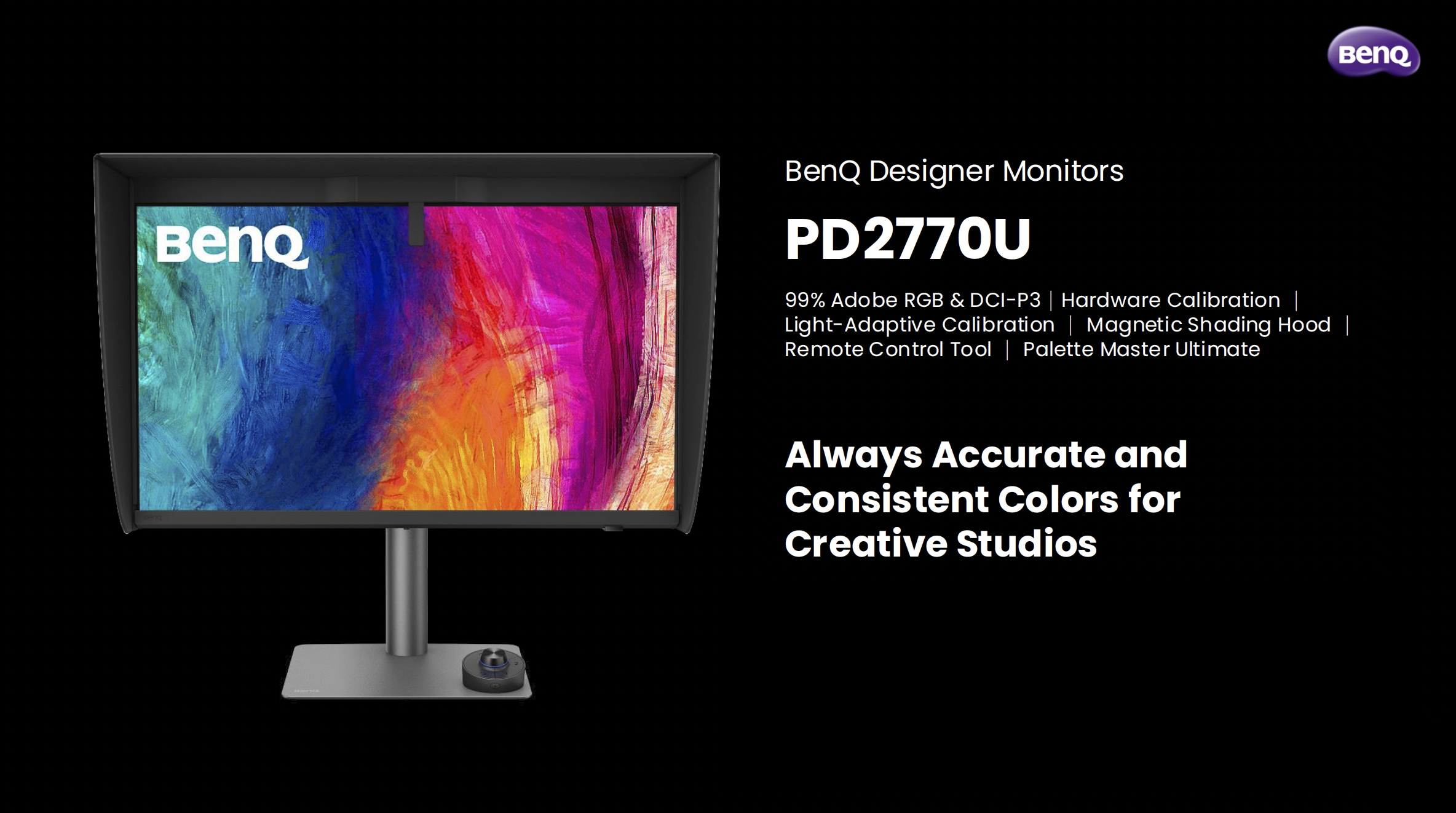
I don't normally do product reviews, but when something comes along that solves a genuine pain point in the studio, I have to share it. BenQ has just released the PD2770U, their first display in the Creative Pro range with a built-in calibration device, and it is a total game changer for my workflow.

While the 27-inch anti-glare screen and the clever magnetic shading hood are great additions, the real star of the show is tucked away at the top of the monitor.

Total Calibration Control

The built-in calibrator isn't just a gimmick; it is a serious tool for anyone who cares about colour accuracy. You can use it in a couple of different ways depending on how you like to work.

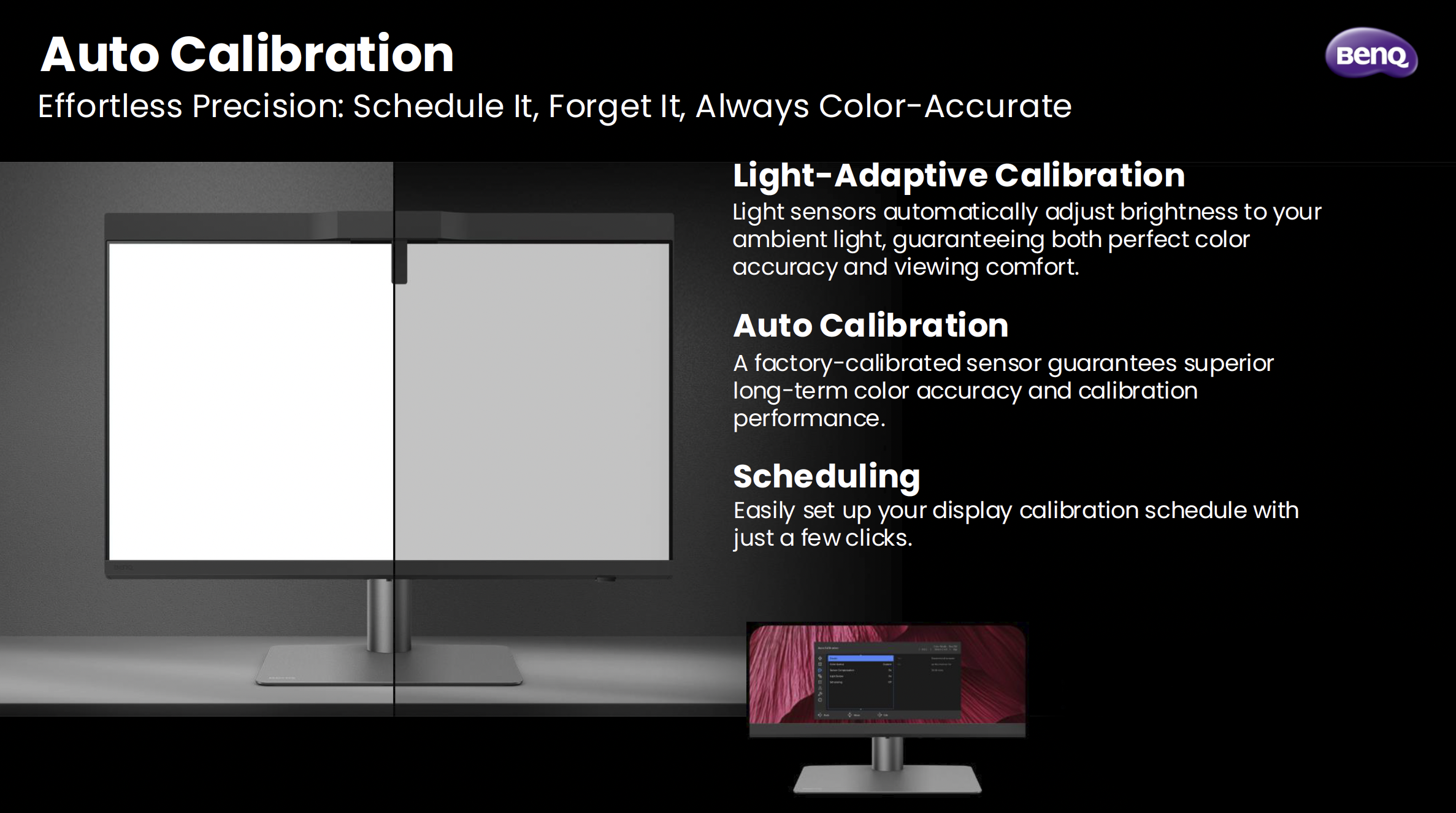
There is an auto-calibration feature that keeps the screen accurate to standards like Adobe RGB or sRGB. What I find particularly useful is the ability to schedule this. You can set the monitor to calibrate itself daily or weekly, meaning you never have to wonder if your colours have drifted. If you are running a studio with multiple displays, the inclusion of an Ethernet port makes networking and managing these calibrations even easier.

Putting it to the Test

For my work, especially when I’m preparing images for print, I need very specific settings. I used BenQ’s Palette Master Ultimate software to see how the built-in sensor handled my preferred targets:

  • Luminance: 60 candela

  • White Point: D65

  • Gamut: Adobe RGB

  • Gamma: 2.2

  • Black Point: 0.5

The results were spot on. The average delta E came back at just 0.68, which is incredible. To satisfy my own curiosity, I ran the same test using my external Calibrite Display Pro HL. The results were almost identical.

Because the performance is so close, the convenience wins every time. I no longer have to dig out cables or hang devices over the screen; the built-in sensor does it all.

A Pro Tip on Lighting

One feature I always recommend turning off is the ambient light sensor. While it sounds like a good idea, you really don't want your screen brightness moving up and down while you are editing. It is much better to control the light in your room with curtains or shutters so your working environment stays consistent.

Is it Worth it?

When you look at the price, this monitor makes a lot of sense. At £1,499 including VAT, it sits at a much more accessible price point than equivalent displays from the likes of Eizo, which can cost upwards of £2,400 for a similar spec.

I’ll be doing a more in-depth look at the other features soon, but for the calibration system alone, this is a massive step forward for the Creative Pro range.

If you’re interested in gear like this or just want to chat photography, come and join us in our free community on Skool. It’s a brilliant, safe space to learn and meet other photographers without the usual social media noise. ( LINK )

BenQ Creative Pro PD2770U: The Display I've Been Waiting For 😍

There are products that come along and tick boxes, and then there are products that come along and actually solve a problem you've been living with for years. The BenQ Creative Pro PD2770U falls firmly into the second category for me.

Let me explain why …

A Built-In Calibrator. Finally.

If you've followed my work for any length of time, you'll know I've been a BenQ display user for a long time. I've recommended their monitors, used them in my own setup, and talked about them on the channel more times than I can count, but there has always been one thing missing … a built-in hardware calibrator.

Every time a new BenQ display launched, that was the thing I found myself quietly hoping for, and every time, it wasn't there. Until now.

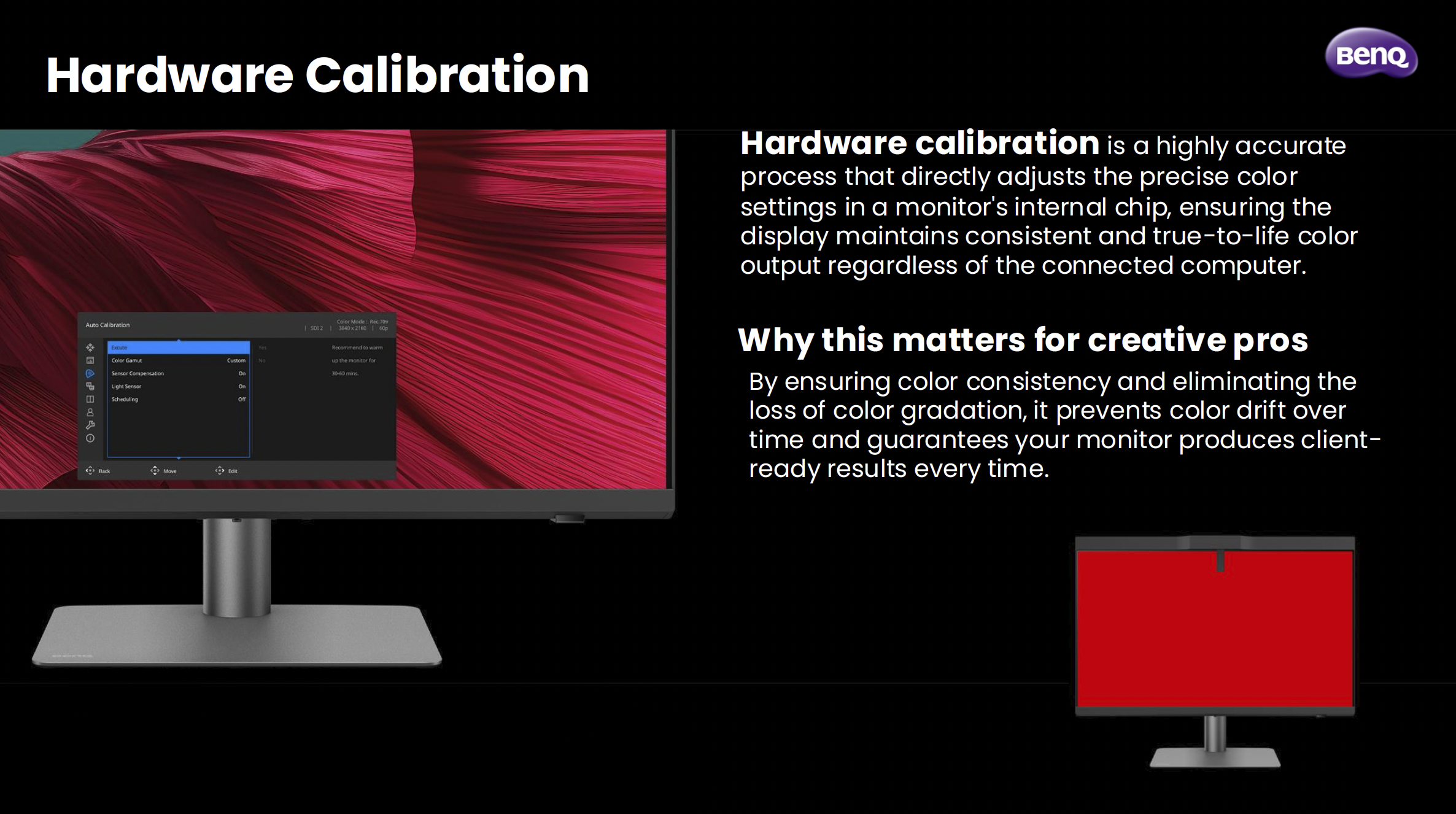
The PD2770U is the first BenQ PD Creative Pro display to feature hardware calibration with a built-in calibrator, and honestly, that alone was enough to get my attention. Hardware calibration is a different beast to software calibration. Rather than adjusting things at the GPU level, it works directly inside the monitor's chip. The result is more accurate, more consistent, and doesn't eat into your bit depth the way software calibration can. For anyone doing colour-critical work, that distinction genuinely matters.

What makes it even smarter is something BenQ calls Light-Adaptive Calibration. The display has a light sensor that reads your ambient environment and adjusts the monitor's brightness to match before the calibration runs. It sounds like a small detail, but it's actually solving a real problem. How many times have you calibrated a display only to find the brightness felt off the moment you sat back down to work? That's exactly what this is designed to prevent.

Also, you can schedule it. Set it, walk away, come back to a calibrated display. No puck, no laptop, no cables. Just done.

Why I've Made This My Main Display

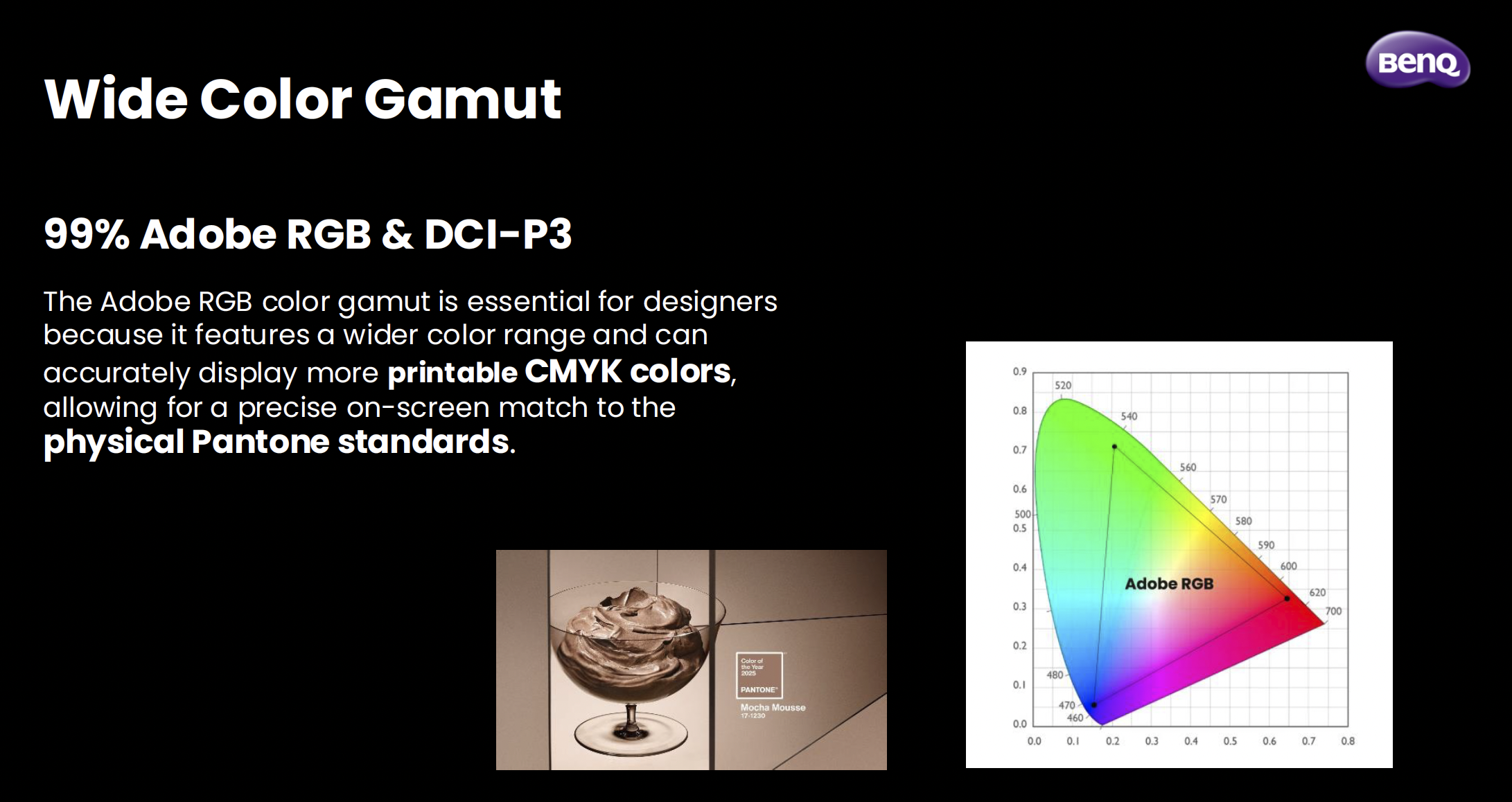
I've switched the PD2770U to my main display, and the reason comes down to one thing: Adobe RGB.

I do a lot of work that ends up in print, and Adobe RGB covers a much wider range of printable colours than standard sRGB. When you're working in a narrower colour space and then sending files to print, you're essentially working blind. What you see on screen isn't what comes back from the lab. The PD2770U covers 99% of Adobe RGB, which means what I'm seeing when I'm editing is as close as it gets to what's actually going to be printed.

Pair that with a Delta E of ≤1.5 out of the box, triple certification (Calman Verified, Pantone Validated, and SkinTone Validated), and the fact that the panel goes through BenQ's AQCOLOR uniformity calibration where every section of the panel, right out to the edges, is individually tuned, and you've got a display that I genuinely trust. That trust is hard to put a price on when you're making colour decisions for print.

The Bits That Make Day-to-Day Life Easier

Beyond the calibration story, there are a few things about this display that have genuinely improved how I work day to day.

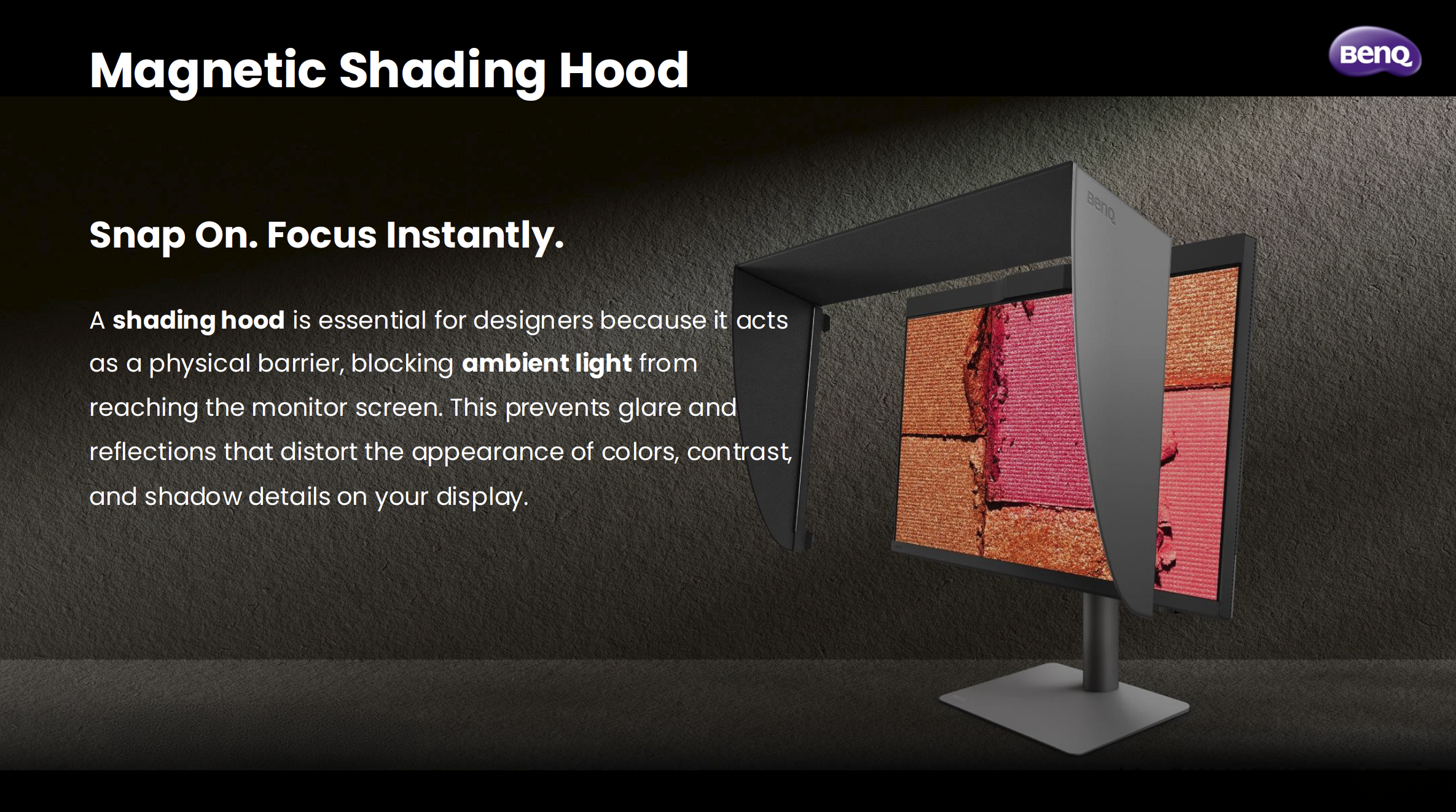
The magnetic shading hood is one of them. It snaps on cleanly, blocks ambient light from messing with how you perceive colour on screen, and is built from noticeably sturdier material than what I've seen on other hoods. It's one of those things where you don't realise how much ambient light was affecting your judgement until you block it out.

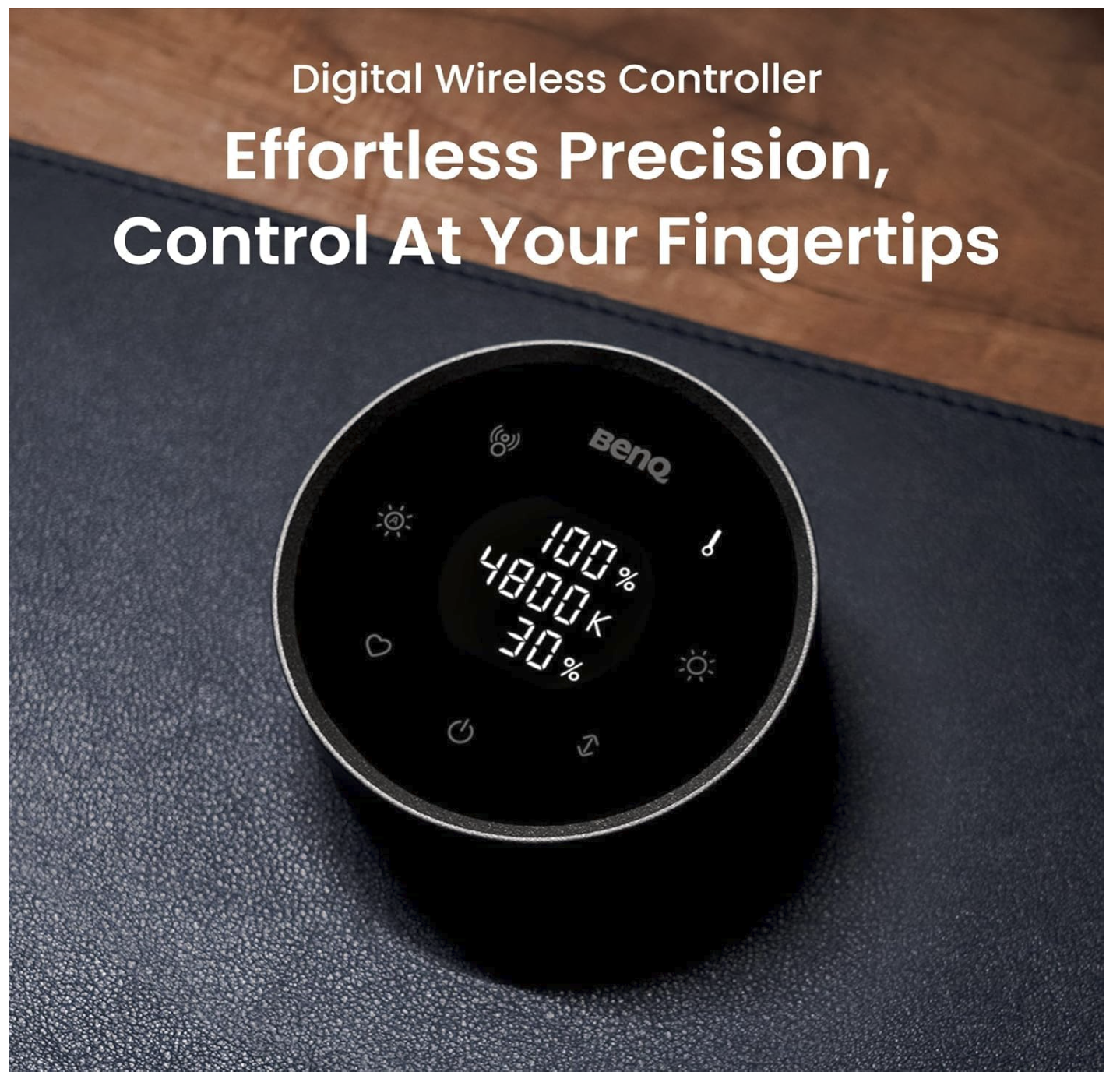
The Wireless Hotkey Puck G3 is another. It's a small dial that sits on your desk and lets you switch colour modes, inputs, and now with the G3, launch applications directly. I use it to jump between Adobe RGB mode and sRGB mode when I need to check how something's going to look on a standard screen. It sounds like a minor convenience, but when you're doing it multiple times a day, having it on a dial rather than digging through a monitor menu makes a real difference.

On the connectivity side, the PD2770U has two USB-C ports (both at 96W charging), two HDMI 2.1 ports, a DisplayPort, and a wired ethernet port via RJ45. My desk runs a single USB-C cable from the laptop to the monitor, and everything else flows through the display. Clean, simple, exactly how it should be.

The Panel Itself

27 inches, 4K UHD, IPS. The panel uses BenQ's Nano Matte technology, which brings the reflection rate down to under 3%. That's noticeably lower than a standard matte panel sitting at 3.5%, and miles away from a glass panel at over 4%. In a real working environment with lights and windows, that matters more than it sounds on paper.

It's a 60Hz panel, which for creative work is absolutely fine. This isn't a gaming monitor. It's built for people who need to trust what they're looking at.

Is It Worth It?

If you shoot for print, work in Adobe RGB, or just want the confidence of knowing your display is consistently accurate without faffing about with external calibrators and third-party software, yes, I think it is. The built-in calibrator alone changes the equation for the PD range. The fact that it comes with everything else the PD2770U offers makes it, for me, the most complete BenQ display I've used.

I've wanted a display like this from BenQ for a long time, and this has definitely worth the wait.

How I Calibrate My BenQ SW272U Display for Photography and Everyday Use

One of the questions I get asked most often is how to correctly calibrate a display for photo editing and printing. Getting a reliable screen-to-print match can save you a huge amount of time, paper, and frustration.

In this article, I’ll walk you through the calibration process I use on my BenQ SW272U display. I’ll share the exact settings I rely on for editing and printing, as well as a second calibration I use for everyday tasks like browsing the internet, emails, and watching videos.

The good news is that while I use BenQ’s Palette Master Ultimate software, the same principles apply no matter what brand or software you use.

Why Two Calibrations?

Your requirements are very different when you are editing images compared to when you are simply watching videos or scrolling through emails.

  • Photo and Print Calibration – designed for accuracy and consistency. A lower brightness, neutral white point, and subtle black levels that preserve shadow detail.

  • Everyday Use Calibration – designed for a punchier, brighter look. Strong contrast and deep blacks make general computing and video viewing more enjoyable.

With a hardware calibrated display, it is easy to switch between these profiles at the push of a button.

Tools I Use

  • BenQ SW272U Display (hardware calibration capable)

  • Calibrite Display Pro HL (connected via USB-C or USB adapter)

  • Palette Master Ultimate Software (BenQ’s calibration tool)

Calibration for Photo Editing and Printing

Step 1 – Connect and Configure

I plug my calibration device into the USB port on the monitor. On BenQ displays, make sure the USB setting is at 60 Hz in the on-screen menu, otherwise the device may not be recognised.

Step 2 – Start Palette Master Ultimate

Open the software, select your display, and choose the calibration device. Then go into Color Calibration and click Start.

Step 3 – Create a Custom Target

The default presets are not suitable for serious photography. They tend to be too bright, too cool, and overly contrasty. Instead, I set up my own target:

  • Luminance: 60 cd/m² (much lower than the default 120 cd/m², but it gives me the most accurate screen-to-print match in my workspace).

  • White Point: 6000K (to match the 6000K LED lighting in my studio).

  • Gamut: Adobe RGB.

  • Gamma: 2.2 (with Enhanced Gamma Calibration enabled for better black and white printing).

  • Black Point: 0.5 cd/m² (slightly lifted from pure black so shadow detail is visible).

I save this as a custom preset called Photo & Print and assign it to Calibration 1 on the monitor.

Step 4 – Run the Calibration

Place the sensor on the screen, tilt the display back slightly, and let the software run. The process takes about 7 minutes.

Step 5 – Check Results

The software generates a report showing how closely the calibration matched the targets. For example, my most recent run achieved:

  • Luminance: 58 (target 60)

  • White Point: 6040K (target 6000K)

  • Black Point: 0.51 (target 0.5)

These are excellent results. The key metric is Delta E, which measures accuracy. A value below 4 is considered good, below 2 is excellent. My calibration achieved an average of 0.53 with a maximum of 1.28.

This means my display is performing very accurately, giving me confidence in my editing and printing.

Calibration for Everyday Use

When I am not editing or printing, I want a brighter, more contrasty display for daily computer use. Instead of creating a custom target, I simply use the built-in Photography preset in Palette Master Ultimate, but assign it to Calibration 2.

This gives me:

  • Bright luminance for comfortable viewing

  • White Point at D65 (6500K), which is the standard for TVs, tablets, and smartphones

  • Absolute black point for deep contrast

The calibration process is the same: place the sensor, let the software measure, and save the profile.

Final Thoughts

By creating two calibrations and assigning them to different preset buttons, I can switch between Photo & Print and Everyday Use in seconds.

For editing and printing, I get a display that shows me accurate colors, controlled brightness, and detail in the darkest areas. For browsing, video, and general use, I enjoy a bright, punchy image that looks fantastic.

If you own a hardware calibrated display like the BenQ SW272U, I highly recommend setting up both profiles. It makes your editing workflow more accurate and your day-to-day computing more enjoyable.

BenQ PD2730S - The 5K Upgrade My Desk Was Missing ✅

The BenQ PD2730S is a premium 27-inch 5K (5120×2880) monitor designed for creative professionals who demand high resolution and precise color. It offers:

  • Exceptional image clarity at 218 PPI — ideal for photo, video, and design work.

  • Wide color gamut with 100% sRGB, 100% Rec.709, and 98% DCI-P3 coverage; factory-calibrated to Delta E ≤ 2.

  • Professional features, including a Nano-Matte anti-glare coating, HDR10 support, and the Hotkey Puck G3 for quick adjustments.

  • Extensive connectivity, with Thunderbolt 4 (90W PD), USB-C, HDMI 2.1, DisplayPort, and a 10 Gbps USB hub.

  • Ergonomic design with full adjustability and VESA compatibility.

While its HDR capabilities and built-in speakers are modest, the PD2730S delivers superb color performance, sharp visuals, and a workflow-friendly design — making it a strong alternative to the Apple Studio Display.

Editing my Photographs in Lightroom on my iPad Pro

Now that I’ve been able to calibrate the screen on my iPad Pro, I’m really enjoying it when from time to time I retouch some of my pictures on it; reason being that the results on my calibrated iPad Pro are extremely close to how they look on my calibrated BenQ SW 272U Display.

I always struggled taking it seriously before now because it wasn’t calibrated and thought …

What’s the point when I’d then have to go and make corrections
in Lightroom on my desktop afterwards?
— Me (Before)

But now this is definitely not the case …

I actually had the technical folks at Calibrite reach out to me after having seen the iPad Pro calibration video I shared on my YouTube channel, asking if I’d be able to do a 2nd calibration to check whether the one I did was indeed accurate; and it most definitely was …

  • Target Luminance = 100cd/m2

  • Achieved Luminance = 99.355cd/m2

  • Target X = 0.3127

  • Achieved X = 0.313

  • Target Y = 0.3290

  • Achieved Y = 0.331

So yeah … the calibration of the iPad Pro screen worked a treat!

If you didn’t see the video I put together showing how to calibrate the iPad Pro and whaich also makes sense of what all this Luminance, X and Y stuff is all about, here it is …

So now, knowing that my iPad Pro screen calibration is good, I’m definitely making more use of it; not for every edit but just for those times when I just fancy sitting with my feet up in front of the TV and tinkering and when out and about on a phot shoot and then grabbing a coffee.

Also on those occasions if I haven’t finished the editing, when I get back home in front of my main computer I can just pick up in Lghtroom on my desktop from where I got to in Lightroom on my iPad Pro; such is the way that Lightroom syncs across all devices.

Clever stuff!

Actually on the subject of getting home and diving back on to my main computer, I’ve some new kit coming that is going to improve my workflow, set up and backing up, so I’ll make sure to share about that here and in a video 👍🏻

FIXED 💥 BenQ Display CALIBRATION SETTINGS + Hot Key Puk

If you’ve a BenQ Display with a Hot Key Puk, when calibrating the display using either the Palette Master Ultimate and Palette Master Element software you can assign different calibrations into 3 different presets namely calibration 1, calibration 2 or calibration 3.

Each of these can then be quickly and easily junmped between using the corresponding 1, 2 and 3 keys on the Hot Key Puk.

However, if when pressing 1, 2 or 3 the display doesn not change to the corresponding calibration setting, here’s the VERY simple fix …

Note:

As a BenQ Ambassador I am able to help out with a discount on anty of the SW and PD range of displays.

If you’d like to know more, just drop me a message using the CONTACT page

DISPLAY 123 - Screen Calibration SIMPLIFIED but IT'S NOT FOR EVERYONE

The Display 123 from Calibrite removes the technicals from Screen Calibration making it possible for everyone with a simple 3 step process ... BUT it's not aimed at the Professional!

NOTE

The Display 123 is NOT suitable for the new LED technology Displays such as in the New Apple Macbook Pro M3 and Apple Pro Display XDR; for these a device like the Display Pro HL from Calibrite would be needed. The display 123 COULD prolfile these displays however only in sRGB. For all other displays using Backlit technology (which is currently the majority of displays on the market, the Display 123 will Calibrate the screen albeit without the additional parameters that more expensive / high end devices can. The display 123 is more aimed at the Consumer as opposed to the Professional.

For more information check out the Calbrite website ( LINK )

Want / Need a BIGGER Display to use with your Apple MacBook ?

So this morning I was contacted by someone from my Newsletter Subscriber list asking about the BenQ Discount I’m able to give details about for their SW and PD range of displays, but also asking a bit of advice on their choice of display.

In short, they use a MacBook Pro as their main computer but the current display (not BenQ) that they plug their MacBook into, after a good few years of reliable service has developed a fault that by all accounts to get fixed would cost more than a replacement, so … a replacement it is.

SW or PD ?

Initially they were looking at getting the BenQ SW272Q which basically has the same spec as the display I have, the SW272U other than it’s a 2K display rather than 4K, however after a bit of digging about to discover exactly what they do, I suggested they consider a Display from BenQ’s PD Range.

As for ‘what they do’ it was mainly editing their photographs but not doing any home printing; if they did print any images they used a lab. They also did a little bit of video editing for social media content and the rest was general day to day computer use stuff.

The reason I recommended they take a look at the PD range of displays from BenQ was first and foremost because their main computer is their MacBook Pro.

Mac Ready

The PD range of displays are Mac Ready, meaning when you connect the MacBook and turn on M-Book mode you get identical colour and brightness, basically meaning no difference between the MacBook screen and the BenQ PD display.

HASSLE FREE Connection

Using just one cable, Thunderbolt 3, you connect the MacBook to the display and this cable is also used for audio, video and data.

ERGONOMIC STAND INCLUDED

The PD displays come with an ergonomic stand that as well as having that Mac metal kind of look, is also able to tilt, rotate and is height adjustable.

2 DISPLAYS IN 1

I have the PD 3420Q as a 2nd display, and because of the ultra wide screen format being 3440 x 1440, it’s like having 2 Displays in 1.

Unless I have Premiere Pro open full screen on my PD display, I’ll often have the Chrome Browser AND my MacMail open together side by side which makes day to day working at my computer way more efficient.

There’s lots more to the PD displays but I just thought it beneficial to share the main reasons I recommended the PD over the SW range of displays, and also to give you something to think about if you were consiodering a new display … especially if you’re a Mac user.

PRICE DISCOUNT

Anyway, if you are looking to get a new display now or in the near future, drop me a message and I’ll give you a link to a page where I have details that explain how you can get a discount on Benq displays in the SW and PD range.

There’s a reason I won’t just post that openly here and when you go to the page I explain why that is 😉

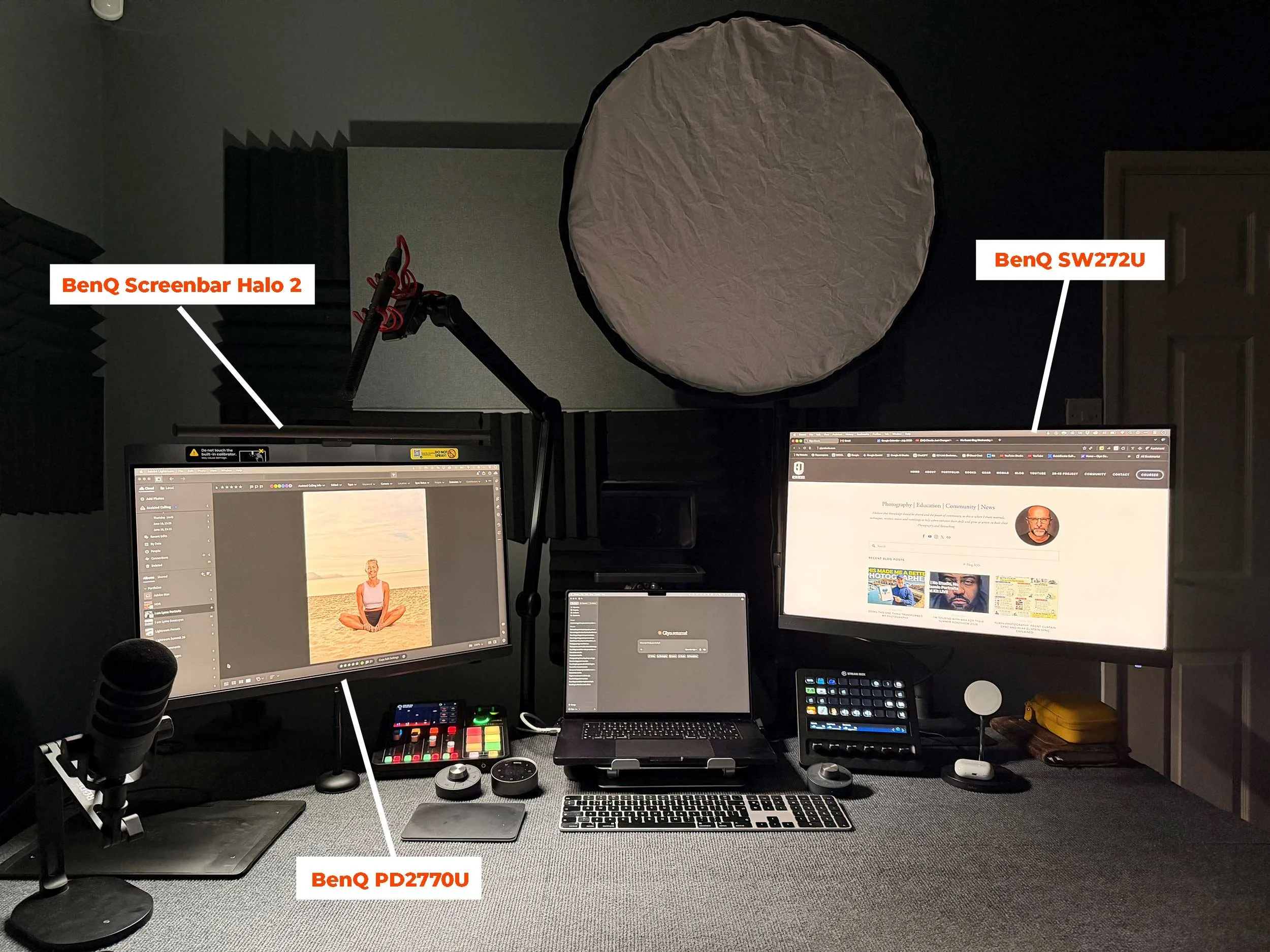
Also, here’s a link to my GEAR page where you can see my desktop set up and the displays I use.

My ULTIMATE Desktop Set Up for Photography, Content and Zoom ( YouTube LIVE )

I'm often asked about the kit / hardware I use every day for photography , content and live streaming so in this video I'll go through the lot; EVERYTHING I use that makes editing (photography& video) and streaming so much easier.

You can see all of the kit I go through over on my GEAR page.