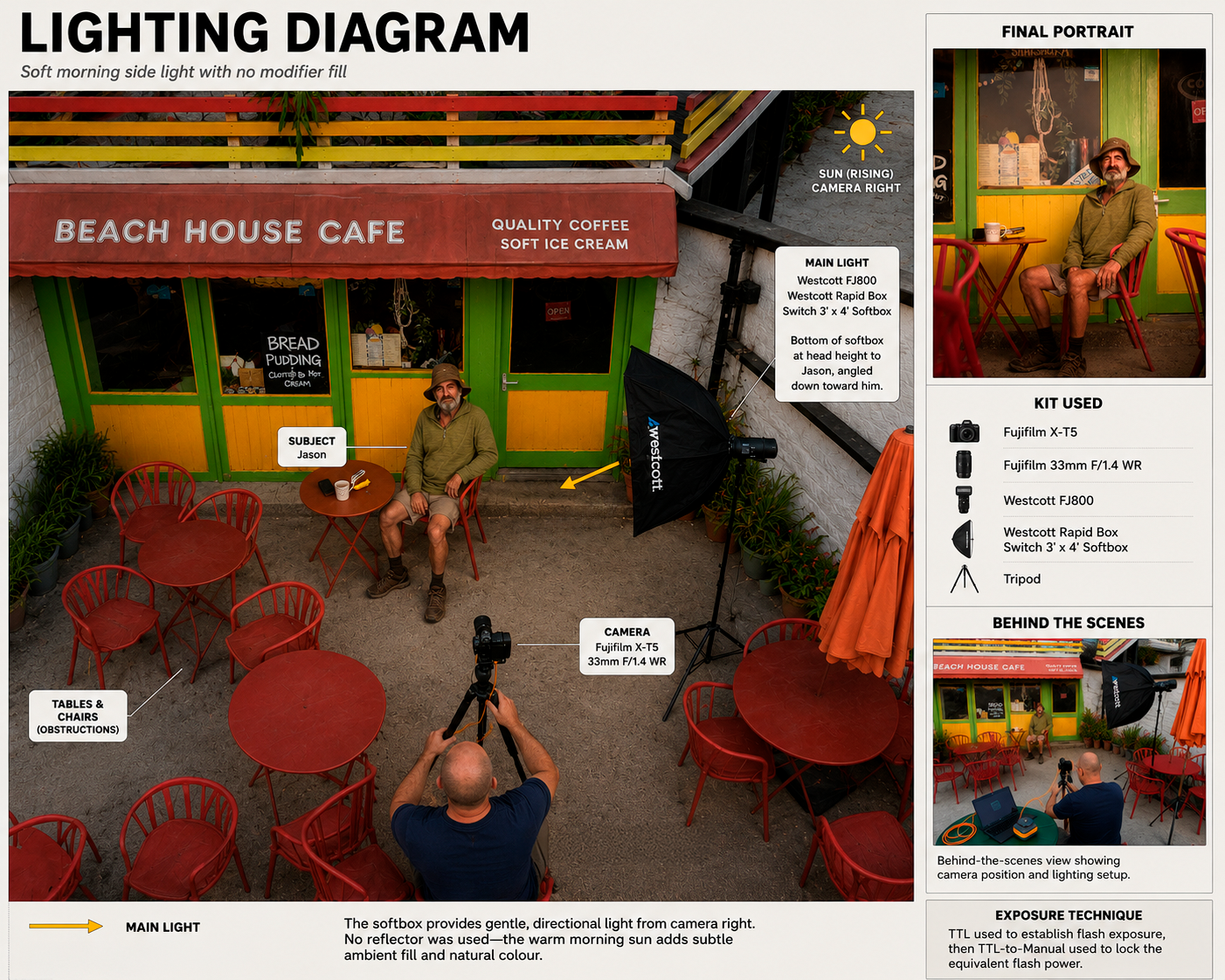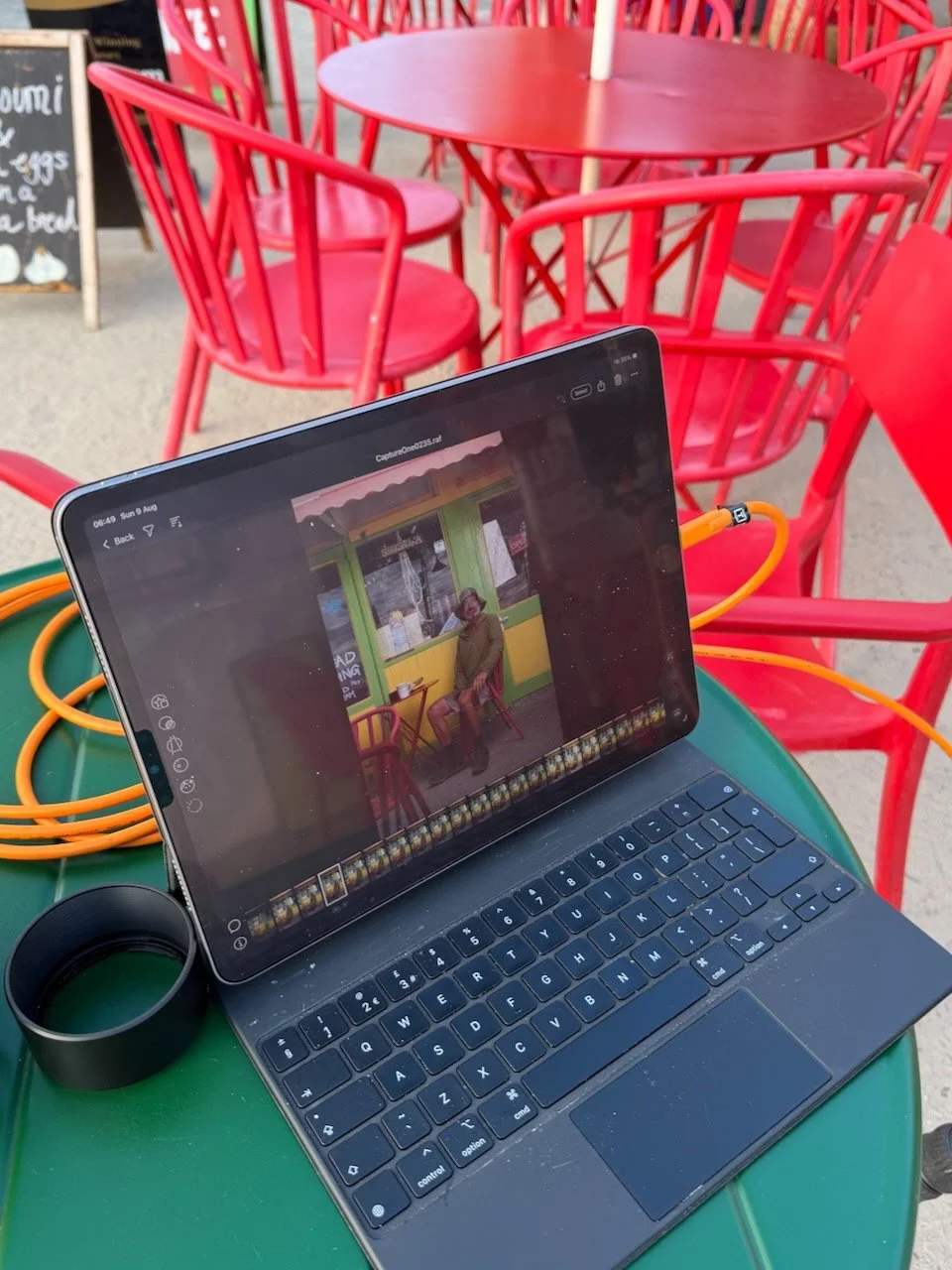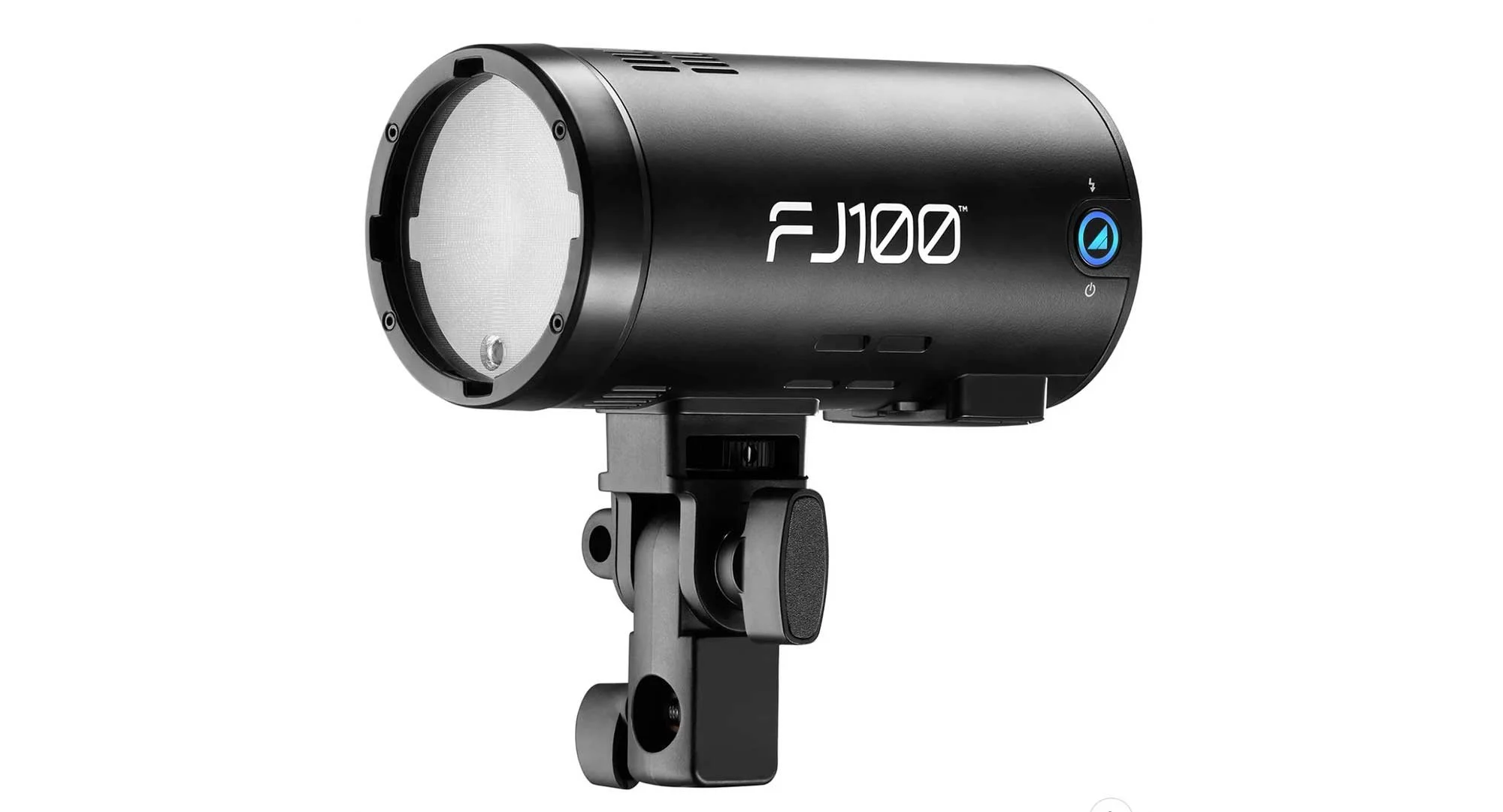
Lighting

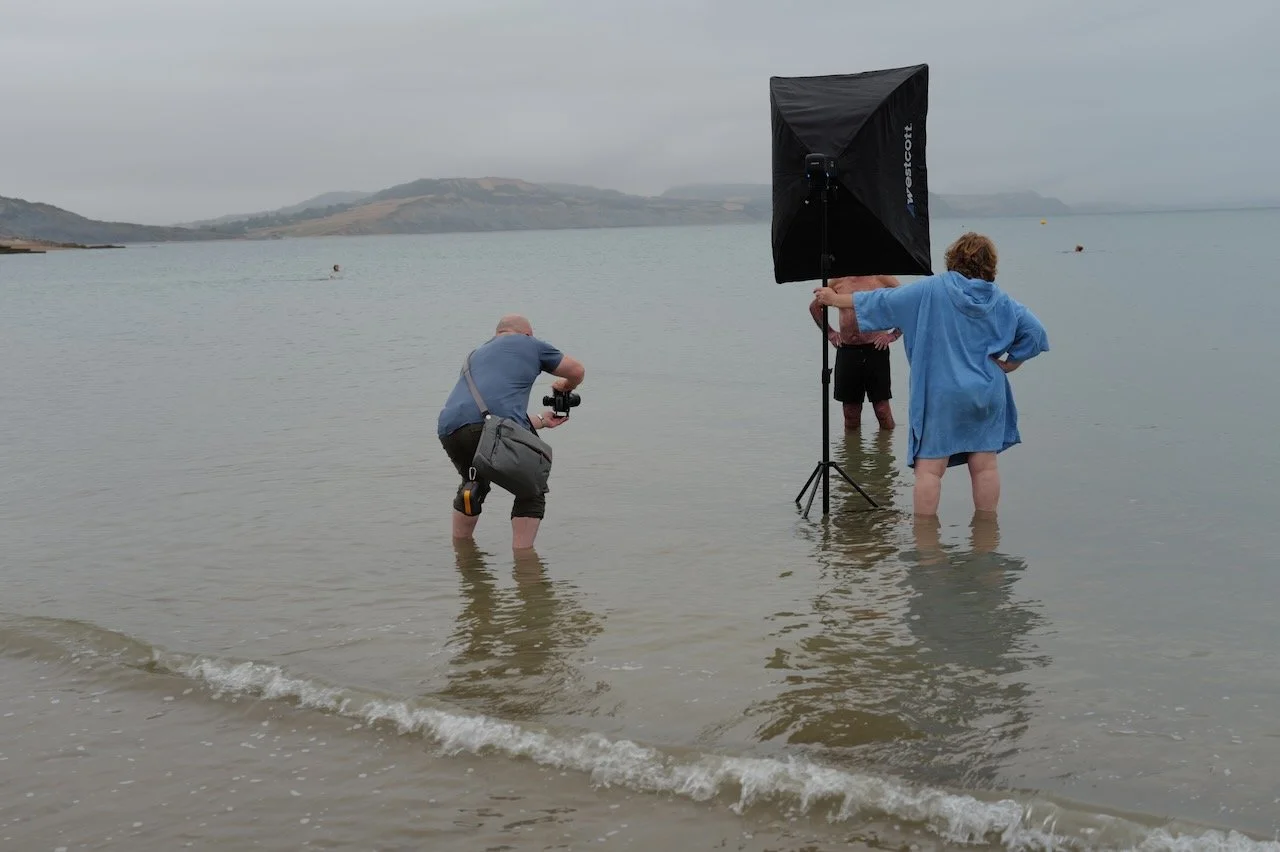
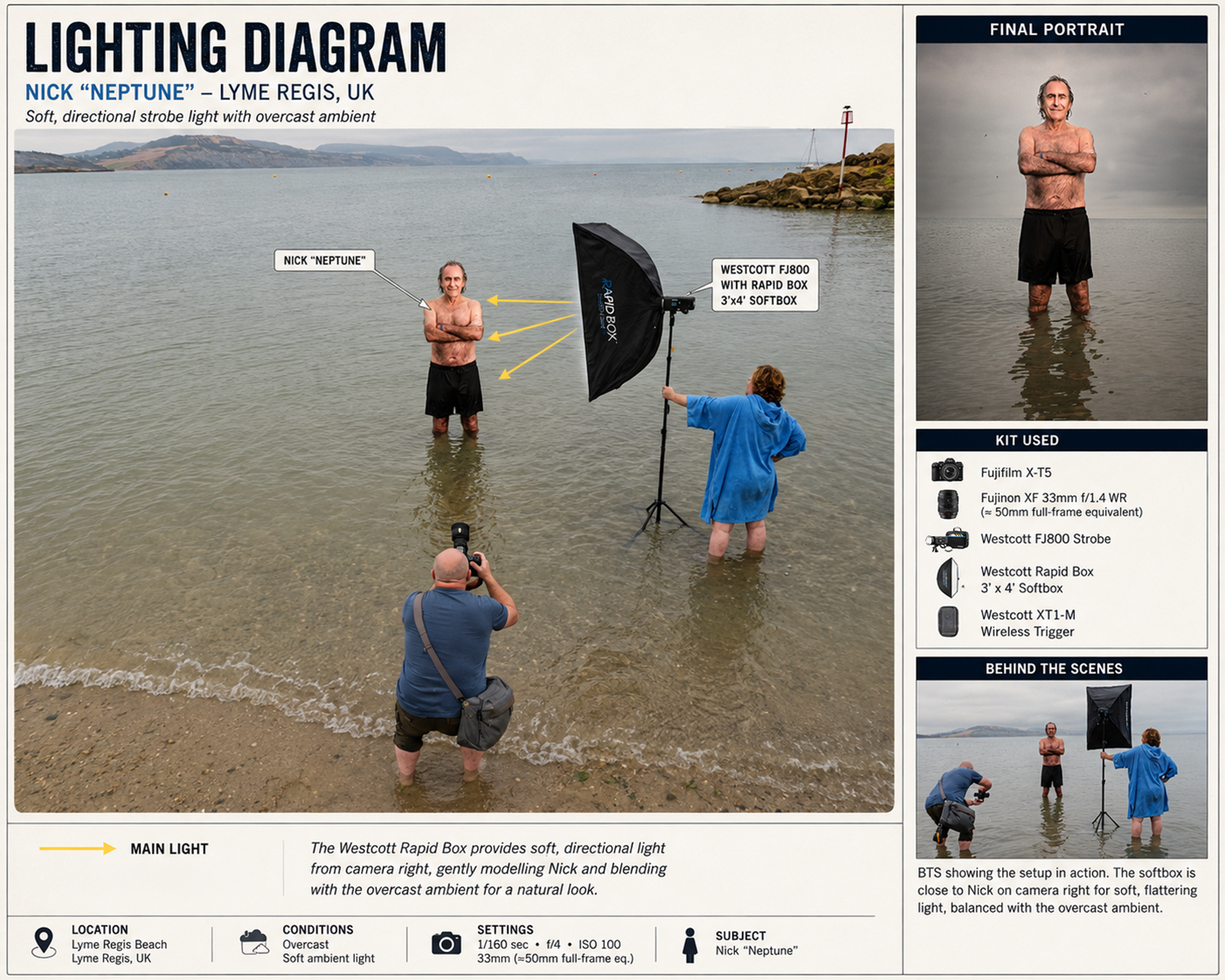
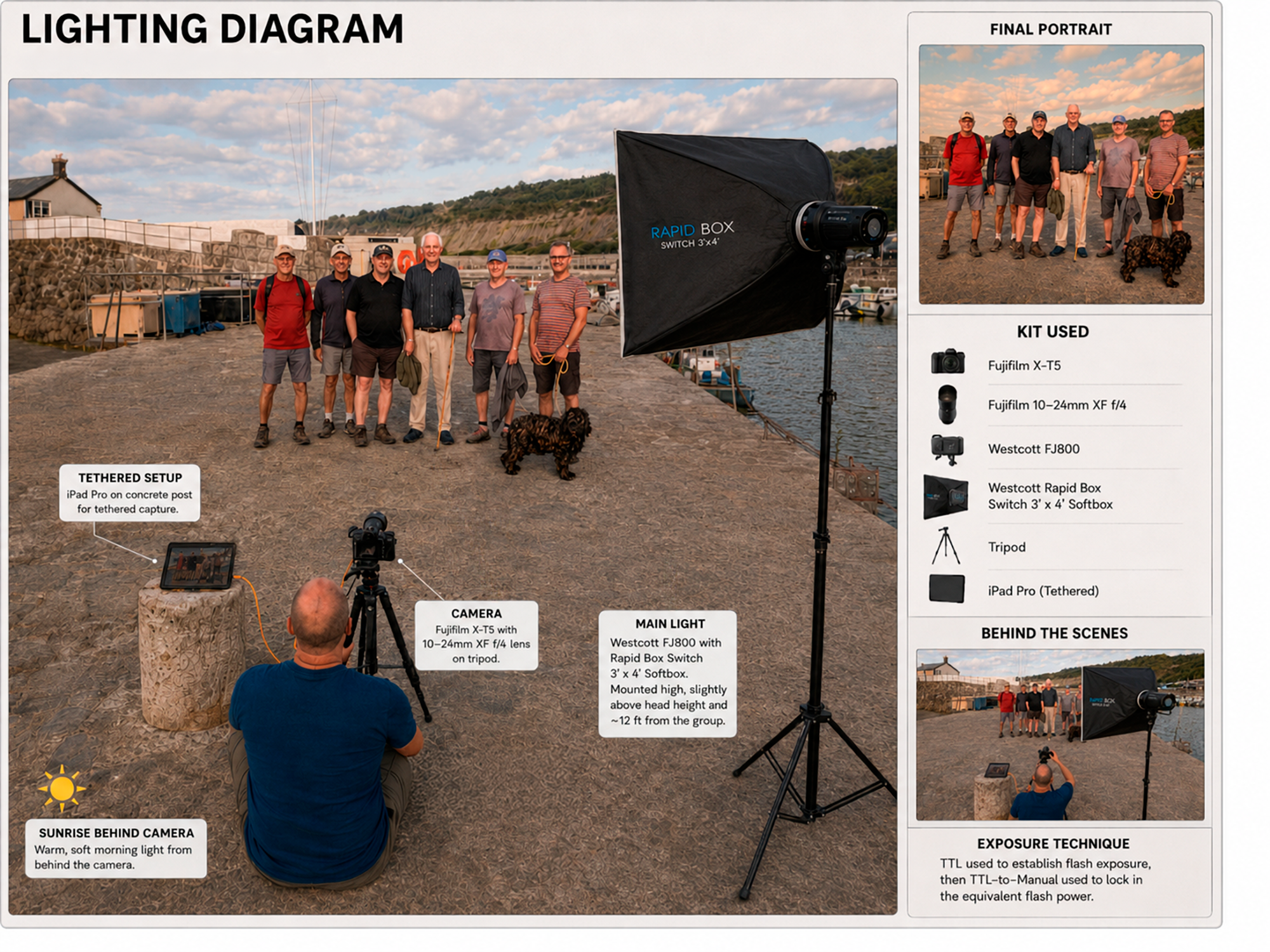
Explained: HSS (High Speed Sync) versus ND when using Flash

High-Speed Sync, or HSS, is a flash mode that lets you use flash at shutter speeds faster than your camera's normal flash sync speed.

For most cameras, normal flash sync speed sits around:

1/160 sec, 1/200 sec or 1/250 sec

Go faster than that and HSS becomes essential.

What High-Speed Sync Actually Does

Normally, when you take a flash photo, the flash fires one quick burst of light while the shutter is fully open. At normal sync speeds, that works perfectly.

But push past your camera's sync speed and the shutter is no longer fully open at any single moment. Instead, a narrow slit travels across the sensor. If the flash fired just one burst at that point, only part of the frame would be lit, leaving you with a dark band across the image.

HSS solves this by making the flash pulse rapidly for the entire time that slit is travelling across the sensor. So instead of one big pop, you get lots of tiny rapid pulses instead.

Why I Use It

The main reason is simple: it lets you shoot with wider apertures in bright light.

Say you're outside on a sunny day and you want to shoot a portrait at f/2.8, f/2, or even f/1.4. That gives you shallow depth of field, a blurred background, nice separation, and that more polished portrait look.

The problem is, in bright daylight, a wide aperture often forces your shutter speed up to something like 1/1000 sec, 1/2000 sec, or even 1/4000 sec. Without HSS, your flash simply won't sync properly at those speeds. With it switched on, you can keep that wide-aperture look and still use off-camera flash.

What It's Really For

Here's where a lot of photographers get it wrong: HSS isn't really there to freeze action. That's a common misunderstanding.

Its real purpose is to give you control over ambient light while still using flash. It frees up your shutter speed, which means you can darken the background, hold onto detail in a bright sky, shoot wide open, and still light your subject properly with flash.

Put simply: HSS lets you make daylight behave itself.

How I Use It in Practice

A typical off-camera flash setup with HSS goes something like this.

1. Set your exposure for the background first

Start without flash. Choose your aperture, for example f/2.8, and set your ISO low, around ISO 100. Then adjust your shutter speed until the background looks the way you want it. In bright daylight, that might mean 1/1000 sec or faster.

At this point your subject is probably too dark. That's where the flash comes in.

2. Turn on HSS

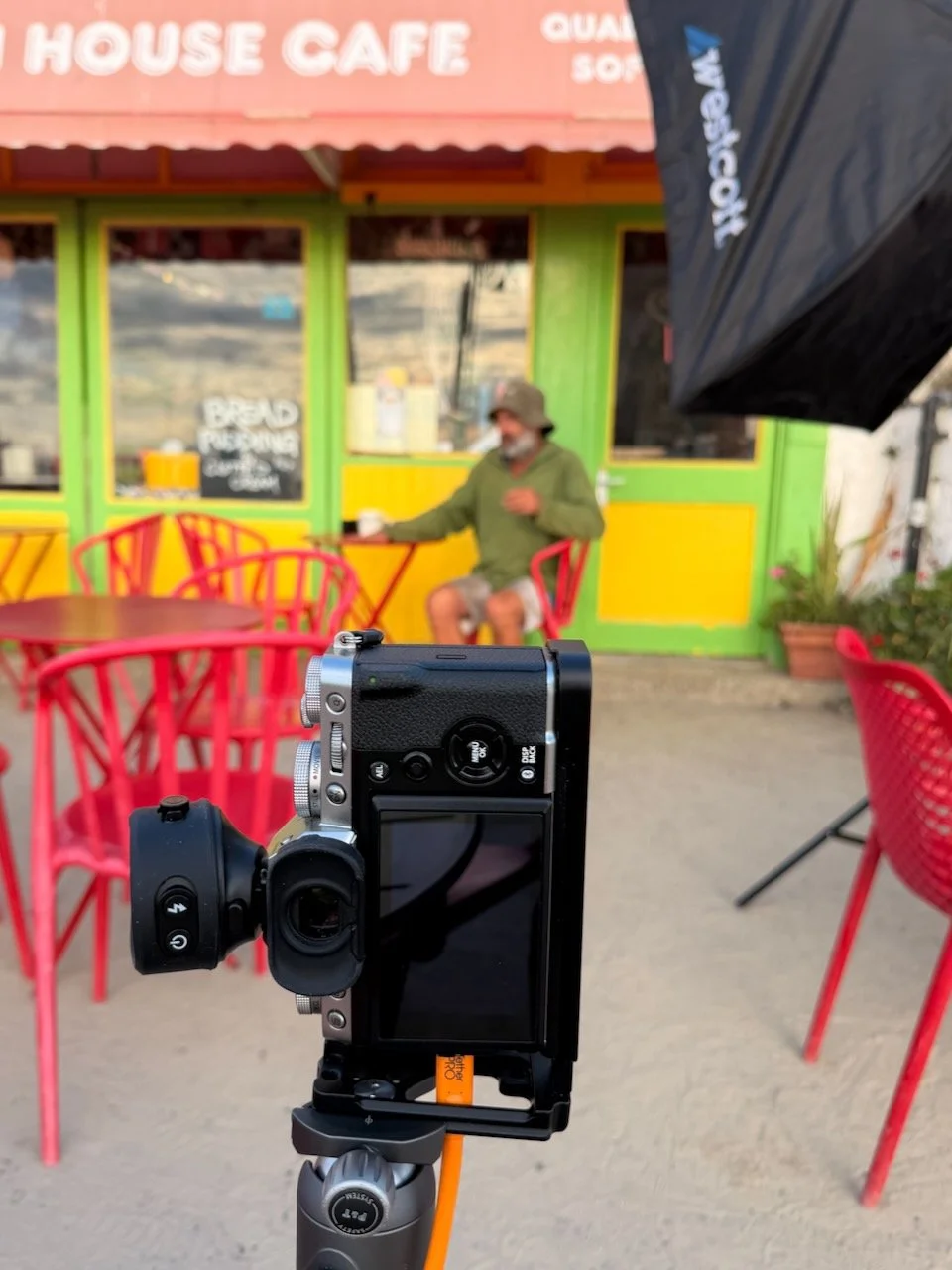
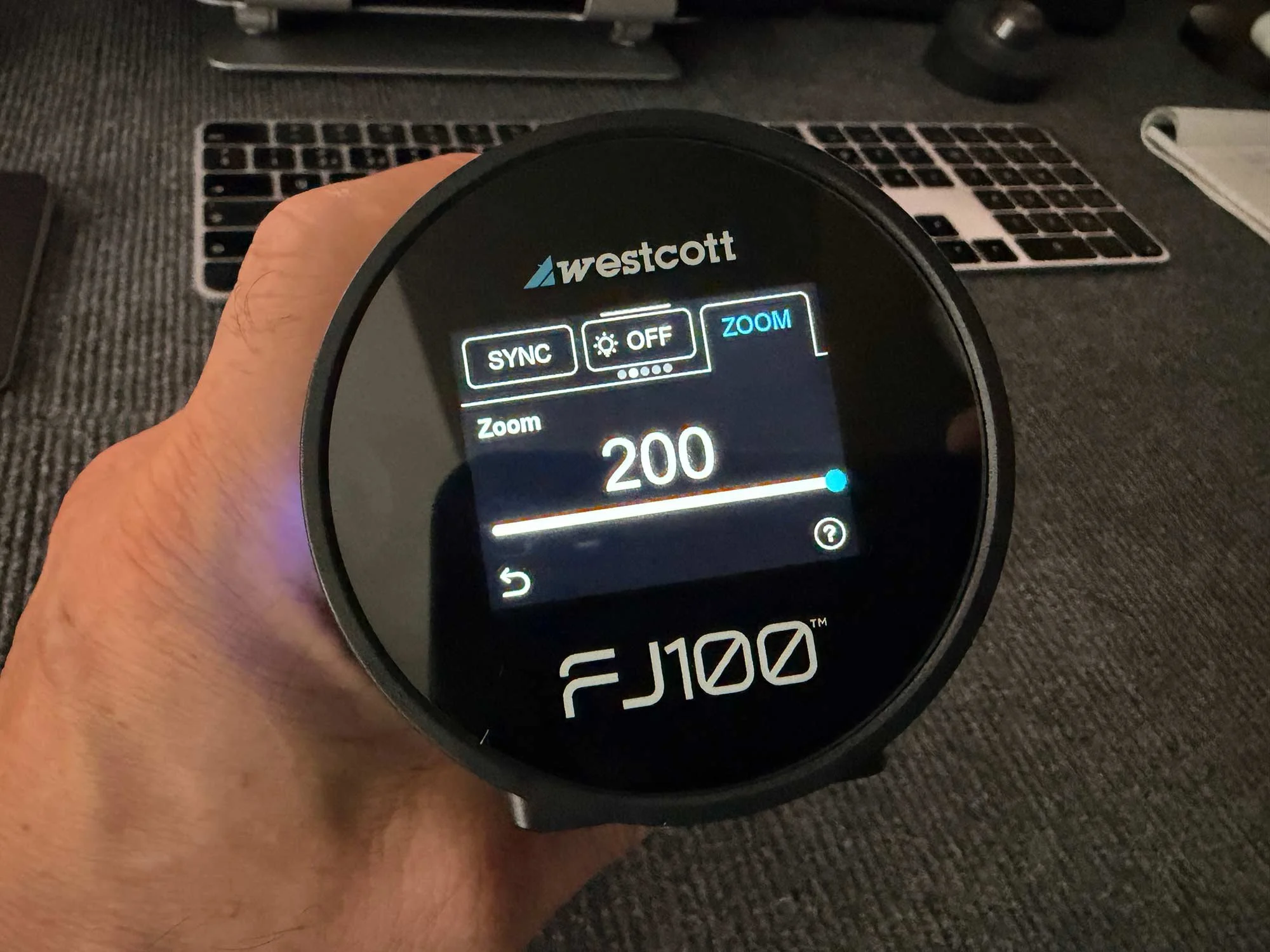
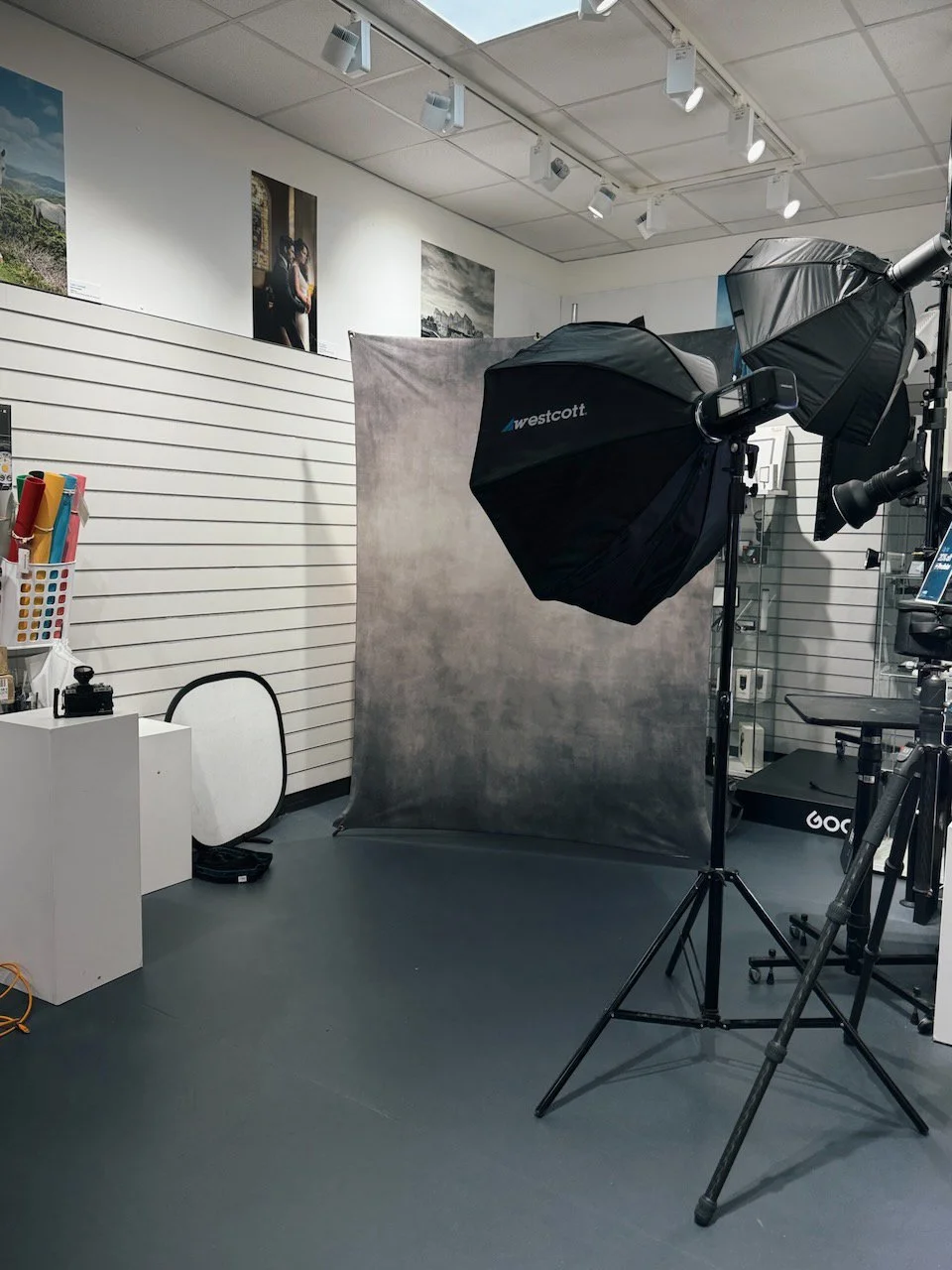
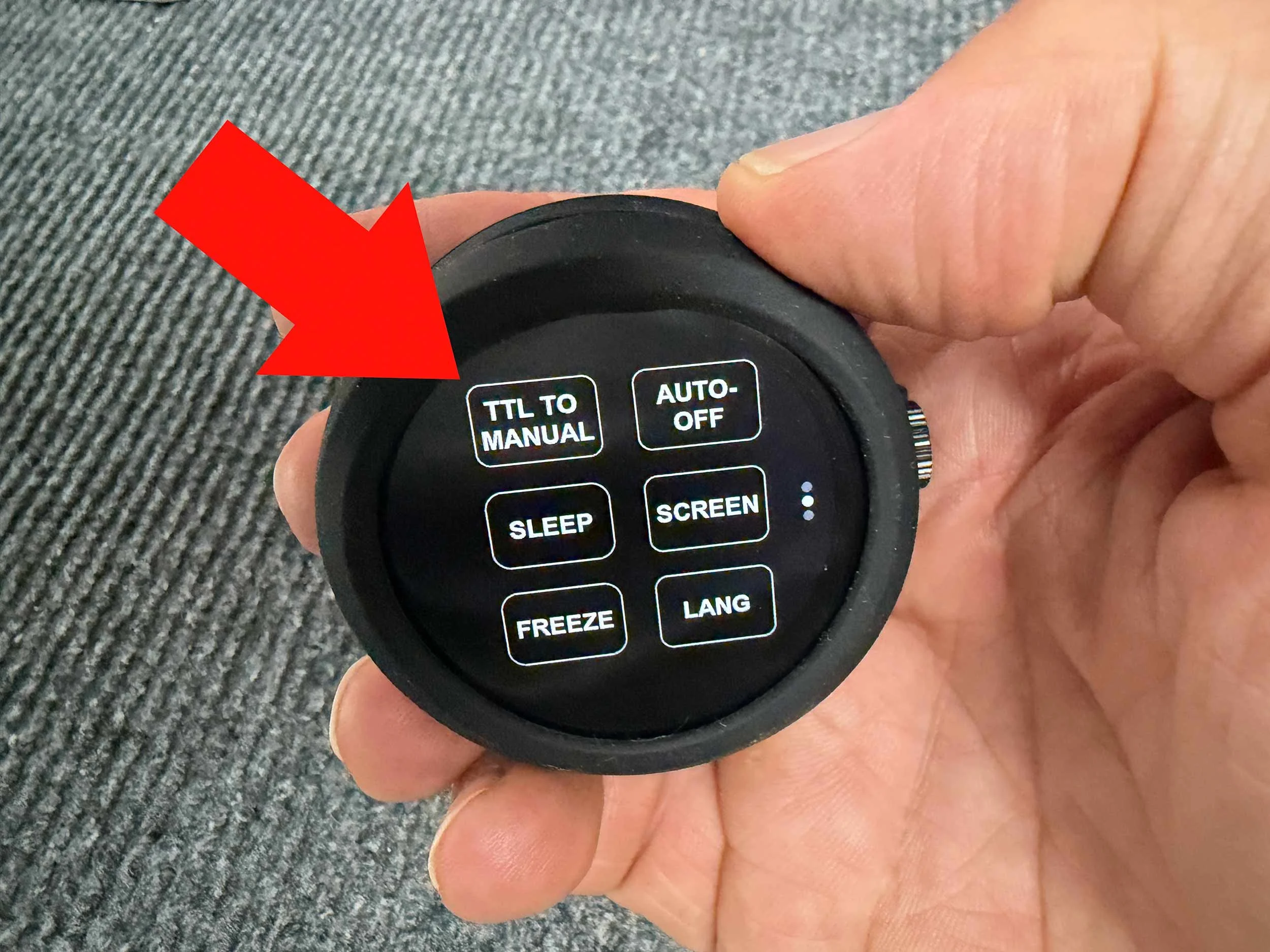
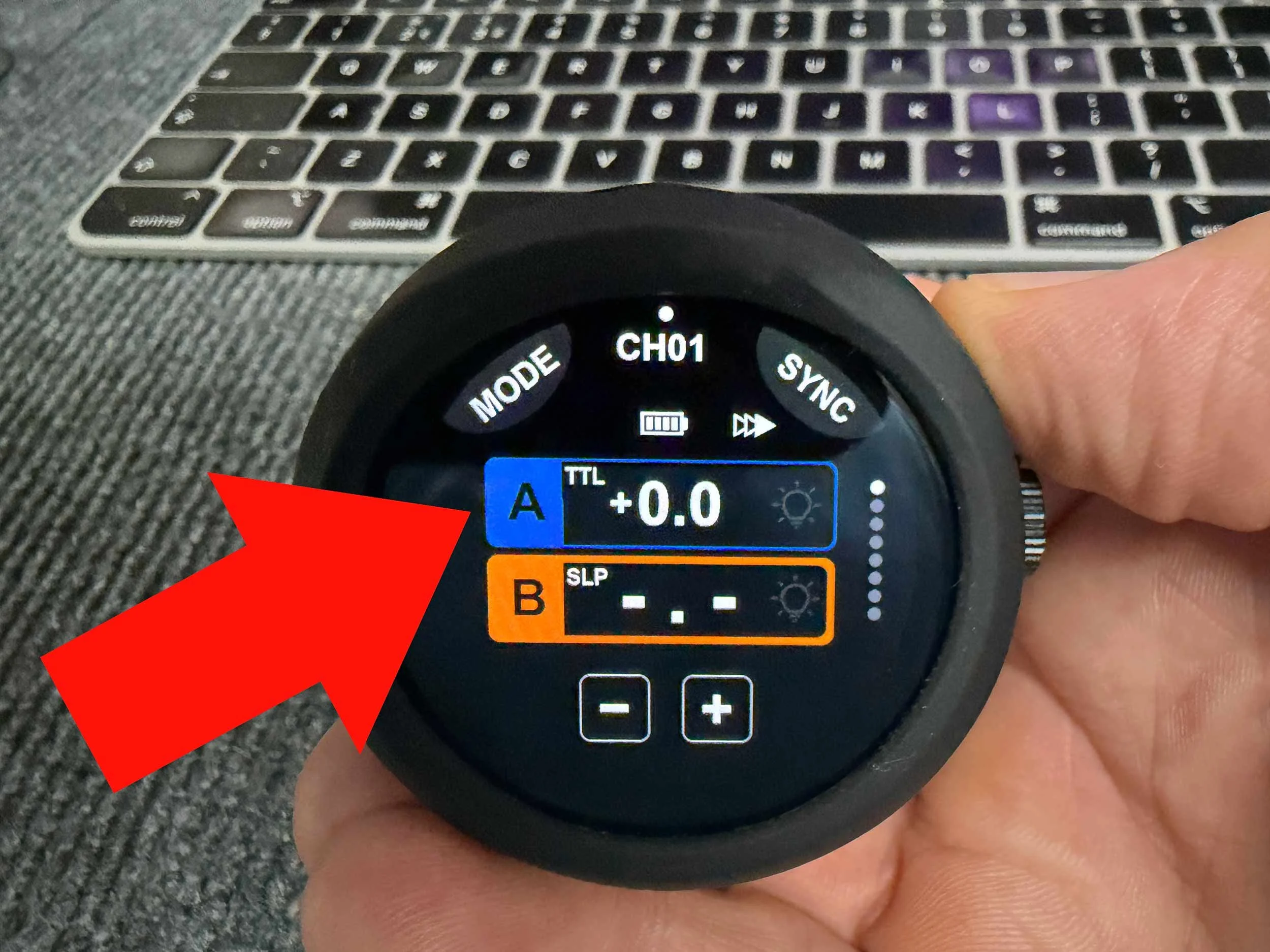
You'll usually need to enable HSS on the flash trigger, the flash head, the camera's flash menu, or sometimes all three, depending on the system. With Westcott, Godox, Profoto, Canon, Nikon, Sony and so on, the exact menu or button differs, but the principle is the same. Look out for HSS, High-Speed Sync, FP Sync, or a lightning bolt with an H next to it.

3. Add flash to light your subject

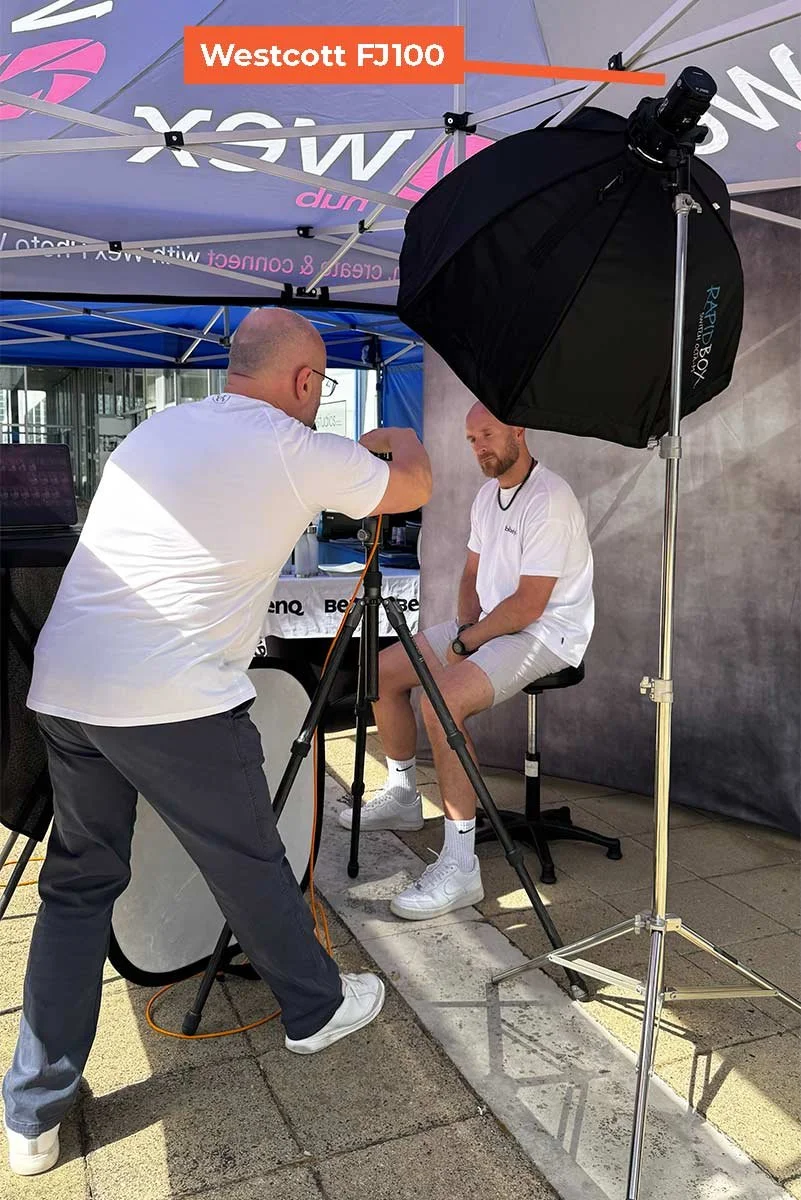
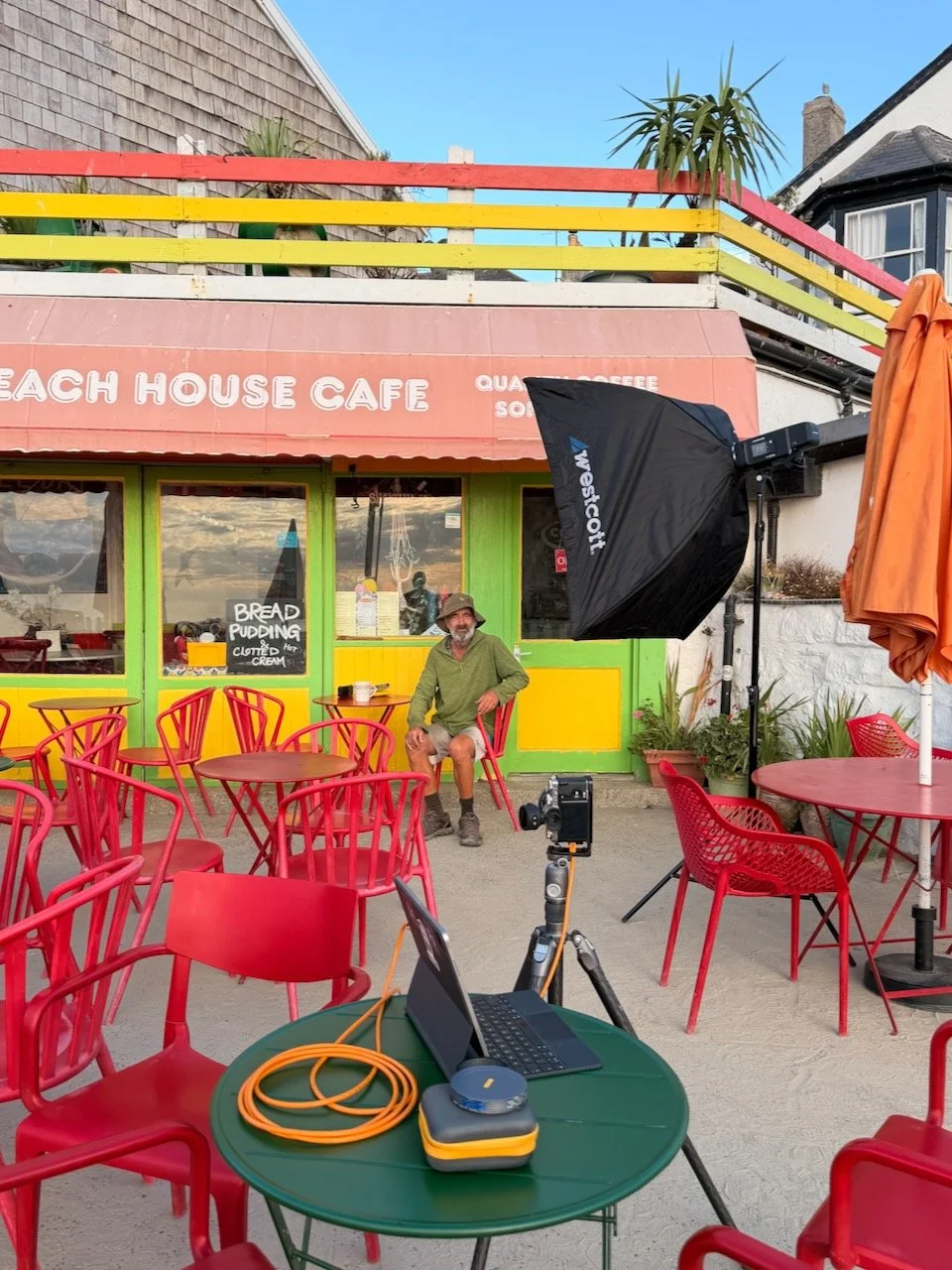
Position your off-camera light where you want it. For portraits, I'll usually go for around 45 degrees to the subject, slightly above eye level, using a softbox, beauty dish or umbrella, and close enough to keep the light soft and powerful. Then adjust your flash power until your subject looks right.

4. Balance flash and ambient

Think of it this way: shutter speed controls the ambient light, flash power controls the light on your subject. In HSS, that's mostly true, but there's one important catch. Because HSS reduces flash power, very fast shutter speeds will also make your flash work a lot harder.

A Simple Example

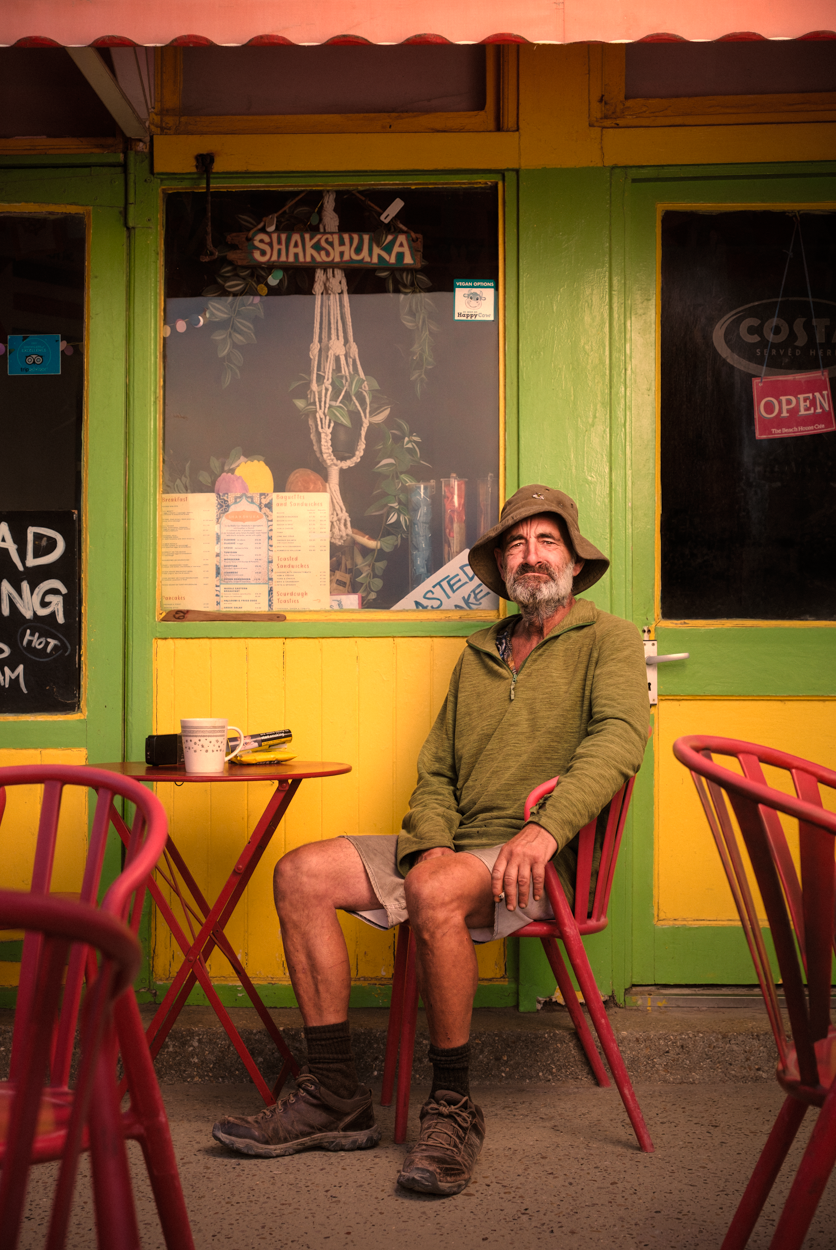
You're photographing someone outdoors at golden hour, or in bright sun. You want a blurred background, a dramatic sky, and your subject nicely lit.

Settings might look like this:

  • ISO 100

  • f/2.8

  • 1/2000 sec

  • HSS turned on

  • Flash in a softbox, off-camera

The shutter speed brings the bright background down. The flash brings your subject back up. That's HSS doing its job.

Why Not Just Use Normal Flash Sync?

At normal sync speed, say 1/200 sec, bright daylight might force you to use f/8, f/11 or even f/16. That gives you more depth of field, so the background is sharper.

That can work fine for some shots, but if you're after that more cinematic, shallow-depth portrait look, it becomes limiting fast. HSS removes that restriction entirely.

The Limitations of High-Speed Sync

HSS is brilliant, but it's not without trade-offs.

1. You lose flash power

This is the big one. Because the flash is pulsing rapidly rather than firing one full burst, the available power drops significantly. The faster your shutter speed, the more power you lose. At 1/4000 sec, your flash has nowhere near the effective reach it has at 1/200 sec.

2. You may need the flash closer

With less power available, you'll often need to bring the light in closer to your subject. That's not necessarily a bad thing, closer light is usually softer, but it can be a problem if you need to light someone from further away.

3. Battery drain is higher

HSS makes the flash work harder, which means more battery use, slower recycle times, more heat, and fewer shots per charge. Fine for a quick portrait session. Worth thinking about for fast-paced shoots, events, or long days.

4. It's not ideal for overpowering the sun

You can use HSS in bright sunlight, but if your goal is to completely overpower harsh midday sun, you need a genuinely powerful light. Small speedlights tend to struggle here. Something like a Westcott FJ400, or similar, is much better suited to the job.

5. It can be less efficient than an ND filter

An ND filter lets you keep your shutter speed at normal sync speed while still shooting wide open. For example:

  • ISO 100

  • f/2.8

  • 1/200 sec

  • ND filter fitted

  • Flash at normal sync

This keeps far more flash power in reserve. So the real choice often comes down to this:

HSS is faster and simpler, with no filter needed. An ND filter gives you more flash power, but it's slower to work with.

HSS vs ND Filter

Use HSS when:

  • you want to work quickly

  • the light is changing

  • you don't want to mess about with filters

  • you're shooting portraits outdoors

  • you need flexibility with shutter speed

  • your flash has enough power to spare

Use an ND filter when:

  • you need maximum flash power

  • you're working in very bright conditions

  • your flash is struggling to keep up

  • you want to stay at normal sync speed

  • you're happy taking a little more time

Neither is better than the other. They're just different tools for different jobs.

The Big Thing to Remember

High-Speed Sync is mainly about creative control. It lets you shoot with flash at fast shutter speeds so you can use wide apertures, darken the ambient light, hold onto detail in bright backgrounds, create separation, and light your subject properly outdoors.

The price you pay is reduced flash power. So the practical rule I stick to is this:

Use HSS when you need the shutter speed. Avoid it when you need maximum flash power.

That's HSS in a nutshell. It gives you freedom, but it charges you for it in flash output.

The KEY to SUCCESSFUL PORTRAIT PHOTOGRAPHY with James Hole

Watch the recording of this LIVE Broadcast as I chat with UK based Commercial and Advertising Portrait Photographer James Hole and learn how he works with a team of professionals, plans a photo shoot and manages and communicates those in front of his camera to ensure that the experience of being photographed is an enjoyable one, the 'talent' feels relaxed and informed and ultimately the very best possible results are achieved.

links mentioned in the video:

Returning to Composites: Ragnar Viking Portrait

It’s been a good few years since I did any compositing but recently I’ve been getting the urge to get back to it again. I don’t know if it’s because of all the updates that have come into Photoshop over the past few years or what, but something is drawing me back to start working in this area again … and I’m really excited about it.

So rather than just start creating random images, I’ve taken my own advice and decided on a project that brings together my photography, retouching and something outside of that world that I have a genuine interest and fascination with … and that’s Vikings. I’m a BIG fan of the Vikings Drama Series on Amazon Prime with incredible characters like Ragnar Lothbruk and Ivor the Boneless.

So not being one to hang around I started gathering ideas for the first pictures I wanted to work on and so for this I made use of technology that wasn’t available a few years ago when I was last doing composites … Adobe Firelfy AI and the ‘Text to Image’ technology.

This is such an incredibly useful piece of technology for coming up with concepts by simply writing your idea.

So using the Generate Image function in Photoshop I wrote …

Viking with beard and plaited hair and holding an axe stood on cliff looking down onto the sea

… and this is just some of the results that were created …

Now with images of what ideas I had in my head it was so much easier to first of all message my friend Simon Fowler aka Foxy and send him a picture of what I wanted to create of him as a Viking.

Then it was time to source the appropriate clothing for Foxy to wear, and for that I headed to Marigold Costumes in Cardiff and arranged to meet Simon and another friend Anthony Crothers there.

I’ve used Marigold Costumes a few times in the past for other photo shoots as there’s such a huge choice of costumes, and sure enough within no time we’d sorted out what was needed …

With clothing sorted it was then just a few days until the gang were all together in the studio for the photo shoot.

Here’s a look at the set up for the first image which is the one where the Viking will be looking down from the cliffs onto the sea below …

Doing this using the LED Constant Lights made it so much easier for everyone to see what was being captured … before it wss captured. It also made setting up so incredibly easy.

kit used:

To the front of Foxy I used the light and soft box combination below …

This was used to mimic the light / highlights coming from the sun.

Now when it comes to composting, I was always someone that liked to get the backgrounds first and then photograph the model / subject. I did this because having the background first meant I then had a light style and direction to mimic in the studio.

However I knew where I was going to photograph the background location … Hartand Quay in North Devon.

This is a location I have been to many times and know really well. It’s perfect for the picture I had in mind. I also had a good idea of where the sun would be located at a certain time of day which is why I positioned the light as I did to the front of Foxy.

I did check using the PhotoPills App though just to be sure …

And here’s one of the ‘out of camera’ shots, which as you can see shows that I also photographed Foxy against a grey background.

The reason for this is two-fold; firstly it contrasts against Foxy so makes it easier to cut him out later in Photoshop. Secondly, because it enables me to capture the real cast shadows, and being grey gives me the option of using a blend mode later in Photoshop to retain them and have them appear in the final composite rather than me paint them in …

The background / scene

As for the background I intend to add the photograph of Foxy into, I headed over to Hartland Quay over this past weekend with my friend Brian Dukes.

Conditions ended up being perfect with the clouds and incoming tide, and in addition to getting the shots I wanted, it made for a great day hanging out with a close friend in a fabulous location …

back to the studio

Anyway, back to the studio, there was one more shot I wanted and that was with Foxy stood facing directly towards the camera. I had an idea of creating a movie poster type of picture.

the set up

For this picture I changed the set up having rim lighting on either side of Foxy and a single light infront …

I really should get another 1x4 Softbox to use for the rim lighting, but as it happened, just using the 3x4 softbox and positioning it facing directly across the back of Foxy and him slightly forward worked out just fine. The other 1x4 I positioned on the opposite side, again facing directly across the back of Foxy.

The light directly to the front of Foxy was another Westcott L60-B Bi Color LED and this one was in a Westcott Rapid Box Switch Medium Octa (36”).

With it being on a C-Stand and on a boom, it was easy to get the camera on the tripod directly below so the light was on camera axis.

Here’s the out of camera photograph …

And below is the final edit.

Genuinely loved working on this adding textures, shadows on the background, dodging and burning, lighting effects, colour grading and creating the text from scratch along with the glow from the fire below and the sparks.

It was so much fun seeing how the updates can help with what I’m doing such as using Adobe Express for the fire and sparks and also Generative Fill AI to change the look of the axe head. Loved it!

So that’s my new Viking Series officially started and I cannot wait to get working on the other picture from this photoshoot.

Needless to say I’ll share it once finished. I’ll also look at creating some tutorial walk-throughs going through all of the retouching for both.

It sure feels good to be back doing this kind of work 😃 and as always a BIG thank you to my ever supportive friends … Ian Munro, Foxy, Anthony Crothers, Gerwyn Williams and Brian Dukes.

Portrait using a 55mm Prime and LED Lighting

I’m currently trying out a new portrait style for me using a different lens focal length than what I’ve used for a while now, and also adding in an additonal light to my usual one-light set up.

For some time I’ve used the Sony 85mm G Master lens with my Sony A7RIV and have and still do love it for the quality and sharpness of the files it produces. However I’m now going to be using a 55mm focal length … my Zeiss f/1.8 Prime Lens.

It’s hard to put into words what I’m really liking about the look the lens gives … it’s just different. Some would say that it gives a much more realistic ‘as the eyes see it’ look but I guess that also depends on how close to the subject you position yourself.

I also like how the focal length means you’re much closer to the subject, making the portraits much more intimate and revealing of the person being photographed ... if that makes sense.

I’m also, like I said, using an additional light with this new look I’m working on; both of which are LED Constant lights.

I’ve been using the 60W Westcott L60-B COB LED for a while now but a few days ago I received the new 120W L120-B COB LED; a slightly bigger unit with the advnatage that no adaptor is needed to fit any of my light modifiers.

So the portrait of my friend Anthony above, I took using one of the grey walls in my office as the background; here’s the set up showing the positon of the lights …

LIGHTING

Westcott L60-B COB LED fitted with a square Westcott Pocket Box Softbox rear and camera right and positioned so that it added both a bit of light onto the background but also a hint of light onto the camera right side of Anthony’s head.

Westcott L120-B COB LED fitted with the 24” Rapid Box Switch Softbox

Westcott 2-in-1 Reflector (silver and White) with silver side uppermost

*NOTE: If you’re looking to invest in Westcott Kit, then give me a shout and I’ll pass on a Discount Code

Westcott L120-B COB LED

Westcott 24” Rapid Box Switch Beauty Dish

Westcott Pocket Box Speedlight Softbox Kit

camera settings

  • Aperture: f/5.6

  • Shutter Speed: 1/60sec

  • ISO: 1250

When taking Anthony’s portrait I was experimenting with different apertures to see hat I prefered for this new look; f/2.0 , f,4.0 , f/5.6 and actually liked the look of f/40 as with the 55m lens it gave a great depth of field with the tip of the nose in foucs and then from the ears losing focus.

However, I mistakenly left the camera in f/5.6 so during the retouching in Lightroom I used the Lens Blur to convincingly fake the depth of the field.

retouching in lightroom

The portrait I retouched using only Lightroom and I’ve added it into my Lightroom Community Profile Page

When you go to my Lightroom Community Profile Page, click on the portrait and this will then take you to where you can see all of the retouching steps I did to the ‘out of camera’ file. You can also save the settings as a preset to use on your own images and even click on Remix to get access to a Smart Preview of my original file and have a go at retouching it yourself.

Beyond the Flash: Unlocking the. Potential of Constant Lighting in Photography

On Thursday of last week I had the pleasure of being invited to be part of Wescott Wednesday hosted by B&H Photo Video on their Event Space.

As I’m using Constant Flash more and more these days for when taking portraits I was asked to talk about my experience and how / why I feel that it has made such a positive impact on how I portraits, but not just for me but also the person being photographed.

The recording of the LIVE Broadcast I’ve added below, in which I go through what constant light I’m using, how I’m using it and also go through tips on how I take portraits in which I hope you’ll see how good constant light is to combine with them.

HUGE thanks to Westcott for inviting me to speak and also to the great folks at B&H who do such a great job hosting and preswenting these events.

From Movie Magic to Photographic Mastery | Lisa Carney

Thoroughly enjoyed chatting with Hollywood Movie Poster / Art Work Retoucher Lisa Carney and uncovering the HOW, WHAT and WHY of her personal work, her photography, process, retouching, personal projects and travel.

At the beginning of this recording check out the slideshow of her images and then learn how she captures and edits them because I guarantee, like me, you’ll be blown away!

Links mentioned in the video

Website: lisacarney.com (Portfolios, Photoshop Tutorials, Courses and more … )

Grief ( Art as Therapy - Personal Project ) LINK

Instagram: @lisacarney

The Lightroom Virtual Summit 2024: bit.ly/lvs-2024

Glyn’s Adobe Lightroom Community Page: LINK

Unsurprisingly, Lisa was a HUGE hit judging by some of the comments posted already from folks watching the recording …

Westcott Wednesday: Unlocking the Potential of Constant Lighting

So here’s a date for the diary …

In conjunction with Westcott and B&H Photo and Video, on the 15th May @ 3pm EDT (8pm UK) I'll be on "Westcott Wednesday" going through the WHY, WHAT and HOW of using Constant Lighting when taking portraits.

Thid will be the latest installment of the regular Westcott Wednesday series hosted by B&H in which I’ll be, as the description says …

Join us for this presentation as Photographer Glyn Dewis takes us through a journey shifting from traditional flash to constant lighting in portraiture. With a mix of image examples and behind the scenes, Glyn will explain how constant lighting has become the cornerstone of his portrait work, injecting a newfound level of creativity and enthusiasm into his photography.

“At first, using constant light almost felt like cheating but I’ve since completely changed my mind because aside from being under no illusion of the results I get and the ease of setting up, more than anything it enables me to concentrate even more on the person in front of my camera and the concept we’re working on.”

Oh and this event is FREE , will last about 1 hour and will be over on the B&H Event Page on YouTube ( LINK )

Classic Portraits with Constant Light

Recently I was back with friends in the studio taking portraits, and this time getting Steve in front of my camera to try out some ideas I’d stumbled across when browsing Pinterest that I thought would be another good excuse to get my L60-B constant light out for.

Pinterest

I’ve used Pinterest for years as a great place for not only finding inspiration by looking at the work of photographers I admire like Annie Leibovitz and Mark Seliger, but also a great tool for looking how other photographers pose their subjects, which lets face it can be awkward at times. 

Finding a balance between what you want but also making the pose look natural and the subject comfortable can be challenging to get right but I’ve always found it a massive help when you can guide your subject on what you’re looking for by showing them a picture.

Anyway, these here are some of the looks and poses I was really interested in …

Model for the Day

Model for the day was my dear friend Steve Healy whom I’ve known for years. 

There was a time when for quite a while we’d not met up because of Steve moving away to Devon but I’m glad to say that when we finally made the move to the South West , we’re now able to meet up fairly regularly to just hangout out and take photographs. This we will certainly be doing more and more of!

Anyway, Steve drove over to my house in the morning and then we both jumped into my car and headed to South Wales to catch up with the gang; some of my closest friends which to be honest are more like family … Ian Munro and Anthony Crothers.

This was the first time Steve had met up in person with Ian and Anthony even though I’m sure they felt like they knew each other anyway having messaged back and forth many times on social media and also in the chat room during my Sunday LIVE Broadcasts on YouTube. Needless to say … Steve instantly became ‘one of the gang’ 😃

So after a traditional meet up at Costa in Brynmawr, South Wales to fuel up on coffee, we then went to the studio and cracked on …

PORTRAIT 1

So the first portrait I really liked the look of doing was the one inspired by this portrait of Robert De Niro taken by Mark Seliger …

Steve had brought along a dark grey casual suit-type jacket which was ideal. He’d also bought a white shirt to wear underneath but when setting up we all felt that even though you’d only seen a small portion of it, it would be too distracting, so instead Steve kept with the black T-Shirt he was wearing.

BACKGROUND

For this I portrait as it was to be a fairly tight crop of Steve on one side and just a little bit of ‘dead space’ to the left, the 7’ x 5’ background would be plenty big enough and so this was set up with the rear supporting leg shortened so that the background took up less floor space and could be closer to the wall.


LIGHT + MODIFIER

I’ve said it before and I’ll say it again … I absolutely LOVE this light!

I wouldn’t be exaggerating when I say that positioning the light (L60-B) to get the Rembrandt Lighting Pattern 100% BANG ON took just a few seconds; such is the convenience and ease of doing so when using because … What You See Is What You Get

Bottom Left: iPad Pro with Pinterest App open showin the ‘reference’ image

To achieve a quality of light that was neither hard or soft but somewhere in between, and also to minimise the amount of light that would spill onto the background, I opted to use the Westcott 24” Rapid Box Switch Beauty Dish and with the outer diffusion panel fitted.

Westcott 24” Rapid Box Switch Beauty Dish with Outer Diffusion Panel

CAMERA + Lens

  • Sony A7RIV

  • Sony 85mm f/4.0 G Master

CAMERA SETTINGS

  • Aperture: F/4.0

  • Shutter Speed: 1/60sec

  • ISO 1250

Once set up and with any light in the studio that wasn’t contributing to the portrait turned off, I could then start taking portraits of Steve but what was really useful here was that everyone could see EXACTLY what the shots would be like without having to look at the back of my camera each time or look at my iPad Pro that I was tethering to; again because What You See Is What You Get

Studio lights and ‘any’ lights not contributing to the portrait turned off.

This made it so easy for anyone who wanted to make a suggestion and move in to maybe get Steve to angle himself differently or change the position of a hand.

It just worked and worked so incredibly well, making EVERYONE feel involved.

OUT OF CAMERA

Here’s the out of camera Raw file …

Original Raw file in Adobe Lightroom Classic

FINAL EDIT

Here’s the final retouched image which was worked on using both Lightroom and Photoshop …

Final Retocuhed Portrait

LIGHTROOM CLASSIC and PHOTOSHOP

Here’s a summary of the retouching steps carried out in both Lightroom Classic and Photoshop …

Lightroom

  • Straighten & Crop

  • Colour Correction*

  • Denoise

  • Masking (Enhance eyes - Iris and Pupil only)

*Had to do this manually as ‘somehow’ I forgot to use my Colour Checker Passport … Doh!

Photoshop

  • Clean Up

  • Dodge & Burn

  • 2010

  • Dreamy Glow (20%)

Lightroom

  • Colour (CN16)

  • Color Mixer (Reduce Orange & Red Saturation on Steve’s face)

  • Masking (Radial Gradient to Shape Light)

  • Masking Exposure on Face

  • Add Grain


PORTRAIT 2

For the 2nd portrait of Steve, this was the photograph I used as the initial inspiration / idea …

For this we went with the exact same set up albeit positioning the light camera left this time as opposed to camera right as it was for the first portrait.

Below is what the set up looked like before turning off the lights in the studio that weren’t contributing to the portrait …

Using the single L60-B coming in from high up and angled down produced exactly the lighting that was wanted (below) however I felt that the shadow side of Steve’s head was a touch too dark …

To add a touch more light onto the shadow side of Steve’s head, rather than use a 2nd L60-B we just used a Silver Reflector which also had a white side to it, however between the two surfaces, the silver side gave the best result …


OUT OF CAMERA

Here’s the ‘out of camera’ Raw file …

Out of Camera Raw file in Lightroom Classic

FINAL EDIT

Here’s the final retouched image which was worked on using both Lightroom Classic and Photoshop …

Final Retouched Portrait

lightroom classic and photoshop

Retouching steps in both Lightroom Classic and Photoshop were pretty much the same as in the first portrait, however there was one very definite difference.

When taking the 2nd portrait, we all felt that although Steve sitting on a stool worked, it did make him look a little squashed because of the height of the stool he was sitting on and also how his jacket sat, so we also tried a few shots with Steve standing …

With Steve standing it definitely stopped him looked squashed, however when looking at the images later in Lightroom Classic I was torn because I liked the pose and expression on Steve’s face from the seated shots.

So now in the retouching I was thinking I could either (a) do a head swap or (b) do the opposite of a technique I used to do when photographing physiques … and that’s what I chose to do.

PHOTOSHOP TUTORIAL

Here’s a short video showing exactly what I did in Photoshop to reduce / remove the ‘squashed’ look …

WRAP UP

Following the photo shoot we all the headed over to Abergavenny for what was a delicious bite to eat at The Angel … THANK YOU Steve!

So there you go, all of the steps that I went through from the initial idea, the kit, the set up and the final edit.

As always if you have any questions / comments, please do make use of the section below and I’ll be sure to reply.

Oh and don’t forget, if you’re interested in getting ANY of the Westcott kit including lighting, modifers, backgrounds etc then drop me a line as I’ll be able to give you a Discount Code for 10% OFF

Cheers
Glyn

Cinematic Portrait using Constant LED Light

Last weekend I was back with friends Ian Munro and Anthony Crothers in South Wales filming more content for the update to my TIMELESS Photography and Retouching Course, but in addition to this managed to grab some extra portraits too.

The vintage clothing Anthony was wearing was for the TIMELESS Update and was provided by a great ccompany called Marigold Costumes who provide clothing and props to the TV and Movie Industry and whilst he was there collecting it, also picked up a ‘Grandad Shirt’ and a set of braces.

The set up above was what I was using for the TIMELESS Update and that consisted of …

  • Westcott X-Drop Pro Background Support System

  • Westcott 8’ x 8’ X-Drop Vintage Grey by Glyn Dewis (Material)

  • L60-B 60W Bi Colour LED

  • Westcott Rapid Box Switch 4’ x 3’ Softbox

  • Westcott Silver Reflector

The constant light I am absolutely loving! So much so infact I’ve now added a 2nd light to my kit with a 3rd on the way to give me more options for a new portrait series I’m going to be working on.

The portrait above is one that I took of anthony in-between filming segments for Timeless, and for this the set up was pretty much the same other than one addition.

Here’s what the ‘Out of Camera’ shot looks like when just using the L60-B LED and Softbox coming in from camera right …

At the time of this photo shoot I didn’t have a 2nd L60-B so instead I used the modelling light from my Westcott FJ200 strobe, and this worked a treat when fitted with the included reflector and honeycomb grid.

This was aimed behind Anthony from camera left so that just the soft outer portion of the light brushed past the side of his head.

Aiming the light past Anthony so that only the outer portion of the light hit him, meant the light will be soft unlike the portion of light nearer the centre. Also, doing this meant the softness of the light from the 4’ x 3’ softbox and the FJ200 matched.

A silver reflector was also positioned camera left just out of shot to bounce a bit of light onto Anthony’s shoulder and upper back nearest the camera because without it, there was very little detail.

As for the light you can see coming into the portrait from the top left, this was added very simply in Photoshop using a soft white brush and this I did so that the highlight on the side of Anthony’s head (camera left) made sense … if you know what I mean.

Below is a lighting diagram to give you an idea how the set up looked …

My favourite image from this quick portrait shoot is defintely the one above, but I did also grab this one with a wider field of view and slightly different pose and feel due to the chair having been turned around …

Using the exact same set up I also took a portrait of Ian, but with him standing instead of sitting …

I’m so looking forward to pushing on with a new portrait series using the L60-B LEDs ; there’s lots more to come so I’ll make sure to share what I get up to and grab plenty of Behind the Scenes.

I hope this breakdown is in some way useful and if you have any questions please don’t hesitate to drop them in the comment section and I’ll make sure to reply.

Cheers,
Glyn

• Note
As part of the retouching on these portraits I made use of my Dark & Moody Lightroom / Camera Raw preset at 20% strength, and this you can download for FREE when you subscribe to my twice-monthly newsletter

LIGHT | CAMERA | CAPTURE | The Art of Portrait Photography | Ross McKelvey

Watch the recordong of this LIVE Broadcast as I chat with Portrait Photographer Ross McKelvey about his process for capturing stunning portraits and motion covering Lighting Set Ups and Post Processing. Plus Camera Clubs, Printing, Presenting your Work and Photography Competitions …

links mentioned in the video …

Ross McKelvey website: rossmckelvey.co.uk

Ross McKelvey YouTube Channel: youtube.com/@rossmckelvey
Ross McKelvey on Instagram: instagram.com/rossmckelvey
Ross McKelvey on Facebook: facebook.com/ross.mckelvey

Westcott L60-B Bi Colour LED: LINK