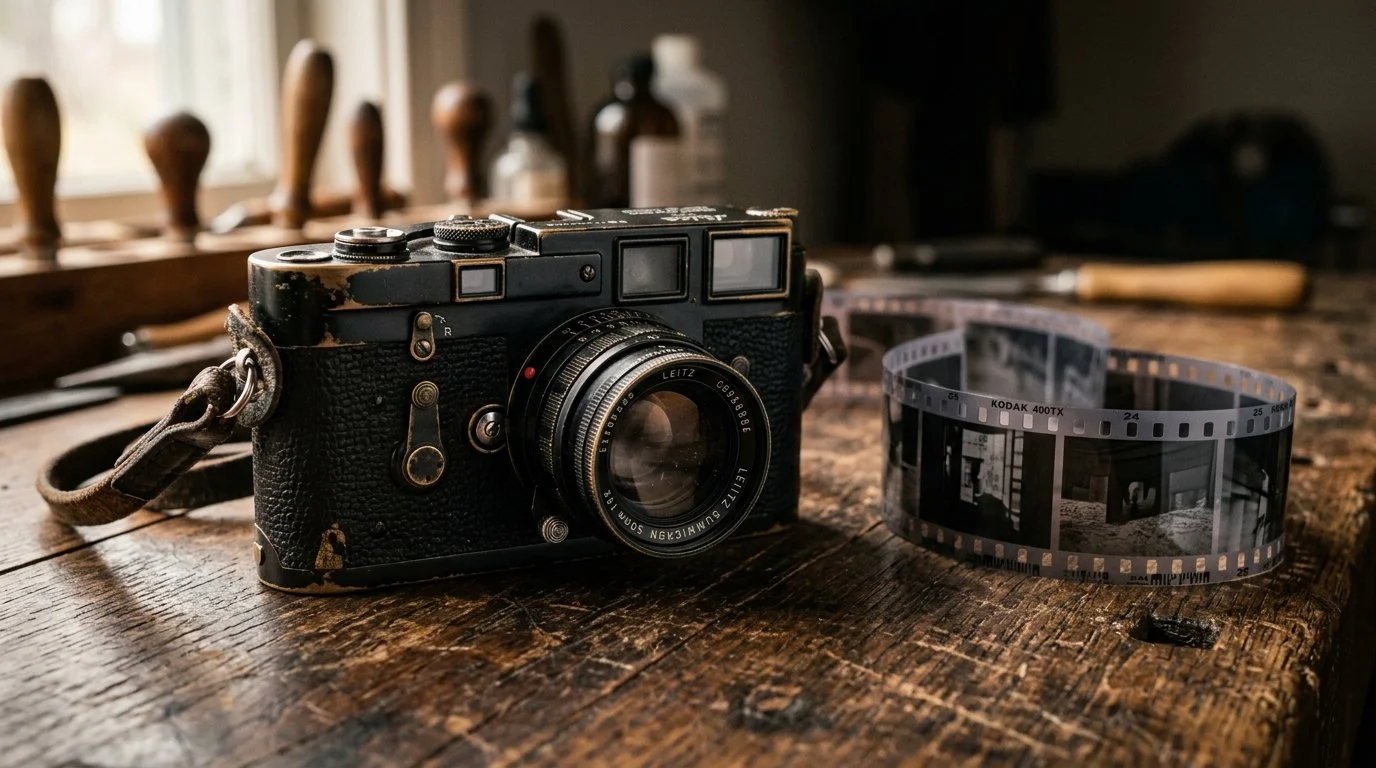
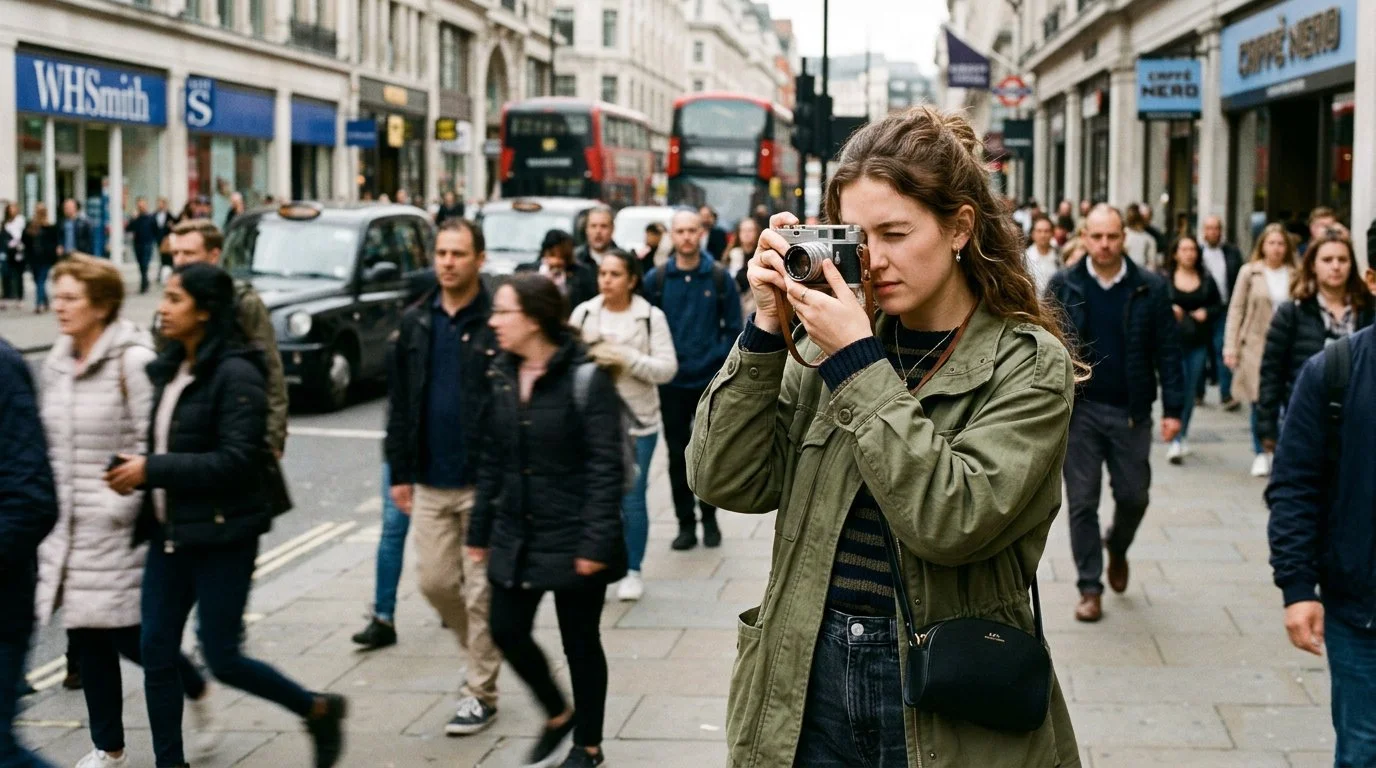
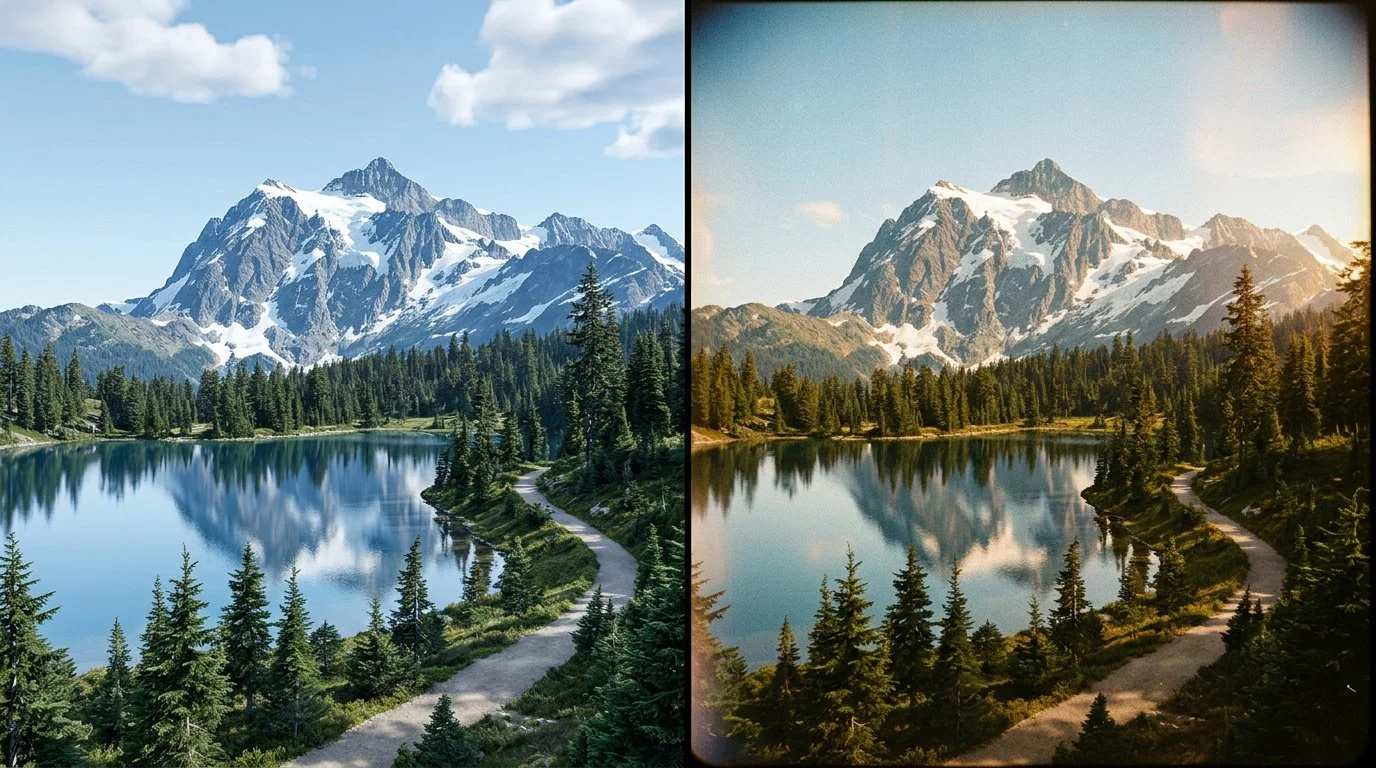
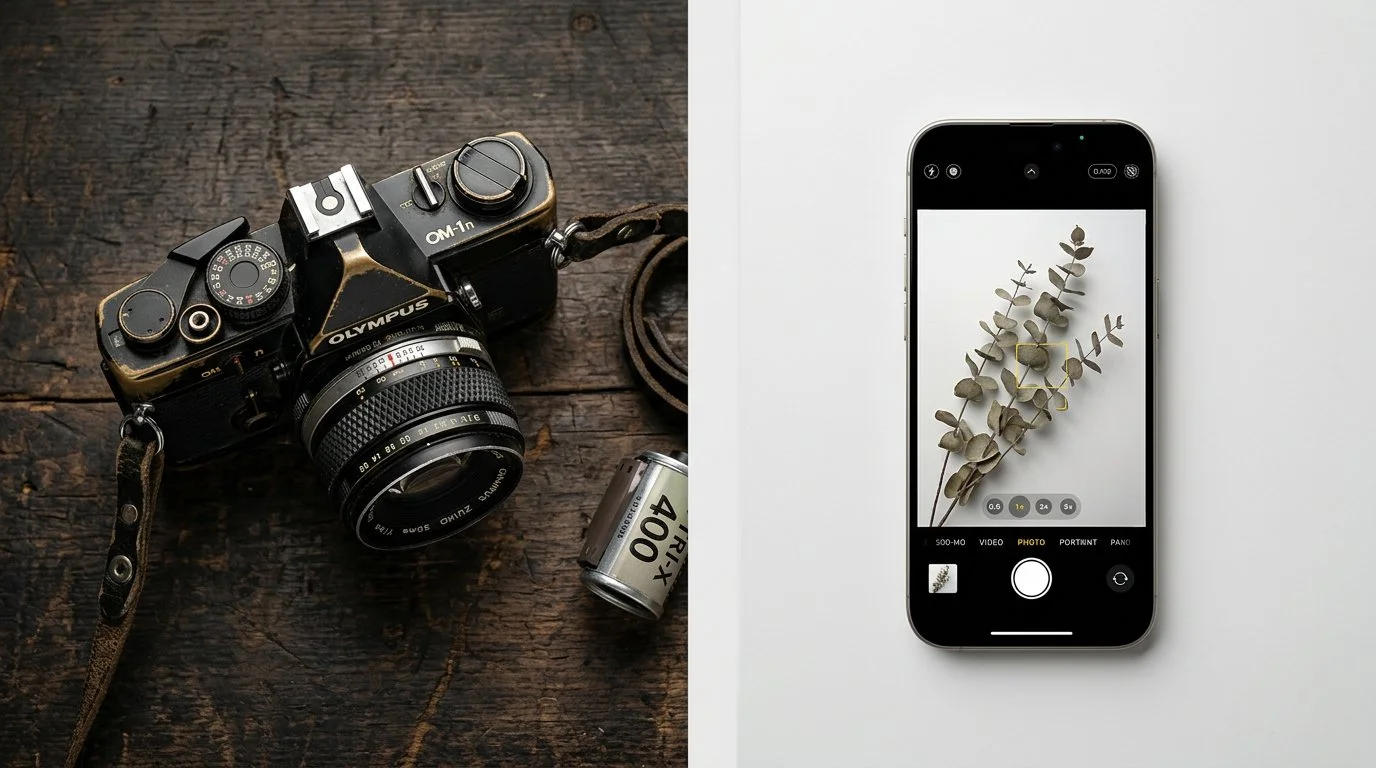
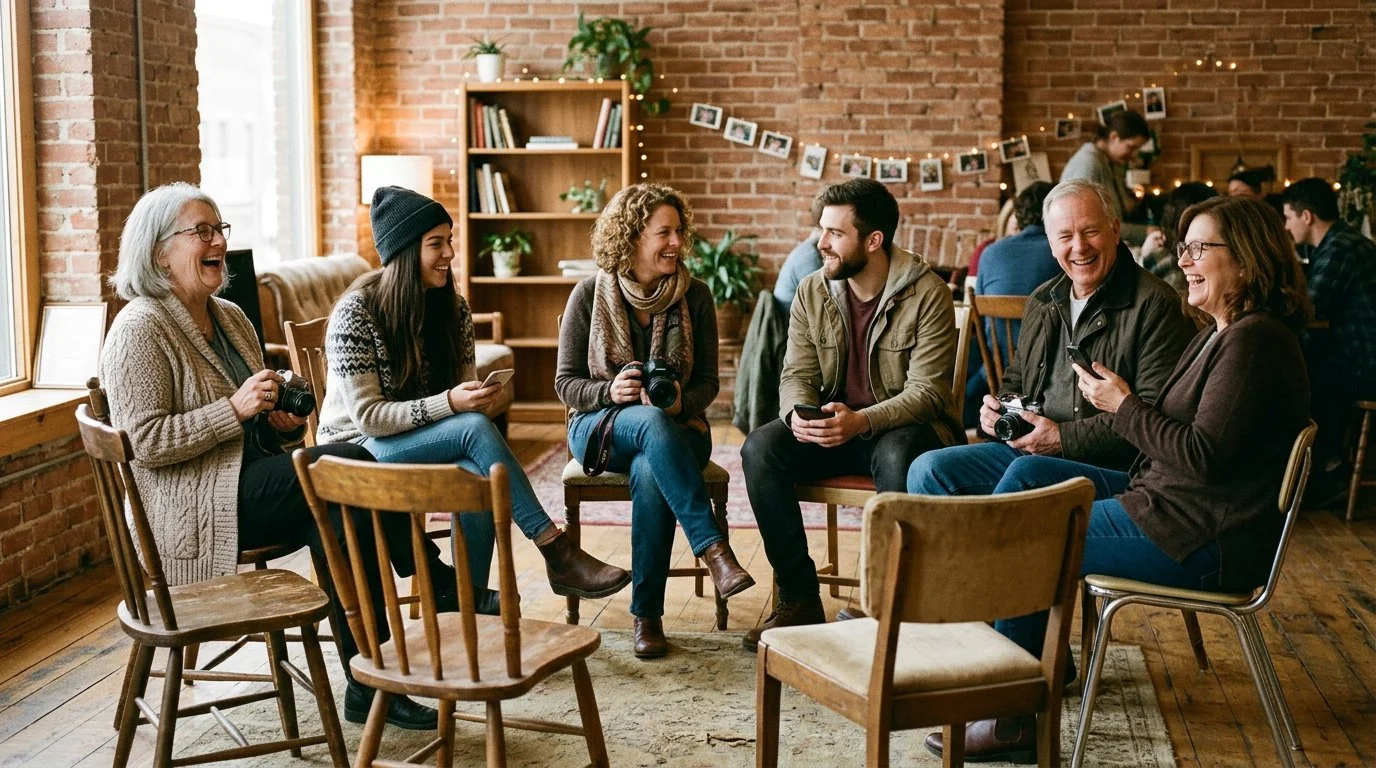
As AI-generated imagery floods every corner of the internet, flawlessly composed, mathematically perfect, technically faultless, there's a growing hunger for photographs that are demonstrably, visibly made by a human being. Film grain, light leaks, slightly off exposures, the warmth of silver halide: these aren't flaws anymore. They're proof.
Survey data from AI editing company Aftershoot found that photographers and clients are increasingly favouring images with raw emotion and imperfection over technically perfect shots. The irony isn't lost that an AI company is reporting this, but it reinforces the point. Even the tools built on AI can see the cultural correction happening.
In short: the more digital becomes automated and "perfect," the more value attaches to the authentically imperfect.
The Cost Problem: Film's Inconvenient Truth
It would be dishonest to write about the film revival without addressing the elephant in the room … it's expensive, and getting more so.
A roll of professional colour negative film now runs approximately £12 to £18 before you've taken a single shot. Add lab development and scanning, and you're looking at £28 to £35 to see 36 images on a screen. At around 40 to 80p per photograph, casual shooting adds up fast.
2026 has brought more bad news on pricing too. Kodak Alaris announced increases of £1 to £3 per roll effective February 2026. Both Kodak and Fujifilm have flagged further increases across some stocks, with some emulsions seeing 20 to 50% rises compared to 2025. Medium format shooters have been hit hardest, with Kodak 120 format stocks seeing price hikes of 14 to 19%.
The silver shortage driving these rises isn't going away, and this is creating a real tension at the heart of the revival: a medium that's growing in popularity is simultaneously becoming less accessible to the very people most interested in it.
Fad or Here to Stay?
The vintage camera market, including collectible film equipment, is projected to grow from USD 1.19 billion in 2025 to USD 1.68 billion by 2031. That's a trajectory backed by institutional investment, not just Instagram aesthetics.
The strongest argument that this is different from previous analogue revivals: it's being driven by people who have no nostalgia for film. Gen Z photographers never shot on film in their formative years. They're choosing it as a deliberate creative act, not a sentimental return. That's a fundamentally different kind of demand.
The strongest argument for scepticism: cost. At £12 to £18 per roll before processing, film photography is becoming a luxury hobby. If price increases continue at current rates, it risks pricing out exactly the demographic driving its growth.
The answer is probably somewhere in the middle. Film won't displace digital, it never will, but it has carved out a permanent, growing niche as the antidote to digital perfection: slower, more intentional, more human. In an era when AI can generate a technically perfect image in seconds, there's real and lasting value in a photograph that carries the fingerprints of its maker.
Over to You
I'm genuinely curious on this one, partly because it's not my world. Have you shot film recently, or are you thinking about giving it a go? Do you think the slower, more deliberate nature of film has had any influence on how you approach your digital work? With prices rising the way they are, at what point does it become too expensive to justify?
Drop your thoughts in the comments below, I'd love to hear from people who actually have the film experience I don't.